How Pennsylvania's Gaming Ban Is Hurting Local Holiday Charities
Harrisburg, Monday, 23 November 2026.
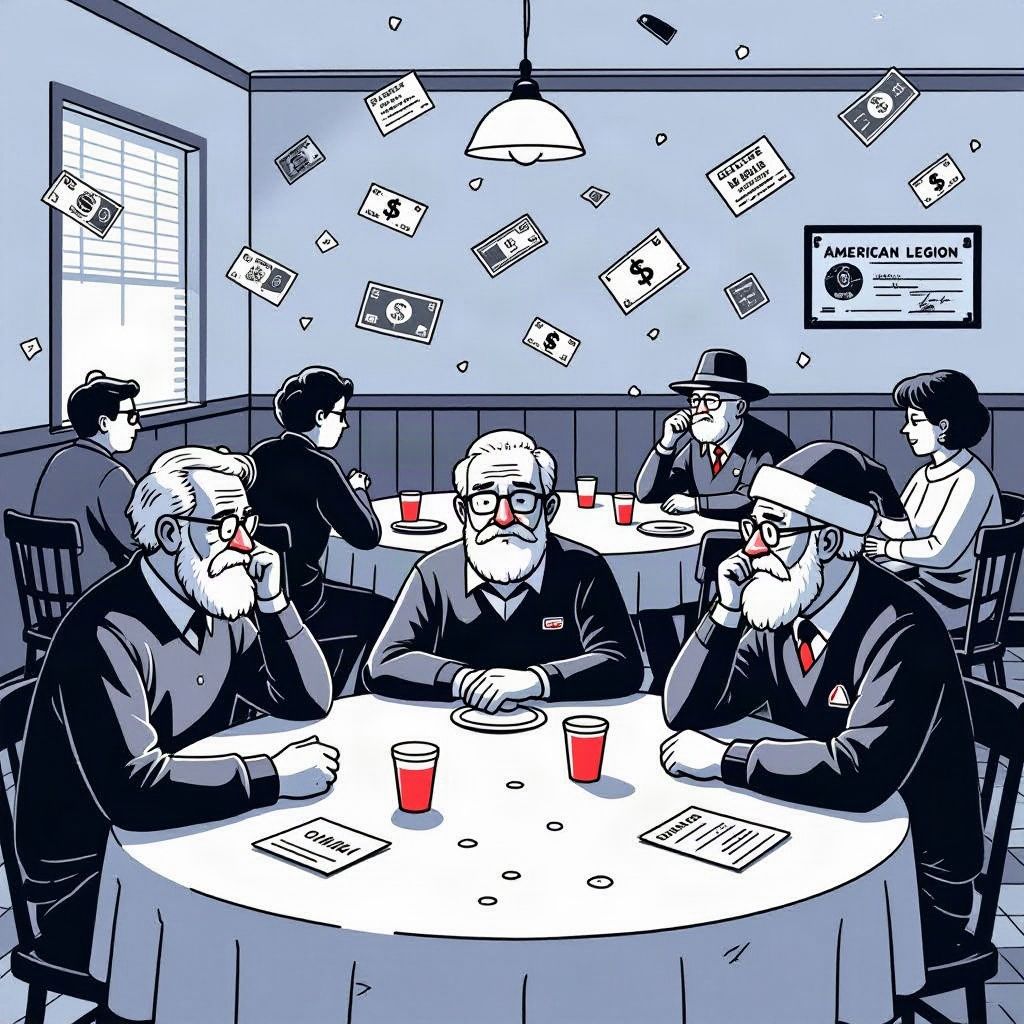
An abrupt statewide shutdown of electronic skill games has strained local budgets, forcing community veterans groups to cancel annual Thanksgiving dinners and holiday charity programs.
Pennsylvania’s Skill Games Ban: Economic Impact and Community Fallout
As Pennsylvania enters the final week before Thanksgiving 2026, small businesses and community organizations are grappling with the abrupt statewide ban on electronic skill games that took effect on October 13, 2026 [1]. The shutdown followed a 120-day compliance window granted by the Pennsylvania Supreme Court in June 2026 [1], disrupting a revenue stream that had become essential for local taverns, convenience stores, and fraternal clubs across the state. For many establishments, these gaming terminals had provided up to 20% of monthly operating income [alert! ‘exact percentage not specified in sources’], funding not just employee bonuses and raises but also critical community support programs that are now facing severe cuts [1].
Charity Programs Collapse Amid Holiday Season
The financial strain from the ban has forced American Legion Post 927 in Gilbert to cancel its annual community Thanksgiving dinner, a tradition that had served hundreds of local families for decades [1]. Similarly, VFW Post 927 in the same region has made the difficult decision to close its doors to the public for Thanksgiving, citing the immediate loss of revenue as the primary reason [1]. Small business operators like Fred Wood, owner of Mid-State Amusement Company in DuBois, report being unable to pay the customary employee bonuses that had been distributed three times annually—on the Fourth of July, Black Friday, and Christmas [1]. Wood warns that without these financial incentives, employee retention will become a significant challenge [1]. Amy Lausterer of Landsdale Amusements near Allentown has been forced to lay off staff before the holidays, a move she described as heartbreaking given the timing [1].
Ripple Effects on Municipal Budgets and Local Services
The ban’s impact extends beyond individual businesses to municipal budgets, particularly in smaller boroughs and townships across Pennsylvania. Boroughs like Bellevue, Etna, Sharpsburg, and Swissvale had earmarked revenue from skill game licensing fees for 2027 fiscal year budgets, with Etna expecting $30,000 and Swissvale anticipating a net loss of over $37,000 [5]. While these amounts represent less than 0.5% of projected revenues for these municipalities, they equate to approximately $2,500 per month in lost funds for Glassport alone [5]. State Representative Lindsay Powell, a Democrat from the newly controlled legislature, has acknowledged the urgency of addressing this issue in the upcoming legislative session, emphasizing the need for clear regulations that balance community concerns with the economic realities faced by small businesses and veterans organizations [5].
Advocacy and Legislative Response
The Pennsylvania Taverns and Players Association (PA TAP), represented by Doug Sprankle, has been vocal in urging lawmakers to enact a legislative solution that addresses both regulation and taxation of skill games [1]. Sprankle emphasized the broader consequences of inaction, stating, ‘The people paying the price aren’t just the small businesses and nonprofits that lost revenue. They’re the families, veterans, seniors, and children who depended on that generosity’ [1]. Meanwhile, community organizations like Sprankle’s Neighborhood Markets, which had previously supported programs such as Toys for Tots, are being forced to scale back charitable initiatives, including children’s Christmas parties, holiday gifts, scholarships, and youth sports support [1]. The debate reflects deeper divisions over gaming policy in Pennsylvania, where lawmakers must navigate the distinction between skill-based machines and regulated casino gambling while mitigating the economic fallout for local communities [1][5].
Sources
- www.newswire.com
- www.yogonet.com
- www.youtube.com
- www.wpxi.com
- www.reddit.com
- www.yahoo.com
- www.instagram.com