Why America's Biggest Banks Are Losing Ground to Regional Competitors
New York, Wednesday, 4 November 2026.
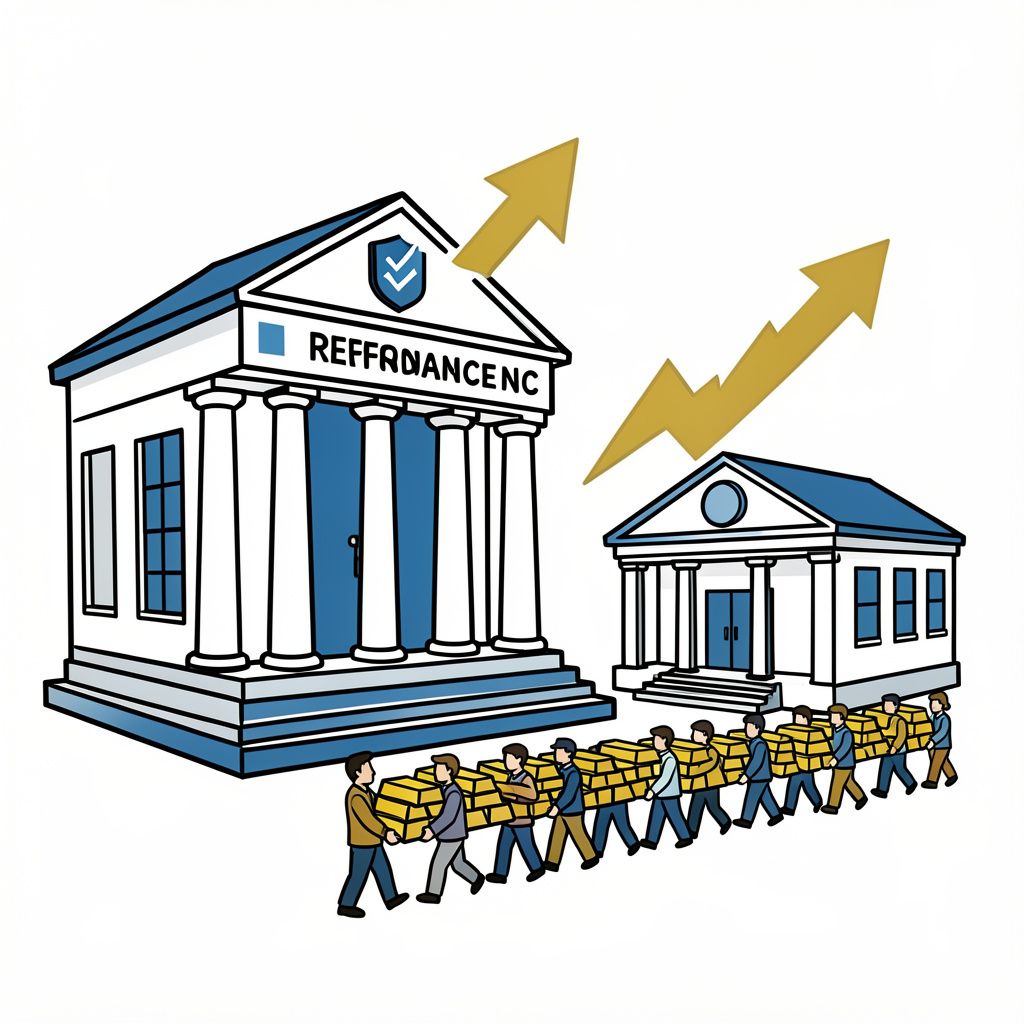
Wall Street giants are tumbling in performance rankings as regional lenders outperform, highlighted by JPMorgan falling to 49th place following massive client gold vault withdrawals totaling 105 metric tons.
JPMorgan’s Dramatic Slide in Bank Rankings
JPMorgan Chase & Co. (NYSE: JPM), the largest U.S. bank by assets, has plummeted to 49th place in the Q4 2026 banking rankings published by Whalen Global Advisors (WGA) on November 4, 2026 [1][2]. This marks a stark contrast to its historical dominance, with the institution dropping from the top 10 in 2025 to its current position among the top 100 banks [2]. The decline reflects broader struggles among Wall Street’s largest lenders, which are increasingly ceding ground to smaller regional competitors. Wells Fargo (WFC) ranked 27th, Bank of America (BAC) fell to 73rd, and Citigroup (C) ranked 81st in the same report [1][2].
Regional Banks Outperform as Institutional Investors Shift Focus
The underperformance of JPMorgan and other money-center banks is attributed to a confluence of factors, including elevated credit risk assessments, persistent interest rate volatility, and exposure to volatile financial markets [1]. Institutional investors and analysts are recalibrating portfolios away from large-cap banks, favoring regional lenders perceived as more agile and less exposed to systemic risks [1][2]. Christopher Whalen, Chairman of WGA, noted that despite strong Q3 2026 results for large-cap banks, the group continues to lag the broader market [1]. ‘None of the top seven depositories are in the top 25 stocks this quarter,’ Whalen observed, highlighting the disconnect between traditional banking metrics and market performance [1].
Gold Withdrawals Expose JPMorgan’s Balance Sheet Vulnerabilities
JPMorgan’s ranking decline coincides with a significant withdrawal of physical gold from its COMEX vaults in New York. In mid-to-late September 2026, clients withdrew approximately 3.7 million ounces (105 metric tons) of gold—representing 62% of the bank’s eligible vault holdings—raising questions about liquidity and client confidence [2][3][alert! ‘The report does not specify the reason for withdrawals, leaving potential implications speculative.’]. The withdrawals occurred amidst geopolitical tensions, including the start of the Iran war and concerns over hidden exposures to AI credit and gold markets [2]. While WGA emphasized that the withdrawals did not constitute a corporate trading or asset loss, the event underscored broader anxieties about risk exposure [2][alert! ‘WGA does not provide granular details on the profile of withdrawing clients or the timing of the withdrawals relative to market events.’].
Toronto-Dominion Leads the Pack as Traditional Banks Lag
At the top of the WGA rankings is Toronto-Dominion Bank (TD), which gained over 50% over the past year and trades at approximately 2.5 times its book value [1][2]. The bank’s outperformance starkly contrasts with the struggles of U.S. giants like JPMorgan, Bank of America, and Citigroup. Whalen attributed TD’s success to its exposure to sectors such as energy and consumer staples, which have remained resilient amidst market volatility [1]. Meanwhile, JPMorgan CEO Jamie Dimon has publicly defended the bank’s gold storage practices, asserting that the bullion is ‘protected by the Atlantic, the Pacific, the United States military, the rule of law’ [2]. Dimon made these remarks during an October 2026 appearance at the Economic Club of Chicago [2].
Regional Lenders Gain Traction Amidst Macro Uncertainty
The Q4 2026 WGA rankings reveal a broader trend: large-cap U.S. banks are failing to keep pace with their regional counterparts. Whalen Global Advisors’ analysis covers 102 banks, with the average stock price declining 0.56% over the 200 days preceding November 4, 2026 [1]. In contrast, Flagstar Bancorp (FLG) and State Street (STT) ranked among the top performers, reflecting a shift toward institutions with lower systemic risk profiles [1][2]. The rankings also highlight the challenges facing consumer lenders, with WGA exiting positions in several large-cap names in Q3 2026 and initiating short positions based on projected increases in consumer credit costs [1][2].