The Hidden Costs Threatening Europe's Multi-Billion Smart Meter Upgrade
Brussels, Wednesday, 4 November 2026.
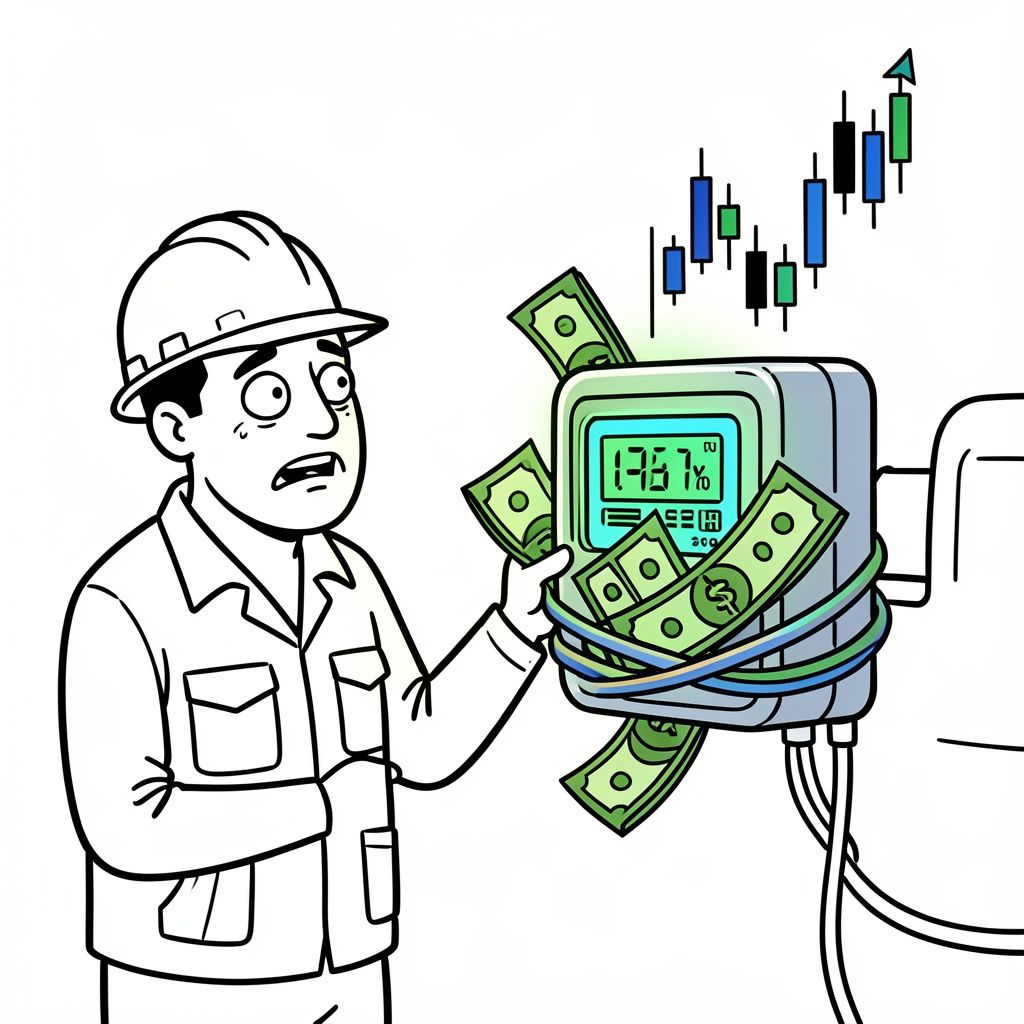
European governments are committing billions to smart grid modernization, yet critical blind spots in long-term connectivity costs and upcoming cellular shutdowns threaten to trigger massive, unforeseen budget overruns.
The Smart Meter Blind Spot: Where Europe’s Billions May Disappear
European governments have earmarked billions of euros for smart meter rollouts, but a critical oversight in connectivity infrastructure threatens to turn these investments into costly liabilities. According to a November 2026 analysis by Finnish wireless networking firm Wirepas, policymakers are making multi-decade, billion-euro decisions without the operational data required to assess long-term financial risks or infrastructure sustainability [1]. Teppo Hemiä, Wirepas’s CEO, warns that while Europe excels at tracking smart meter installations, the connectivity layer—often an afterthought—remains a black box [1]. This lack of visibility extends across the continent, from Germany’s regulated meter data charges of up to €140 annually to Poland’s exposure to 2G and 3G network shutdowns without a national view of replacement costs [1].
Government Targets vs. Operational Reality
The European Commission’s ambition to source 46% of the bloc’s final energy consumption from electricity by 2040—requiring an estimated €1.2 trillion in grid investments—highlights the scale of the challenge [1]. Yet, the Wirepas report reveals that Germany, despite spending up to €140 per meter annually on data transmission, lacks visibility into network closure risks, replacement costs, and gateway dependencies [1]. Similarly, France tracks meters and local data concentrators but lacks a shared 15-year cost view for connectivity amid rising loads from electric vehicles (EVs), solar panels, and heat pumps [1]. Great Britain, home to 39.2 million smart meters, has identified 12 to 13 million communication hubs at risk from the 2033 2G/3G shutdown but lacks visibility into replacement costs for 4G hubs [1][5]. Spain, meanwhile, understands its meter connections but lacks a shared view of lifetime connectivity costs per meter or alternative switching costs [1].
A Patchwork of Procurement Policies
The report underscores how national variations in procurement strategies exacerbate the problem. In Germany, only operators possess full insight into network timelines, while utilities see only their own gateways and contracts [1]. Poland tracks meters exposed to cellular network switch-offs but relies on mobile operators to determine closure timelines, leaving policymakers in the dark about replacement costs [1]. These inconsistencies create a fragmented landscape where central policymakers—tasked with meeting decarbonization targets—are forced to make high-stakes decisions without the complete data required [1]. Hemiä emphasizes that without a full view of connectivity costs and challenges, Europe risks locking itself into a ‘connectivity layer’ incompatible with future grid demands [1].
The Cost of Inaction: Billions at Risk
The stakes are underscored by the broader smart grid market, projected to grow at a compound annual growth rate (CAGR) of 18.5% between 2025 and 2033, from $52.8 billion to $211.5 billion [4]. This expansion is driven by aging infrastructure, renewable energy integration, and government decarbonization policies [4]. However, the Wirepas analysis suggests that without addressing connectivity blind spots, a significant portion of these funds could be misallocated. For instance, the €1.2 trillion grid investment target set by the European Commission assumes seamless integration of smart meters, yet the lack of data on connectivity costs and risks could lead to unforeseen expenditures [1][4]. In Germany alone, regulated meter data charges of €140 per year per meter—while providing some visibility—fail to capture the full scope of operational risks [1].
Technological Solutions on the Horizon
Amid these challenges, partnerships like the one between Thales and Landis+Gyr offer a potential lifeline. Announced on November 2, 2026, the collaboration integrates Thales’s eSIM technology into Landis+Gyr’s Revelo® and Surent® smart meter platforms, enabling utilities to adapt connectivity without hardware swaps [3]. Roque Martin, Senior Vice President of Connected Platforms at Landis+Gyr, highlights the need for flexibility, stating, ‘No utility wants to replace thousands of devices just because technology changes’ [3]. Thales’s eSIM subscription management technology supports over 450 mobile network operators and 200 original equipment manufacturers (OEMs), and the company holds GSMA eSA certification for SGP.32, a standard for remote SIM provisioning in IoT devices [3]. This approach could mitigate long-term risks by allowing utilities to switch networks or upgrade connectivity without costly field interventions [3].
Regulatory Shifts and Consumer Impact
The operational risks of smart meter deployments are further compounded by regulatory and structural challenges. In Great Britain, the control of the 39.2 million smart meters network was transferred from Smart DCC (a subsidiary of Capita) to a non-profit startup in November 2026, marking the end of a 13-year licence marred by delays, billing issues, and a £200,000 consumer redress fund agreement [6]. The transition follows years of spiraling costs and operational failures, including a regulator investigation into non-competitive procurement contracts [6]. Citizens Advice reported in 2024 that nearly a third of household smart meters were not working properly, and the government’s spending watchdog estimated £1.7 billion might be needed to complete the rollout, originally targeted for 2020 [6]. Capita’s market value plummeted by 97% between 2016 and 2026, reflecting the financial strain of these systemic issues [6].
The Road Ahead: Data-Driven Decision Making
To avoid repeating past mistakes, experts advocate for a more data-driven approach to smart meter connectivity. The EU-funded OPENTUNITY project, launched in 2023, is developing digital tools such as AI, data spaces, and flexibility management systems to support Europe’s energy transition [5]. Over the past year, the project tested innovations across pilot sites in Greece, Slovenia, Spain, and Switzerland, including an autonomous local flexibility market in Switzerland and smart charging in Slovenia [5]. Álvaro Nofuentes, the project lead, emphasizes the need to align technological advancements with end-user needs and social welfare [5]. However, the project’s final phase—currently underway—focuses on consolidating lessons learned and assessing conditions for wider deployment, leaving policymakers with a narrow window to integrate these findings into national strategies [5][alert! ‘OPENTUNITY’s data analysis and deployment recommendations are pending completion as of November 2026’]. Meanwhile, initiatives like the Wirepas analysis and Thales-Landis+Gyr partnership underscore the urgency of addressing Europe’s smart meter connectivity blind spots before they derail the continent’s energy transition.
Sources
- www.einpresswire.com
- wirepas.com
- www.eenewseurope.com
- www.linkedin.com
- cordis.europa.eu
- www.theguardian.com
- www.euronews.com
- www.facebook.com