Global Oil Giants Forge Historic Production Deals in Post-Maduro Venezuela
Caracas, Friday, 24 April 2026.
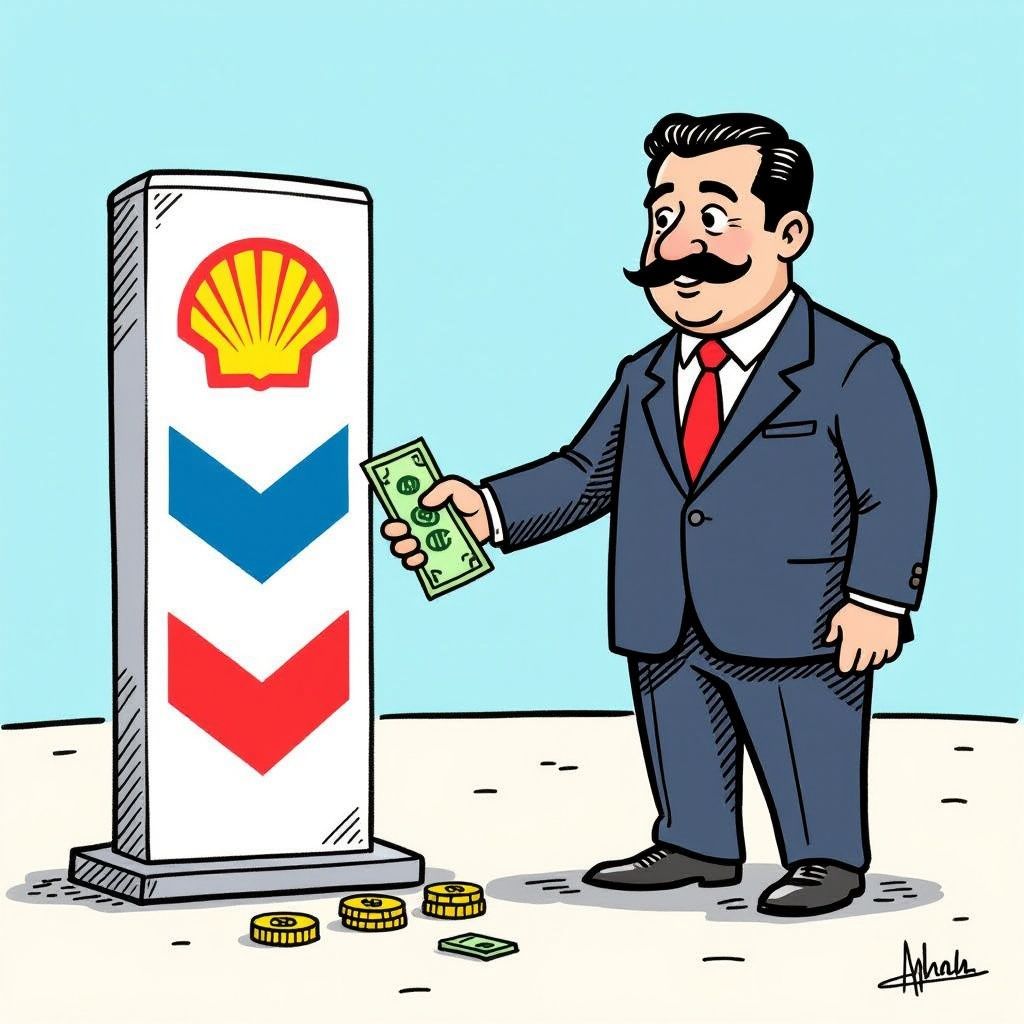
Following the January 2026 capture of Nicolas Maduro, Chevron and Shell are finalizing historic agreements to revitalize Venezuela’s energy sector, signaling a pivotal return of foreign corporate investment.
Legislative Reforms Catalyze Chevron’s Heavy Oil Expansion
The groundwork for this corporate resurgence was laid in late January 2026, when Venezuela’s National Assembly approved sweeping reforms to the nation’s oil legislation [1]. These critical changes granted foreign entities unprecedented autonomy to operate, export, and market Venezuelan crude, even when acting as minority partners to the state-run Petróleos de Venezuela, S.A. (PDVSA) [1]. Capitalizing on this legislative pivot, Chevron Corporation (CVX), a prominent component of the S&P 500 index [2], formalized an asset swap agreement with PDVSA on April 14, 2026 [2]. This strategic maneuver allows Chevron to consolidate and strengthen its heavy oil production capabilities within the region [3].
Shell Consolidates Natural Gas Assets Amid Regional Energy Integration
While Chevron deepens its crude oil footprint, Shell (SHEL) is concurrently restructuring its portfolio to prioritize natural gas extraction [3]. On April 16, 2026, Shell signed preliminary oil and gas agreements with Venezuelan authorities, notably coinciding with a visit to Caracas by United States Interior Secretary Doug Burgum [1]. Shell’s primary objective under these new frameworks is the development of the Carito and Pirital fields, situated in the Monagas North region [1]. Last month, the broader Punta de Mata area—which encompasses Pirital, Carito, and El Furrial—yielded approximately 94,000 bpd of crude and 29.1 million cubic meters of gas per day [1]. However, extraction inefficiencies remain a challenge, as 9.9 million cubic meters of that daily gas output was flared [1], representing a loss of 34.021 percent of the area’s total daily gas production [1].
Broader Economic Recovery and Ongoing Regulatory Hurdles
The impending agreements with Chevron and Shell are not isolated events but rather part of a broader, systemic revitalization of Venezuela’s energy sector. In February 2026, the Venezuelan government initiated a comprehensive review of all existing oil and gas projects, mandating updated documentation from participating foreign companies [1]. This regulatory housekeeping appears to be attracting additional industry heavyweights; oilfield services provider Halliburton has confirmed it is currently discussing commercial terms with clients to resume its operations within the country [5]. These corporate movements align with broader macroeconomic indicators, as Venezuela is currently demonstrating signs of economic recovery, bolstered by nearly two years of sustained growth [4] and a 10.5 percent climb in oil exports recorded in 2024 despite prior political turmoil [1].