Borrowing Costs for Homebuyers Reach Highest Level in Three Years
Washington, Sunday, 11 October 2026.
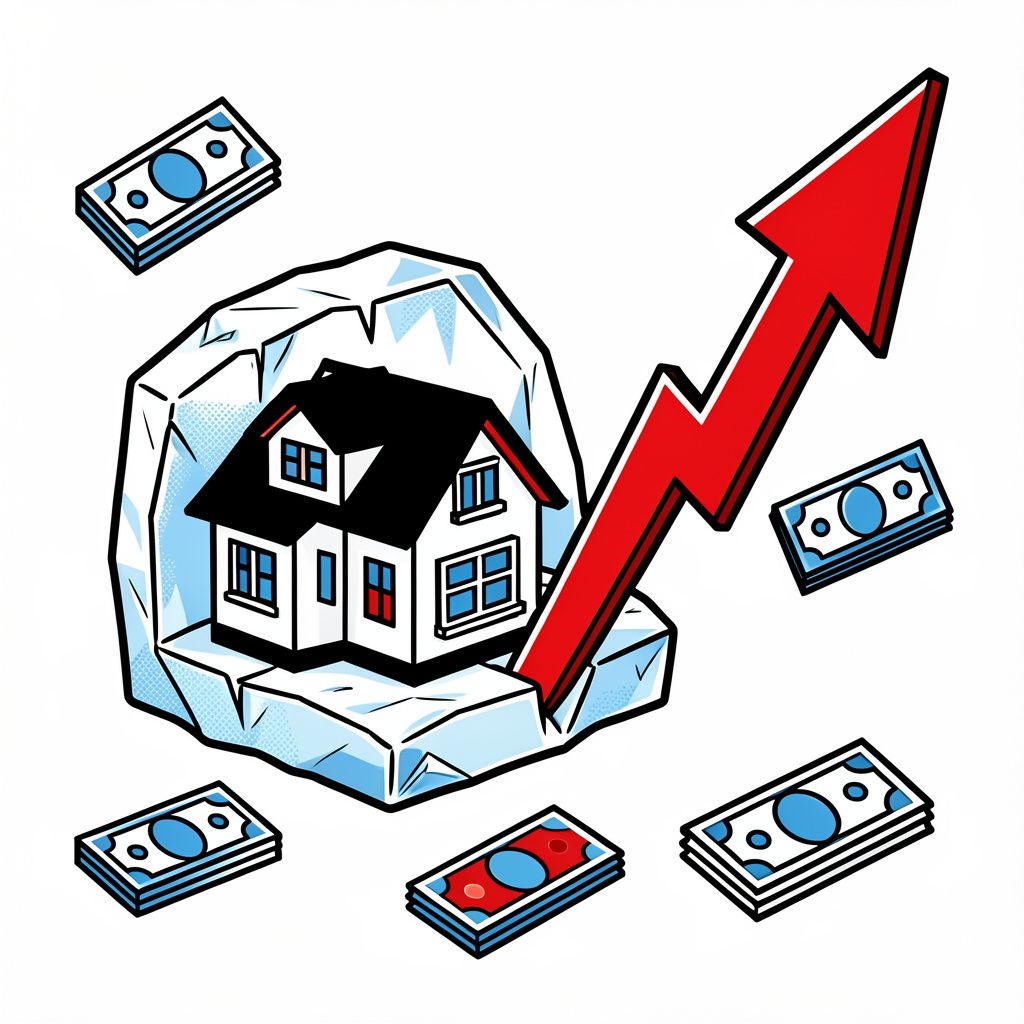
US home loan rates reached a three-year high of 7.4 percent in October 2026, causing refinancing demand to plunge 56 percent year-over-year as elevated borrowing costs freeze housing market activity.
Mortgage Rates Reach Three-Year High
The average 30-year fixed mortgage rate in the United States climbed to 7.4% in October 2026, marking the highest level since November 2023 [1][3]. Data released by Freddie Mac on October 8, 2026, indicates a rise from 7.28% in the prior week, standing well above the 6.3% level recorded a year ago [1][2]. This increase represents a year-over-year jump of 17.46 percent in borrowing costs [6][7]. The sharp rise in rates continues to pressure the domestic housing sector, posing broader implications for consumer spending as elevated yields maintain strain on debt financing [1][3].
Housing Market Activity Declines
For the week ending October 9, 2026, the Mortgage Bankers Association reported total mortgage application volume fell 4.2% from the previous week [1][4]. Purchase applications declined 2% weekly and 15% year-over-year, while refinancing applications dropped 8% weekly and 56% compared to the same period in 2025 [1][4]. The Adjustable-Rate Mortgage share of total applications held steady at 10.3% as of the week ending October 3, 2026, significantly higher than the sub-3% share recorded during the early pandemic period [1]. Existing home sales in August 2026 fell 2% from July 2026 to a seasonally adjusted annual rate of 3.98 million units, the slowest pace in over a year [7].
Treasury Yields and Economic Drivers
On October 8, 2026, the 10-year Treasury yield opened at 5.32%, compared to 4.14% one year prior, driven by concerns over inflation and the federal deficit [2]. As of October 9, 2026, the 10-year Treasury note dipped to 5.26%, creating a spread of 2.14% against the 30-year fixed-rate mortgage [4]. Consumer inflation is currently estimated at 3.5% to 4%, with the Federal Reserve expected to maintain aggressive tactics to curb it [4][7]. The Federal Reserve’s current target interest rate range is between 3.75% and 4.00%, which directly increases borrowing costs for banks [5].
Historical Context and Payment Impact
In late February 2026, 30-year mortgage rates were 5.98%, resulting in a monthly payment of $2,991 on a $500,000 loan, compared to a $3,421 monthly payment at a 7.28% rate [3][7]. The increase from the February 2026 low of 5.98% to the current 7.4% adds approximately $376 per month to the cost of a $400,000 home loan [7]. Historic peaks for 30-year fixed-rate mortgages include over 16% in the early 1980s and a recent peak of 7.79% in late 2023 [3][6]. The average since 1971 is 7.69%, with the high recorded at 18.63% on October 9, 1981 [6].
2027 Outlook and Buyer Strategies
A HousingWire survey of mortgage lender executives conducted on October 1, 2026, found that 70% of respondents expect mortgage rates to remain at or above 7.5% in 2027 [2]. The Federal Open Market Committee has signaled a potential 0.25% interest rate hike before the end of 2026 [2]. Financial strategies to mitigate high mortgage costs include purchasing condominiums, considering 15-year mortgage terms, and utilizing rate buydowns [2][5]. A Bankrate study indicates that failing to shop around for mortgage rates results in an average loss of $78,000 over the life of a loan [3].
Sources
- www.einpresswire.com
- finance.yahoo.com
- www.wsj.com
- journal.firsttuesday.us
- www.noradarealestate.com
- www.macrotrends.net
- www.oregonlive.com
- www.facebook.com