Donald Trump Asks Supreme Court to Reopen Dismissed Hillary Clinton Lawsuit
Washington, Saturday, 10 October 2026.
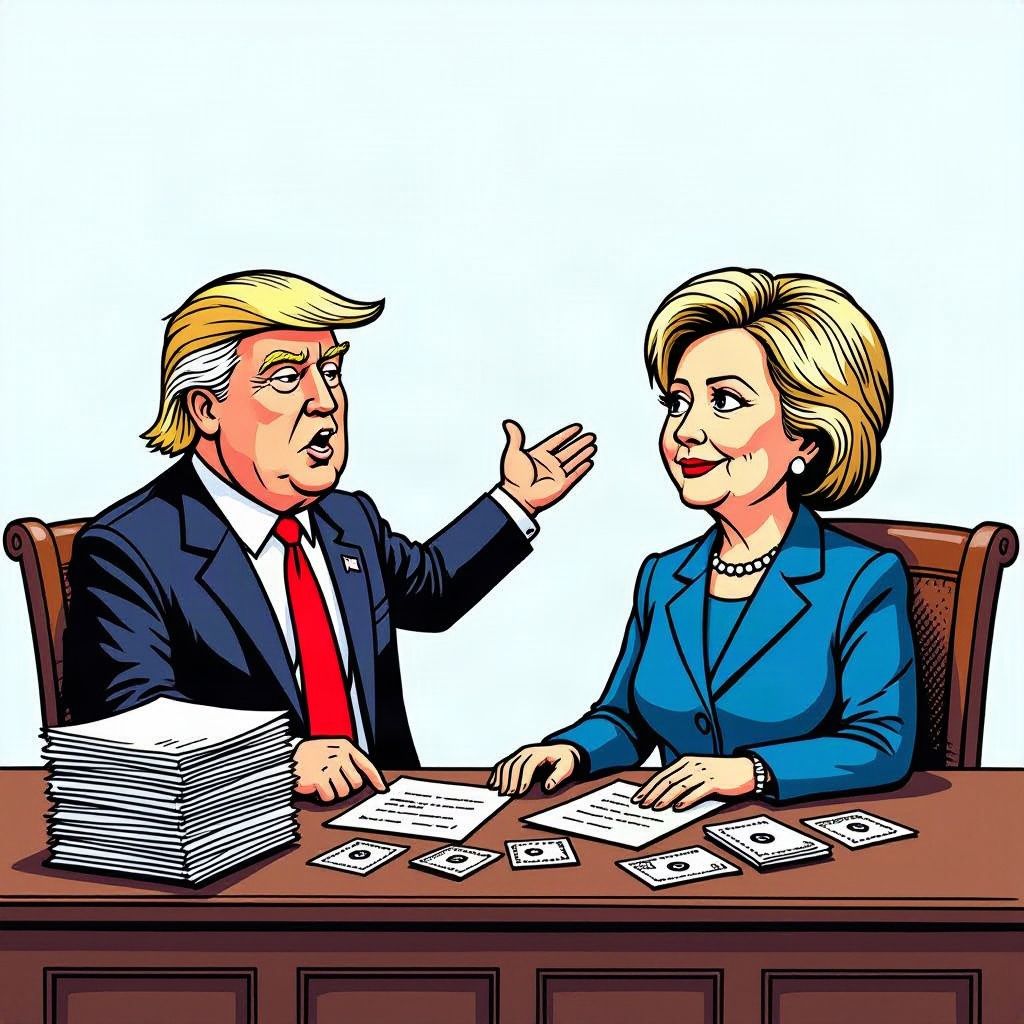
Donald Trump requested the Supreme Court revive his dismissed 2016 election lawsuit against Hillary Clinton, challenging nearly $1 million in court-ordered sanctions for filing a case lower courts labeled frivolous.
Supreme Court Petition Filed
On Friday, 9 October 2026, President Donald Trump formally requested the U.S. Supreme Court to reinstate a federal lawsuit against former Democratic presidential nominee Hillary Clinton and several associates [1][3]. The petition asks the justices to review previous rulings that dismissed the case, bringing long-standing political legal battles back to the highest court [1]. This move signals a continued focus on legal strategies surrounding national elections, occurring just one day before the current date of 10 October 2026 [1][4]. The lawsuit originally alleged a conspiracy to create false ties between Trump’s campaign and Russia during the 2016 presidential election [1][3]. By appealing to the Supreme Court, the President is challenging lower federal courts that previously concluded the claims were “frivolous” [1][2]. The Supreme Court will likely decide later this year whether to hear the case, marking a critical juncture in this decade-long legal saga [1].
Litigation History and Sanctions
The underlying lawsuit was initially filed in 2022 against Clinton, the Democratic National Committee, and dozens of other entities [1][3]. A federal district court dismissed the suit and ruled that Trump’s attorneys were liable for nearly $1 million in sanctions [1][3]. Specifically, Judge Donald Middlebrooks of the Southern District of Florida ordered Trump and attorney Alina Habba to pay $938,000 in legal fees and sanctions for filing in “bad faith” [3][4]. The Atlanta-based 11th U.S. Circuit Court of Appeals largely upheld that decision in 2025, noting that many legal arguments were indeed frivolous [1][3]. The time elapsed since the original filing is calculated as 4 years, highlighting the prolonged nature of this litigation [1][4]. Trump’s appeal argues that presidential responsibilities warranted postponing the civil suit until after his term, a theory the district court erroneously rejected according to his attorneys [1][3].
Political Context and Implications
This legal revival occurs against a backdrop of midterm election concerns, with 84% of registered voters identifying the economy as a “very important” issue [4]. Recent polling from 8 October 2026 indicates a 30% approval rating for President Trump, with Democrats holding an eight-point lead in congressional voting preferences [4]. Critics, including Judge Middlebrooks, have described the lawsuit as a “two-hundred-page political manifesto outlining his grievances against those that have opposed him” [3][4]. Conversely, Trump’s legal counsel argues there is a “deeply troubling trend of federal courts using sanctions and disciplinary threats to punish the president” [4]. The outcome may influence public perception regarding the judiciary’s role in political disputes leading into the midterms [4]. Ultimately, the case remains a focal point for discussions on accountability and the limits of presidential litigation [1][3].