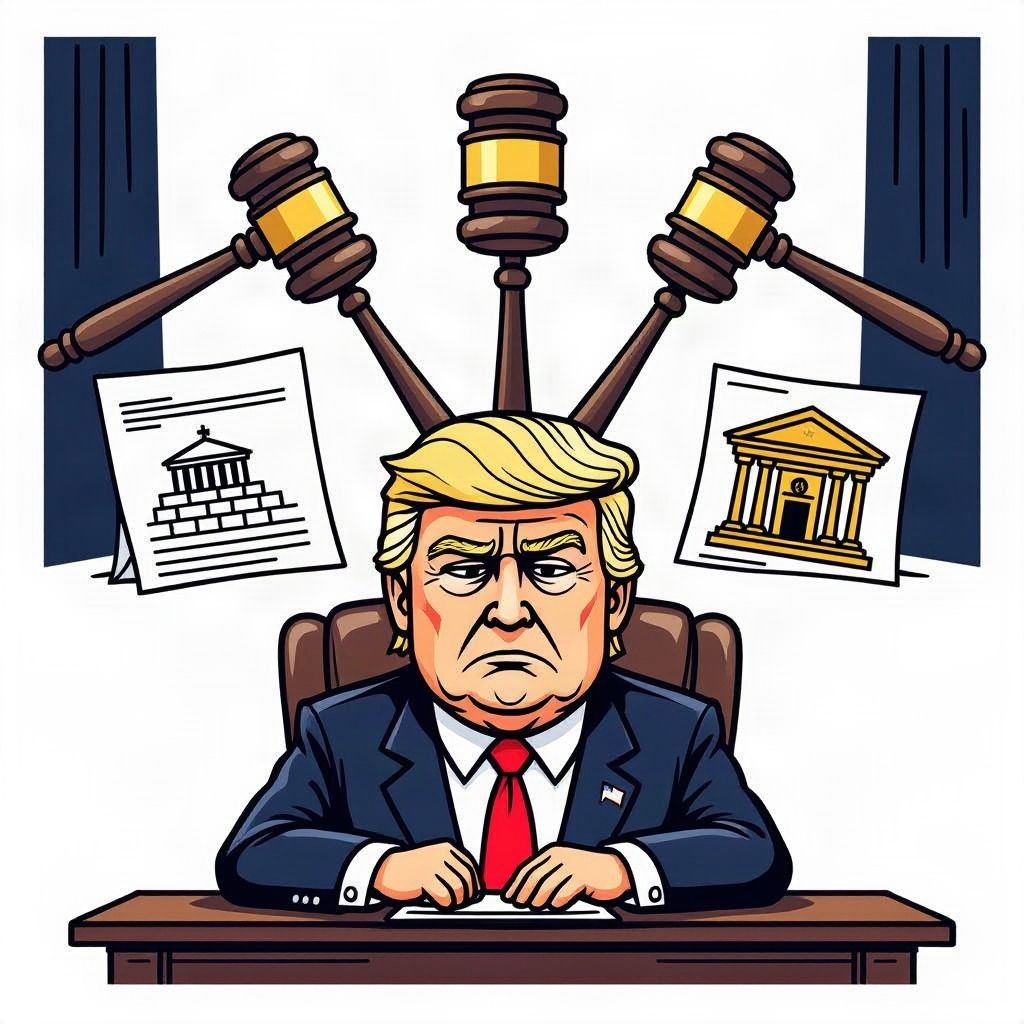
President Trump Expresses Frustration as Supreme Court Limits Executive Power
Washington, Tuesday, 6 October 2026.
Despite siding with the administration in most major cases, conservative Supreme Court justices have repeatedly blocked key presidential policies on tariffs, immigration, and Federal Reserve independence.
Judicial Alignment and Expectations
Statistical data from the previous term indicates significant alignment between the Trump administration and his appointees despite recent high-profile divergences [5]. Justices Gorsuch and Kavanaugh sided with the administration in 6 of 7 argued cases, while Justice Barrett sided with the government in 5 of 7 cases [5]. This alignment rate calculates to approximately 85.714% for Gorsuch and Kavanaugh [5]. Legal experts suggest the expectation of a rubber stamp was a fundamental misunderstanding of the judicial role [5].
Upcoming Court Term and Immigration
The Supreme Court commenced its new term on Monday, 5 October 2026, with a docket featuring multiple challenges to President Trump’s immigration agenda [4]. In the week prior to 3 October 2026, the Court added two major administration appeals concerning immigration policies to their docket [4]. Decisions on the legality of mandatory detention policies and due process rights for migrants are expected by summer 2027 [4].
Economic and Political Implications
The friction between the executive branch and the judiciary creates uncertainty for markets relying on policy predictability [5]. While US economic growth continues, voter anxiety regarding artificial intelligence and affordability drives political dynamics independent of judicial outcomes [5]. If Democrats win control of the U.S. Senate in November 2026, confirming future judicial nominees would face increased difficulty [1].
Sources
- financialpost.com
- www.ft.com
- www.pbs.org
- thehill.com
- www.ft.com
- www.linkedin.com
- www.facebook.com
- www.linkedin.com