AI-Generated Resumes Are Overwhelming Employers and Breaking the Hiring Process
Austin, Monday, 21 September 2026.
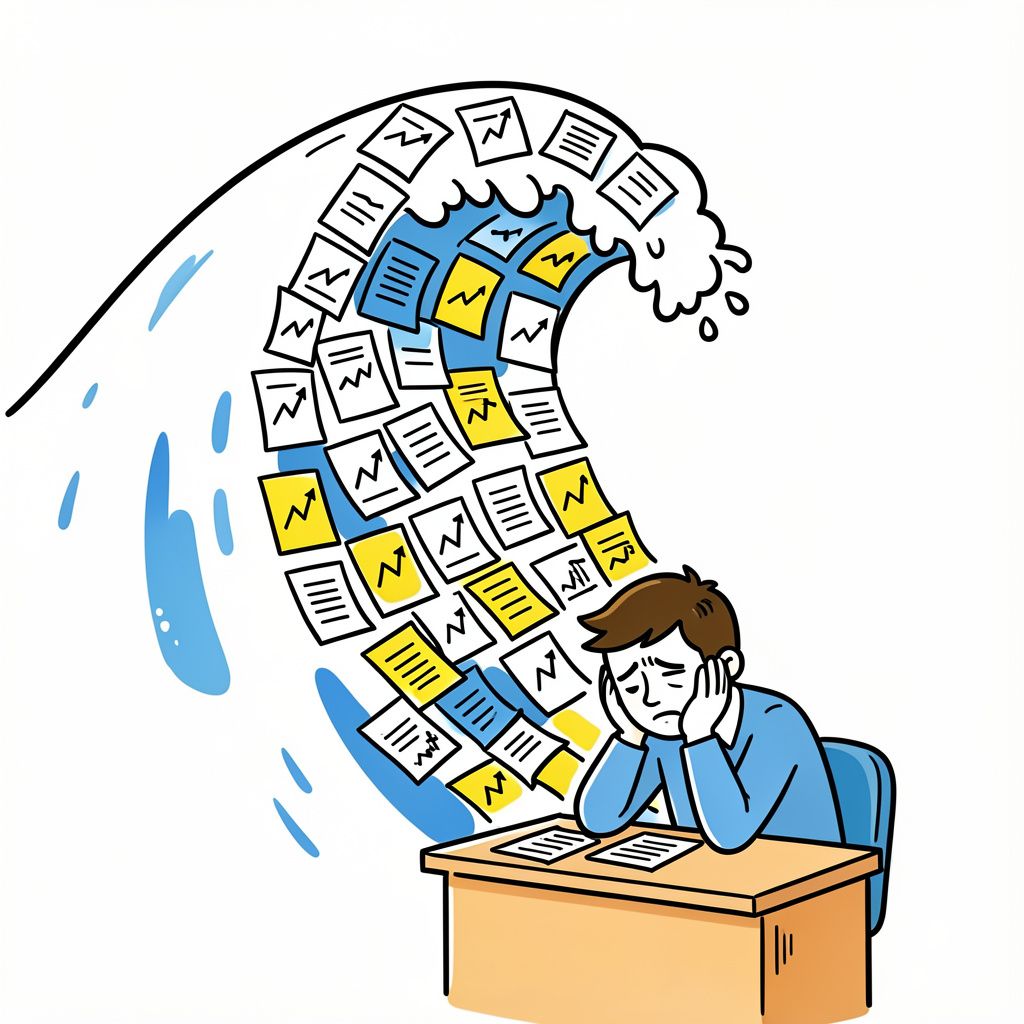
Job applications surged 111% while recruiting staff fell 56%, creating an automated hiring bottleneck where AI-generated resumes flood employers, leaving qualified candidates overlooked.
Market Friction Intensifies
On September 21, 2026, Hisayuki Idekoba, CEO of recruitment platform Indeed, warned that the corporate labor market faces severe friction due to an overwhelming influx of artificial intelligence-generated resumes and fraudulent applications [1]. As candidates utilize automated tools to submit hundreds of applications simultaneously, hiring managers are struggling to process candidates, leaving qualified workers unreviewed and creating a bottleneck across enterprise talent acquisition channels [1]. This disruption marks a critical point where the efficiency gains promised by AI are being offset by the noise generated within the system itself.
Data indicates that between 2022 and 2025, applications per job increased by 111%, while the number of recruiters decreased by 56%, creating a “vicious cycle” where job seekers face ghosting at a three-year high [1]. Indeed and Greenhouse CEOs acknowledge this “doom loop” where both employers and job seekers are increasingly unhappy with the automated, high-volume recruitment process [1]. The divergence in volume versus capacity suggests a significant strain on human capital resources, with the gap between application volume and processing capability widening considerably over the observed period.
The AI Doom Loop
Former Indeed CEO Chris Hyams, speaking on September 19, 2026, stated that his departure from the company was motivated by concerns over how AI is being deployed, rather than a lack of faith in the technology itself [3]. Hyams noted that during his tenure, he felt constrained in expressing personal views on AI policy to ensure the economic survival of the company, highlighting internal tensions regarding the pace of automation [3]. He emphasized that the risk does not come from the tech, but from those responsible for driving it, contrasting responsible leaders with those pushing a utopian narrative without necessary regulation [3].
Daniel Chait, CEO of Greenhouse, described the situation as the first time when really both sides have been unhappy, stating the market just isn’t working for either side [1]. Chait identified an “AI doom loop” in recruitment, where AI-generated applications create a system-wide degradation in hiring efficiency [1]. Everyone is using their own AI to solve their own problem, but it is making the whole system worse, according to industry leaders observing the trend [1].
Corporate Countermeasures
In response to these challenges, Indeed launched “Career Scout” for job seekers and “Talent Scout” for employers on September 10, 2025 [2]. Indeed claims “Career Scout” users apply to relevant jobs 7 times faster than standard app users and are 38% more likely to be hired, aiming to restore signal amidst the noise [2]. The company is also developing verification tools for phone numbers, employer emails, and professional licenses to combat application fraud [2].
However, implementation has faced hurdles; on August 4, 2026, Indeed paused the automatic submission mode of “Apply For Me,” requiring job seekers to review every application manually before submission due to concerns regarding automated application volume and recruiter trust [2]. In July 2026, Indeed tested “Apply For Me,” an AI feature designed to draft and submit job applications with guardrails like submission caps and inactivity pauses, but accuracy complaints necessitated the pause [2]. Community discussion suggests that adding a matching layer does not fix the signal-to-noise ratio, and verification might help more than matching to solve for the real problem of knowing if a human is on the other end [4].
Economic Implications
The broader economic impact includes qualified workers remaining unreviewed and potential productivity losses due to hiring bottlenecks. Indeed currently processes 350 million job seekers and 30 million jobs monthly, creating a theoretical ratio of seekers per job that highlights the scale of competition [5]. The calculated ratio of job seekers to available jobs on the platform is approximately 11.667, illustrating the intense competition for each opening [5]. This imbalance exacerbates the difficulty for legitimate candidates to stand out.
Looking forward, Chris Hyams predicted that the next three years will be like 30 years’ worth of change in the job market, requiring rapid adaptation from workers [6]. Hyams noted that generative AI will not completely replace jobs in the next 1–2 years but will radically change most roles within the next year, requiring employers to prioritize hiring candidates with curiosity and willingness to learn [5]. As companies attribute layoffs to AI regardless of the actual cause, the labor market continues to navigate this period of significant transformation and uncertainty [3].