Youth Demonstrations Over Rising Living Costs Descend Into Violent Clashes Across Major German Cities
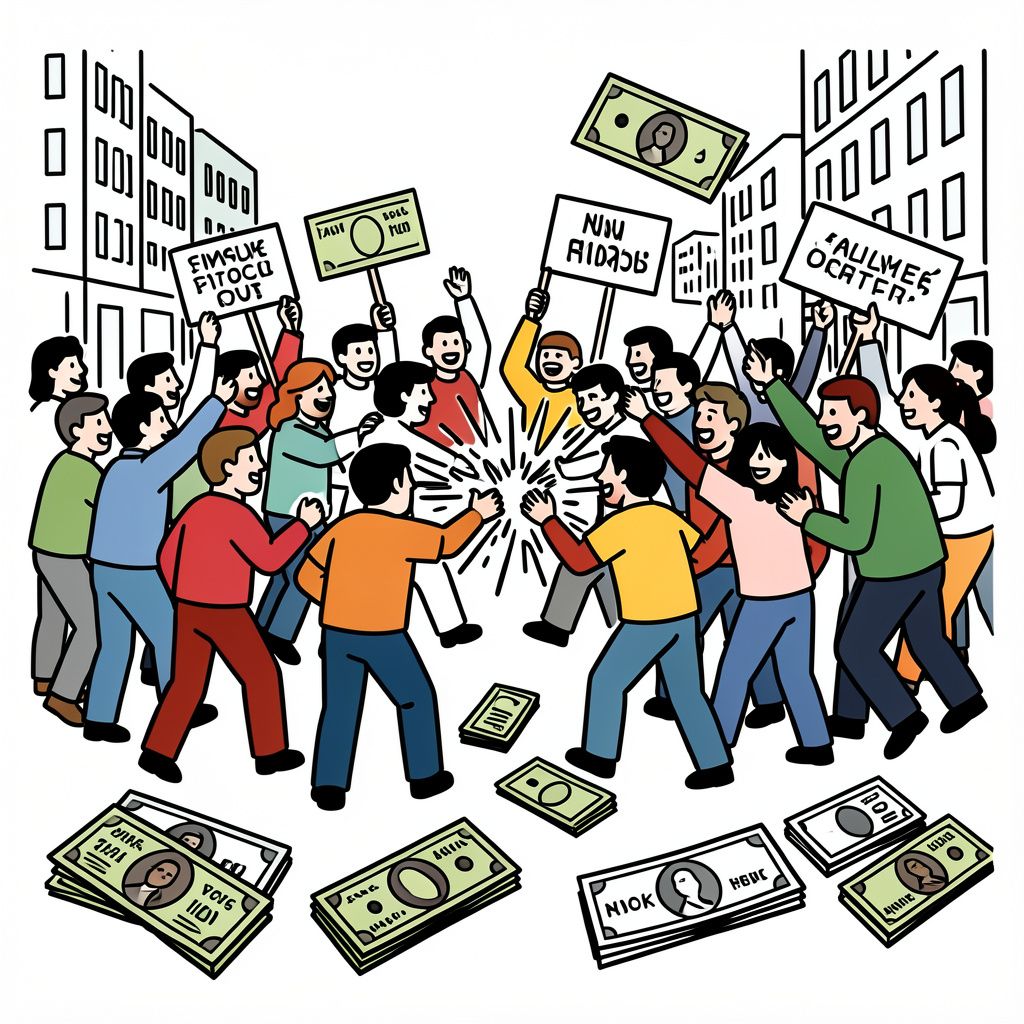
Berlin, Sunday, 1 November 2026.
Tens of thousands protested rising living costs across Germany yesterday, but demonstrations escalated into violent riots and store looting, including weapons seized from a Frankfurt shop amidst broader European economic unrest.
A Weekend of Unrest: Protests Turn Violent in Germany
Tens of thousands of demonstrators took to the streets across Germany on Saturday, 31 October 2026, as part of nationwide protests organized by the youth-led movement ‘Gen Z regelt’ to voice frustrations over escalating living costs, underfunded public services, and the federal government’s military conscription plans [1][2][3][4][5]. While the afternoon marches in cities including Berlin, Frankfurt, Munich, Hamburg, and Cologne began peacefully, the demonstrations devolved into chaos after dark, with rioters smashing storefronts, hurling Molotov cocktails, and looting retail establishments. In Frankfurt’s central shopping district, rioters targeted Die Zeil, a major commercial thoroughfare, where at least two stores were looted and multiple windows shattered before authorities sealed off the area and evacuated bystanders [1][2][5].
Escalation in Frankfurt: Weapons Seized and Critical Infrastructure Targeted
The situation in Frankfurt intensified when masked assailants broke into a firearms specialty shop near the city’s central train station, prompting a heightened security response from Hesse state authorities. Local police reported seizing two weapons and multiple suspects during the night, while emergency services faced coordinated attacks involving fireworks, stones, and bottles [1][3]. State Interior Minister Roman Poseck condemned the infiltration of the protests by around 100 left-wing extremists, describing their actions as deliberate attempts to destabilize public order. ‘We all have those images from France in our minds—looting, burning houses, burning police vehicles, and attacks on police officers,’ Poseck stated. ‘France must not be held up as a model in this regard.’ [1][3]
Police Response and Civil Unrest Across Major Hubs
Authorities deployed water cannons and pepper spray in an attempt to disperse crowds in Frankfurt and Cologne, where rioters erected burning barricades and hurled projectiles at law enforcement officers, resulting in multiple injuries and at least 30 provisional arrests in Frankfurt alone [3][5]. In Berlin, 27 police officers were lightly injured during clashes near Rosenthaler Platz, where up to 3,500 protesters gathered before the scene deteriorated. A separate peaceful rally at the Brandenburg Gate, involving up to 5,000 participants, remained largely orderly, highlighting the sharp contrast between organized demonstrations and the subsequent violence [6]. Police confirmed 56 arrests citywide and warned that extremist elements had hijacked the event’s original intent, with authorities remaining on high alert through Halloween night [6].
Broader European Context: Protests Spread Amidst Deepening Economic Crisis
Germany’s unrest unfolded in parallel with France’s third consecutive weekend of mass demonstrations, where over 320,000 protesters rallied in cities including Paris, Toulouse, Lyon, and Marseille, leading to 511 arrests and the deployment of tear gas [1][5]. The cross-border synchrony of the protests underscores a shared crisis of affordability and public service funding across core Eurozone economies, with similar unrest reported in Italy, Portugal, Belgium, Spain, Greece, Serbia, and Albania [1][5]. In Portugal, house prices have more than doubled over the past decade (2016–2026), exacerbating housing affordability concerns and fueling discontent among young and middle-class populations [1][5]. Analysts warn that the sustained protests—amplified by coordinated youth mobilization—signal eroding consumer confidence and growing instability in Western Europe’s economic powerhouses [4][GPT].
Movement’s Origins and Future Mobilizations
The ‘Gen Z regelt’ initiative, which organized the protests, initially projected participation of 182,000 across 34 cities but revised its estimate downward to 120,000, while police reported a combined turnout of 18,000 in Berlin, Frankfurt, and Munich—half of the organizers’ revised figure [2][4]. The movement’s demands center on increased funding for education and healthcare, opposition to mandatory military service, and immediate measures to address inflation and housing affordability [2][4]. Despite condemning the violence, the initiative’s spokesperson Lina Friedrich acknowledged limited influence over events post-demonstration, stating, ‘What matters most to us is better support for the health and education systems. We are against compulsory military service and we are in favour of a fairer distribution of the burden.’ [1] The group has announced plans to participate in a pan-European mobilization on 20 November 2026, signaling the potential for further unrest [3][5].
Sources
- www.bbc.co.uk
- www.ndtvprofit.com
- www.radiokw.de
- www.radiohagen.de
- www.handelsblatt.com
- business-panorama.de
- www.derstandard.de