US Consumer Confidence Drops to Seven-Month Low Over High Fuel Costs and Economic Uncertainty
Washington, Tuesday, 25 August 2026.
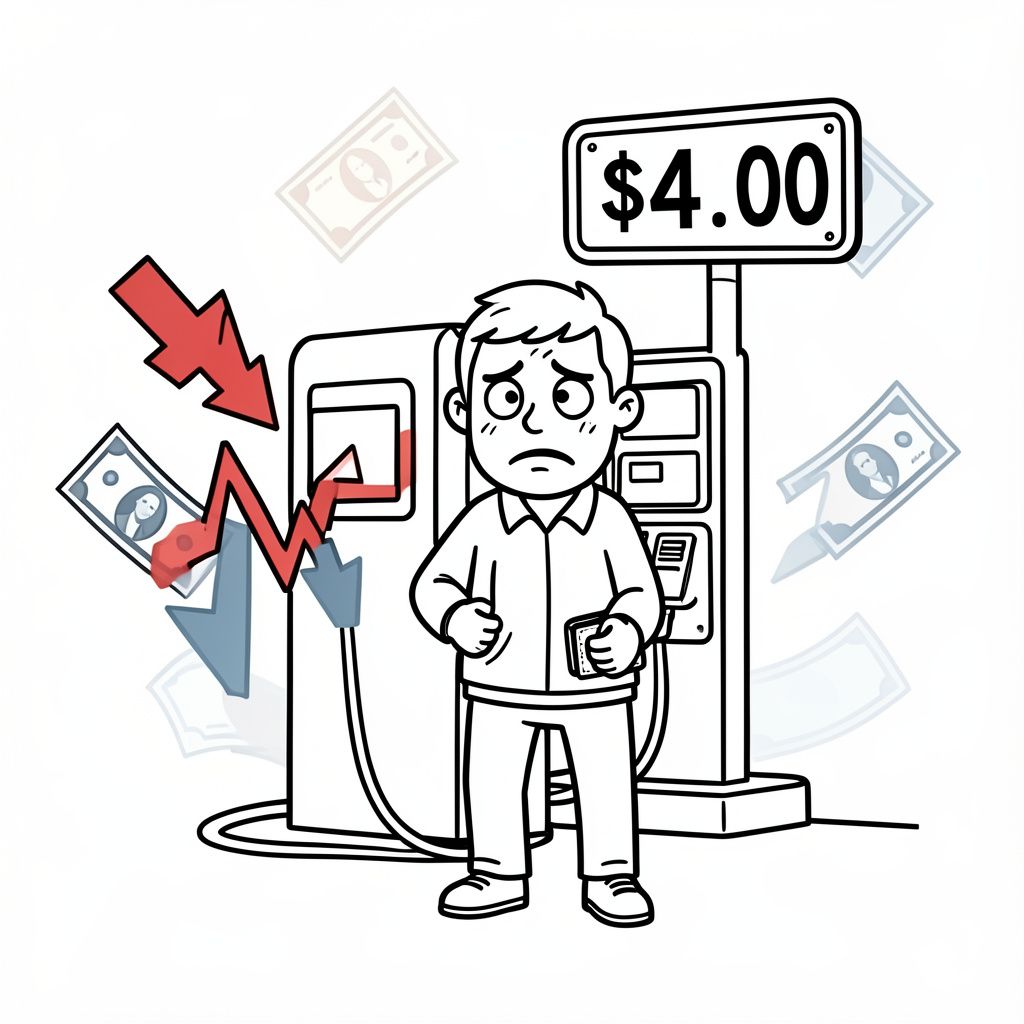
US consumer confidence fell to 89.4 in August 2026 as sustained gasoline prices above $4 per gallon and future labor concerns eroded economic expectations despite current job market stability.
Consumer Confidence Index Declines Amid Fuel Price Pressures
The Conference Board reported on Tuesday, 25 August 2026, that its Consumer Confidence Index decreased to 89.4 in August, down from 90.2 in July [1][2]. This decline represents a percentage drop of -0.887 in the headline index, marking the lowest level in seven months [2][3]. The decrease is primarily attributed to sustained gasoline prices remaining above $4 per gallon, driven by ongoing geopolitical tensions in Iran [2][4]. While the headline number slipped, the reading remains within the lukewarm range observed since the beginning of the year, contrasting with readings consistently above 100 in late 2024 and early 2025 [2][4].
Divergence Between Present Conditions and Future Expectations
A significant dichotomy exists within the data, as the Present Situation Index rose 6.8 points to 121.2, indicating improved perceptions of current business and labor conditions [1][5]. Conversely, the Expectations Index declined 5.8 points to 68.2, driven by pessimism regarding business conditions and the labor market for the next six months [1][5]. Net expectations for business conditions dropped 2.5 percentage points to –6.3%, while net expectations for the labor market softened by 2.6 percentage points to –11.5% [1]. This split suggests consumers feel secure in their immediate economic environment but harbor significant concerns about the near-term future [5].
Inflationary Pressures and Geopolitical Impact
Americans remain frustrated with the economy after five years of elevated inflation, with write-in responses highlighting concerns over prices, specifically oil and gas [2][4]. The Federal Reserve’s preferred inflation gauge, the personal consumption expenditures (PCE) price index, was up 3.7% in June from a year earlier [2][4]. This figure is up from 2.8% before the Iran war began on 28 February 2026, and stands higher than the 2.5% rate recorded when President Trump was inaugurated in January 2025 [2][4]. The ongoing conflict continues to push U.S. gasoline prices above $4 per gallon, contributing to the sustained cost-of-living pressures weighing on household budgets [2][4].
Labor Market Stability Versus Outlook
Consumers’ views of the current labor market improved in August, with 27% saying jobs were plentiful, up from 24.4% in July [1][4]. However, respondents were more negative about the labor market over the next six months, with just 14.6% expecting more jobs to be available, down from 16.4% last month [2][4]. This caution persists despite the unemployment rate falling to 4.1%, a decrease attributed partly to individuals dropping out of the labor market rather than net job creation [4][8]. With midterm elections fewer than 70 days away, these economic sentiments pose potential political risks as households navigate persistent inflation and uncertain job prospects [2][4].