U.S. Offers Financial Lifelines to Gulf Nations to Counter Chinese Currency Threat
Washington, Wednesday, 6 May 2026.
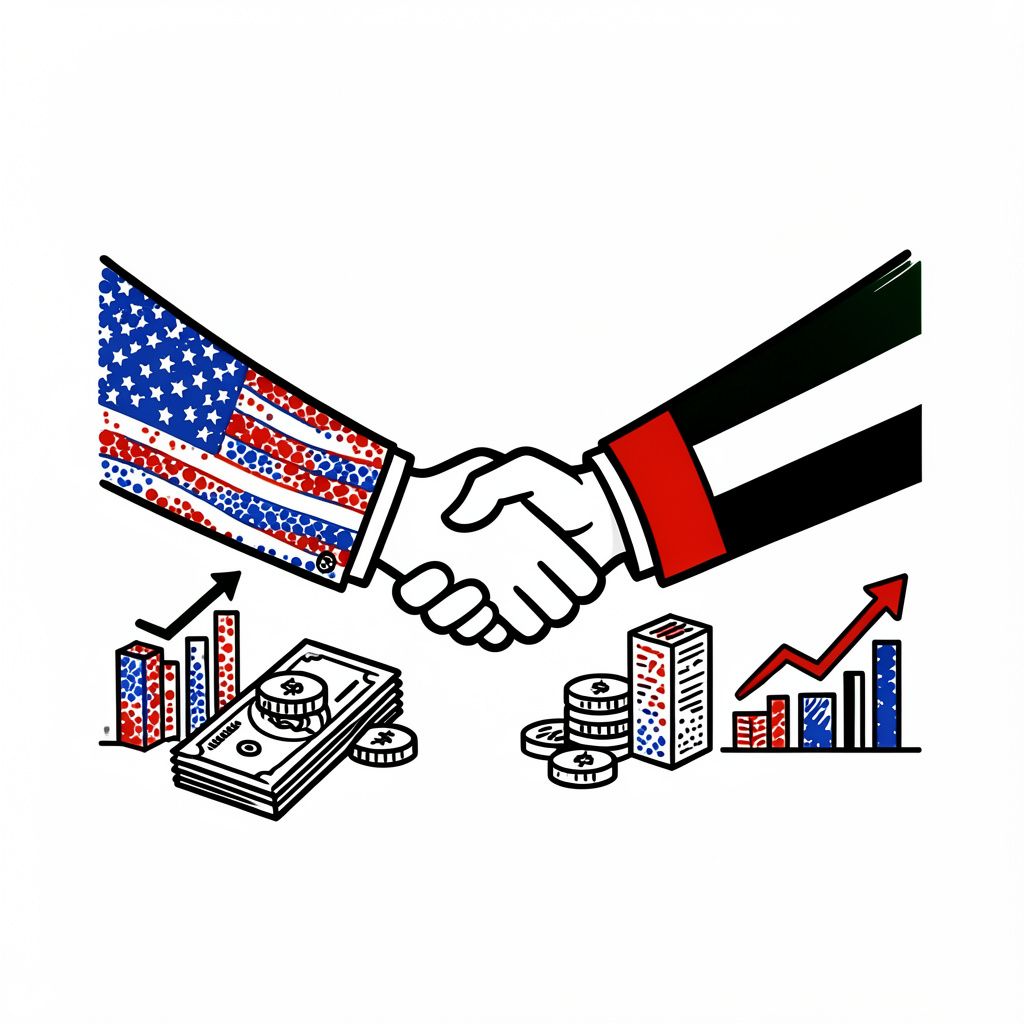
To counter China’s financial influence, the U.S. is offering currency swap lines to Gulf nations like the UAE, which recently exited OPEC amid severe Iran war trade disruptions.
The Geopolitical Catalyst: War and the Strait of Hormuz
The ongoing war with Iran has severely disrupted the Strait of Hormuz, a critical maritime chokepoint responsible for the transit of over 20% of the world’s oil and gas traffic [2]. This closure has triggered a sharp spike in domestic gasoline prices and drawn the United States into a highly complex strategic standoff [3]. The financial toll is compounding rapidly; Senator Chris Van Hollen recently noted that the conflict is costing the U.S. over a billion dollars a day—amounting to roughly 7 billion per week—while everyday consumers feel the economic squeeze [2]. For Gulf nations, the macroeconomic fallout has been acute. Despite its vast sovereign wealth, the United Arab Emirates (UAE) has much of its capital locked in long-term investments, creating an immediate liquidity crisis amid the energy disruptions [2]. Reports indicate that the UAE’s reserves have depleted by a staggering $120 billion [2]. Consequently, on April 23, 2026, the UAE announced its departure from the OPEC and OPEC+ cartels, a move that officially took effect on May 1, 2026 [1][2]. This exit signals a desperate need for oil production flexibility and a pivot toward closer financial alignment with the United States [2].
Deploying the Dollar Lifeline
In response to this regional instability, the Trump administration has activated a powerful economic countermeasure. U.S. Treasury Secretary Scott Bessent is currently extending permanent dollar swap lines to Gulf and Asian allies [1]. These financial instruments allow foreign central banks to exchange their domestic currencies for U.S. dollars, providing crucial liquidity during systemic crises [2]. Bessent confirmed that “many” American allies are requesting these arrangements to “maintain order in dollar funding markets” [2]. For Washington, extending these lifelines is a strategic imperative designed to prevent distressed Gulf nations from liquidating their massive holdings of U.S. assets, which could destabilize domestic markets [2]. Interestingly, this geopolitical maneuvering coincides with private financial entanglements; the Trump Organization is expanding its real estate footprint in Dubai, with Gulf-linked funds investing billions into ventures connected to the Trump family [2].
Counterpunching China’s De-Dollarization
This financial diplomacy serves a critical dual purpose: neutralizing Beijing’s decade-long campaign to unseat the U.S. dollar in global energy markets [1]. The U.S. dollar has functioned as the global economy’s primary reserve currency since the end of World War II [GPT], but China’s efforts have steadily eroded American financial hegemony. Today, the dollar’s share of global foreign exchange reserves has slipped to approximately 57%, marking the lowest level recorded since 1994 [1]. Beijing’s strategy gained significant traction in recent years; in November 2023, the People’s Bank of China and the Saudi Central Bank signed a $7 billion currency swap agreement, and by June 2024, Saudi Arabia joined mBridge, a cross-border digital currency platform led by China and the Bank for International Settlements [1]. To put the U.S. counter-strategy into perspective, the $20 billion swap line Washington provided to Argentina in 2024 is 185.714 percent larger than the 2023 Saudi-China agreement, highlighting the sheer scale of American financial firepower being deployed [1][2].
Reshaping Global Oil Settlements
By offering these massive swap lines, Washington presents the UAE and its neighbors with a stark choice: accept a robust dollar lifeline or hedge their economies with the Chinese yuan [1][2]. While some critics, such as Brazilian economist Paulo Nogueira Batista Jr., argued in a May 3, 2026 debate that political distrust makes the U.S. the dollar’s own worst enemy [4], current market dynamics suggest the administration’s strategy is succeeding. The combination of the UAE leaving OPEC for U.S. swap lines, Venezuelan oil flowing through American companies, and Asian refiners purchasing U.S. crude is pulling the global oil trade firmly back toward dollar settlement [1]. With Asia’s April 2026 crude imports tracking at their lowest levels since 2016, massive tankers are now arriving empty at ports in Texas, Louisiana, and Alaska specifically to load American oil [1]. Moving forward, financial markets will closely monitor whether other Gulf states, including Saudi Arabia, Qatar, and Kuwait, engage the U.S. Treasury for similar swap lines [1]. Ultimately, while the immediate liquidity crisis may be averted, it remains to be seen if these financial instruments will permanently halt the Gulf’s gradual pivot toward Asian markets [alert! ‘Long-term geopolitical alignments in the Middle East remain highly fluid and subject to shifting trade dependencies’].