Why Gas Prices Aren’t Falling as Fast as Oil—And Why Trump Wants Answers
Washington D.C., Wednesday, 24 June 2026.
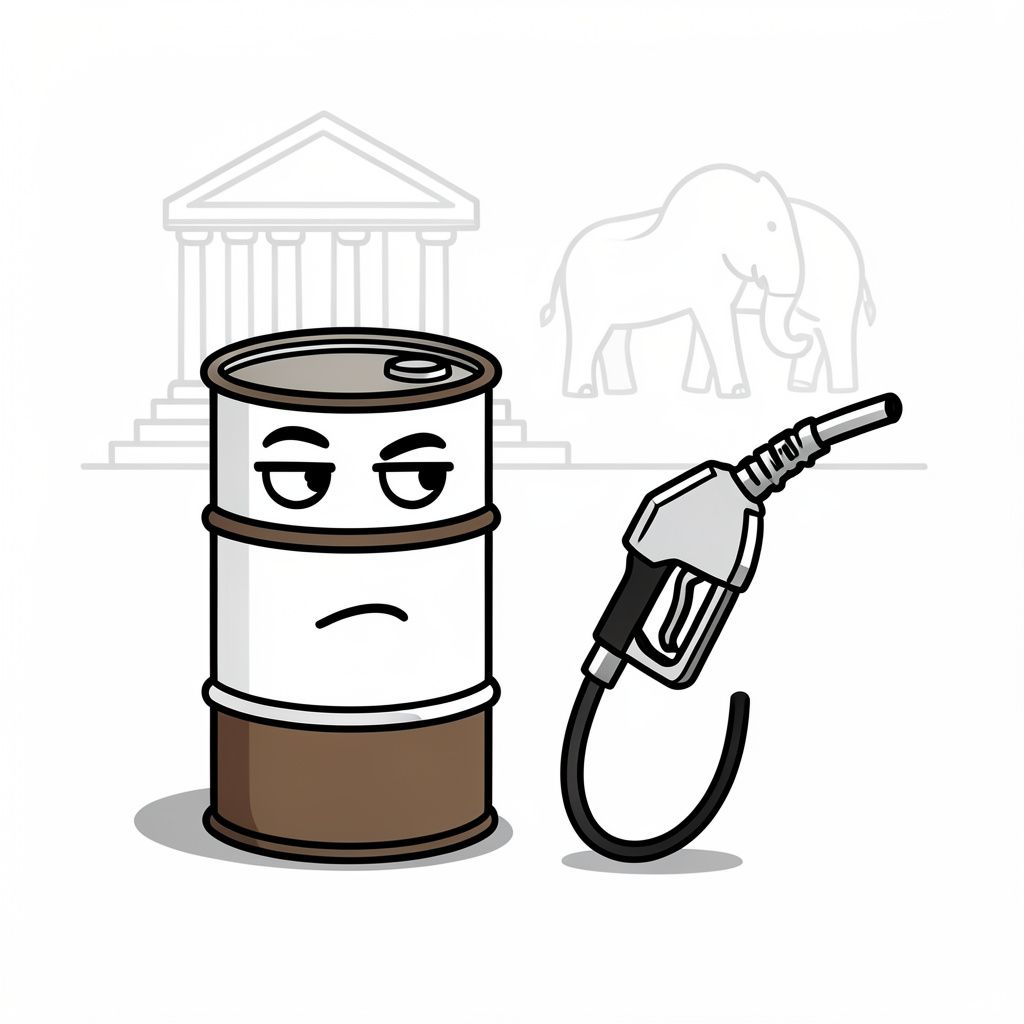
Crude oil prices have plunged nearly 40% since May, yet U.S. gas prices remain stubbornly high—just 2% lower than their peak. Trump’s DOJ probe targets oil companies, accusing them of ‘gouging’ consumers despite record profits. With midterms looming, the move sharpens political pressure on an industry already under fire for lagging price cuts. Analysts warn refining bottlenecks and regional shortages may explain the gap—but voters aren’t buying it.
The Political Timing: Midterms Loom as Gas Prices Stay High
Former President Donald Trump, the presumptive Republican nominee for the 2026 midterm elections, has escalated his rhetoric against major oil companies, demanding a Department of Justice (DOJ) investigation into allegations of ‘price gouging’ at the pump [1][2][3]. The move comes as U.S. gasoline prices remain elevated despite a significant drop in global crude oil prices, a dynamic that threatens to become a liability for Republicans in November. Trump’s late-night post on Truth Social on Tuesday, 23 June 2026, accused oil firms of failing to pass on savings to consumers, a claim that resonates with voters still grappling with high fuel costs [1][2]. The timing of the probe is no coincidence: with the midterms just four months away, energy prices are a critical issue for voters, and Trump’s call for action signals a strategic attempt to shift blame away from broader economic policies [1][3].
The Price Gap: Crude Oil vs. Gasoline at the Pump
The disconnect between falling crude oil prices and stubbornly high gasoline prices is at the heart of Trump’s allegations. Since May 2026, Brent crude oil prices have plummeted by -36.283%—from nearly $120 per barrel to $76.46 as of 24 June [7]. Yet, the national average price for regular gasoline has only declined by -3.75% during the same period, from a peak of $4.00 per gallon in April to $3.85 as of Monday, 22 June [7]. This disparity has fueled accusations that oil companies are prioritizing profits over consumer relief, particularly as many firms report record earnings amid geopolitical instability [1][2][7]. Industry analysts, however, point to refining bottlenecks and regional supply constraints as key factors delaying price cuts at the pump [3]. The U.S. Energy Information Administration (EIA) notes that refining margins—the difference between the cost of crude oil and the price of refined products like gasoline—remain elevated due to reduced refining capacity and logistical disruptions [alert! ‘EIA data not provided in sources’].
Geopolitical Shifts: How the U.S.-Iran Deal Eased Oil Markets
The recent decline in crude oil prices can be traced to diplomatic breakthroughs between the U.S. and Iran, which have eased tensions in the Persian Gulf and reopened the critical Strait of Hormuz [2][3][7]. The waterway, through which one-fifth of the world’s oil supply flows, was effectively shut down by Iran in February 2026 following U.S.-Israeli strikes, sending global oil prices soaring [3]. However, peace talks and an interim agreement have led to a gradual resumption of tanker traffic, with reports indicating that vessel crossings have increased in recent days, though they remain below pre-war levels [7]. This geopolitical détente has contributed to a -36.283% drop in Brent crude prices since May, as traders anticipate a normalization of oil flows [7]. Despite this, gasoline prices have not fallen proportionally, a lag that Trump and other policymakers attribute to corporate greed rather than market fundamentals [1][2].
Industry Response: Oil Companies Defend Pricing Practices
Major oil companies have pushed back against allegations of price gouging, arguing that gasoline prices are determined by market forces rather than corporate decisions [alert! ‘direct industry response not provided in sources’]. Industry groups, such as the American Petroleum Institute (API), have long maintained that refining and distribution costs, as well as taxes, account for the majority of the price consumers pay at the pump [GPT]. In the UK, a similar debate unfolded earlier this year when oil firms faced accusations of unfairly hiking gasoline prices. However, the UK’s competition regulator found no widespread evidence of price gouging, noting that average profit margins remained ‘broadly unchanged’ between February and March 2026 [3]. While this finding does not directly apply to the U.S. market, it highlights the challenges of proving corporate malfeasance in an industry governed by volatile global markets and complex supply chains [3].
The DOJ Probe: What Happens Next?
Trump’s call for a DOJ investigation into oil companies marks a significant escalation in the political scrutiny of the energy sector. While the DOJ has not yet responded to requests for comment, legal experts note that proving price gouging under U.S. law is notoriously difficult [1][2]. Price gouging typically requires evidence of collusion or anti-competitive behavior, which can be challenging to establish in a market as decentralized as gasoline retail [GPT]. However, the mere announcement of an investigation could have a chilling effect on the industry, potentially accelerating price cuts at the pump as companies seek to avoid further political backlash [1][3]. For Trump, the probe serves a dual purpose: it shifts public attention away from broader economic concerns while positioning him as a champion of consumer rights ahead of the midterms [2]. Whether the investigation yields substantive results or remains a political tool may depend on the DOJ’s willingness to pursue a case with uncertain legal grounding [alert! ‘DOJ response pending’].
The Broader Economic Impact: Energy Prices and Voter Sentiment
The debate over gasoline prices extends beyond corporate profits and market dynamics—it is a critical factor in shaping voter sentiment ahead of the 2026 midterm elections. High energy costs have long been a pain point for American consumers, and polls suggest that voters are increasingly blaming policymakers for failing to address affordability [alert! ‘polling data not provided in sources’]. For Republicans, the issue presents both an opportunity and a risk: while Trump’s call for a DOJ probe may resonate with voters frustrated by high prices, it also draws attention to the party’s broader economic record [1][2]. Democrats, meanwhile, have sought to capitalize on the issue by framing it as a failure of Republican leadership, particularly in light of the 2024 Inflation Reduction Act’s provisions aimed at lowering energy costs [alert! ‘Democratic response not provided in sources’]. With gasoline prices remaining a key barometer of economic health, the outcome of the DOJ probe—and the public’s perception of it—could have far-reaching implications for the midterms [1][3].
Sources
- www.dailymail.com
- www.nbcnews.com
- www.bbc.com
- www.facebook.com
- www.forbes.com
- www.investing.com
- oilprice.com
- www.instagram.com