Strict Labor Restrictions Backfire as U.S. Native Unemployment Rises
Washington, Sunday, 16 August 2026.
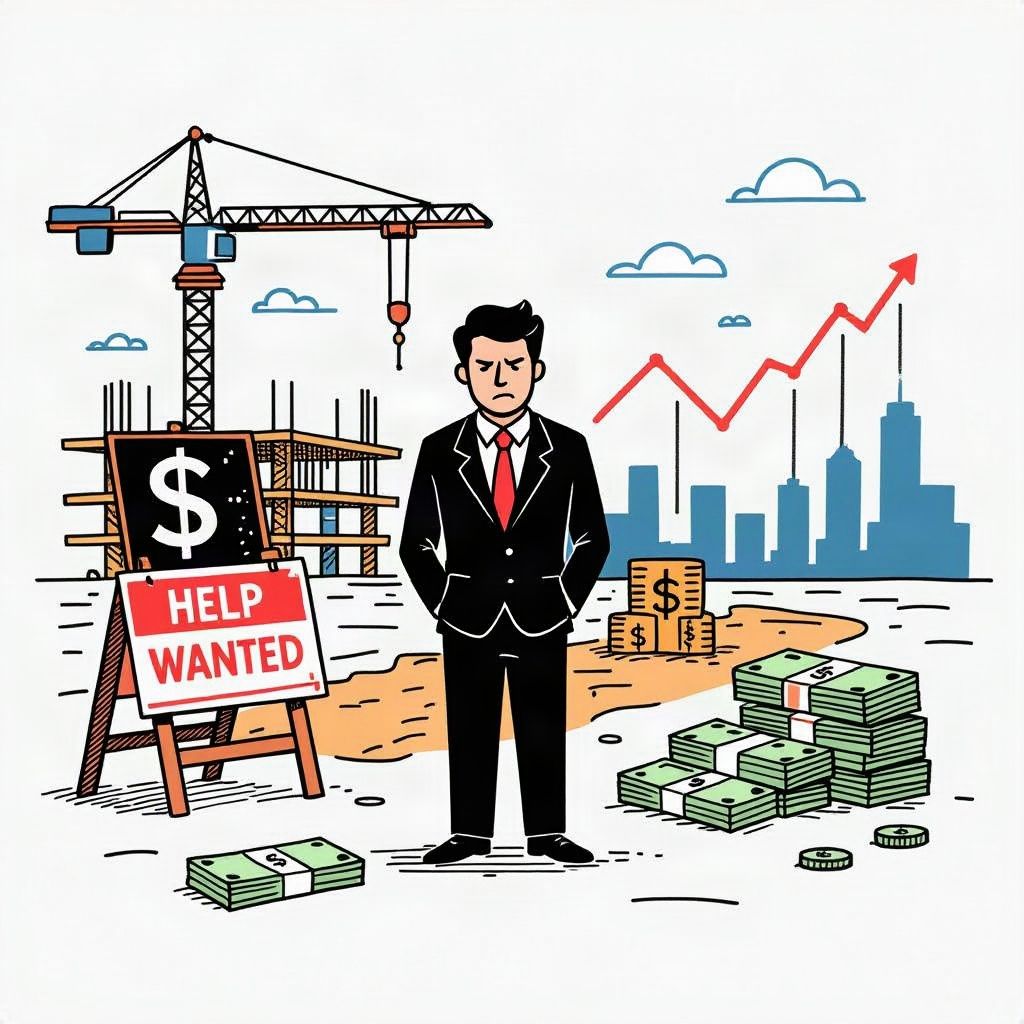
Restricted immigration policies have backfired, driving native-born unemployment above foreign-born rates as domestic workers refuse physically demanding roles, leaving critical sector vacancies unfilled and wage growth stalled.
Shifting Demographics and Labor Supply Constraints
The United States labor market is exhibiting signs of significant structural stress as of August 2026, driven by a sharp contraction in net international migration. Census Bureau data from January 2026 indicates that net international migration plummeted from a peak of 2.7 million in 2024 to an estimated 321,000 by mid-2026, representing a dramatic reduction in labor supply -88.111 [1]. This decline coincides with protectionist labor policies enacted following the 2024 presidential election, which aimed to prioritize domestic employment but have resulted in unintended economic consequences [1]. While the overall unemployment rate has held steady at 4.1%, analysis by Moody’s Chief Economist Mark Zandi indicates that foreign-born unemployment fell below native-born unemployment in October 2025 based on a 12-month moving average [1]. Recent data released in August 2026 reveals a tick upward in native-born unemployment alongside stagnant wage growth, suggesting a mismatch between policy intentions and labor market realities [1].
Initial claims for unemployment benefits have risen slightly, reflecting the tightening conditions. The Labor Department reported that 209,000 people filed jobless claims last week, up from a revised 200,000 the week before and higher than the 205,000 forecasters had expected [2][3]. The four-week average of applications, which smooths out week-to-week volatility, remained unchanged at 199,000, indicating that while layoffs are not surging, the hiring market remains sluggish [2][3]. Economists describe the current environment as a “no hire, no fire” job market, where companies are reluctant to let go of staff but are equally hesitant to take on new workers due to lingering effects of high interest rates and erratic trade policies [2].
Sector-Specific Shortages and Wage Stagnation
Critical vacancies persist in physically demanding sectors such as agriculture, construction, and lower-wage service industries, where employers report ongoing difficulties attracting domestic labor despite wage incentives [1]. Bureau of Labor Statistics data from 2025 confirms that foreign-born workers are more heavily concentrated in construction, trucking, natural resources, and health/personal care sectors, historically earning 85.7% of the median weekly wage of native-born counterparts [1]. Mark Zandi noted that these are typically very arduous jobs that require physical hardship, and native-born workers have not done these jobs for quite some time and are in no mood to take them now, certainly not at current wage levels [1]. Consequently, wage growth has stalled in many areas, although New York Fed data from May 2026 indicates some growth in public administration, construction, and mining industries, potentially driven by AI data center construction demand [1].
The broader hiring data underscores the slowdown in labor absorption. Last month, companies, government agencies, and nonprofits together cut 23,000 jobs instead of increasing them, according to Labor Department reports [2]. So far this year, employers are adding 61,000 jobs a month, which is an improvement on the 9,700 they averaged last year but remains well below the 166,000 monthly jobs created on average in 2023 and 2024 [2]. This disparity highlights the challenge facing policymakers who aimed to boost domestic employment through immigration restrictions, as the native-born workforce has not filled the vacuum left by reduced migration [1]. Julie A. Su, discussing the labor market on August 16, 2026, noted that the national economy is losing jobs, raising questions about local economic resilience despite federal headwinds [4].
Economic Outlook and Stagflation Risks
Economic experts are warning of potential stagflation as supply-side shocks converge with labor market constraints. Zandi identifies three policy-induced supply-side shocks currently impacting the economy: immigration policy restrictions, tariffs, and the war in Iran [1]. The conflict with Iran has caused a spike in energy prices, yet the labor market has yet to show significant wear and tear from the surge in oil prices, suggesting unusual job security for those currently employed [2]. However, Zandi projects that immigration policy will likely be forced to reverse in the coming years due to labor market trade-offs, which he anticipates will result in stagflation characterized by rising prices without corresponding output increases [1]. The supply-side stagflationary shock of tariffs and the Iran war are reducing growth and lifting inflation, with AI being cited as the only reason the economy is not in complete shambles [1].
White House spokesmen maintain that unchecked illegal immigration had long depressed wages for American workers, claiming real wages in key sectors are growing by leaps and bounds compared to overall wage growth [1]. Conversely, the persistent supply chain bottlenecks and reduced corporate productivity reported by executive leadership suggest that the cost of labor shortages may outweigh wage gains for many domestic workers [1]. As the nation moves further into 2026, the balance between protectionist policy and economic functionality remains a critical focal point for investors and policymakers alike. The overall number of people collecting employment benefits the week that ended August 1 dropped by 22,000 to 1.78 million, indicating that while hiring is slow, retention remains a priority for employers amidst uncertainty [2].