Chinese Clean Tech Firm Scage Future at Risk of Nasdaq Delisting
Nanjing, Thursday, 18 June 2026.
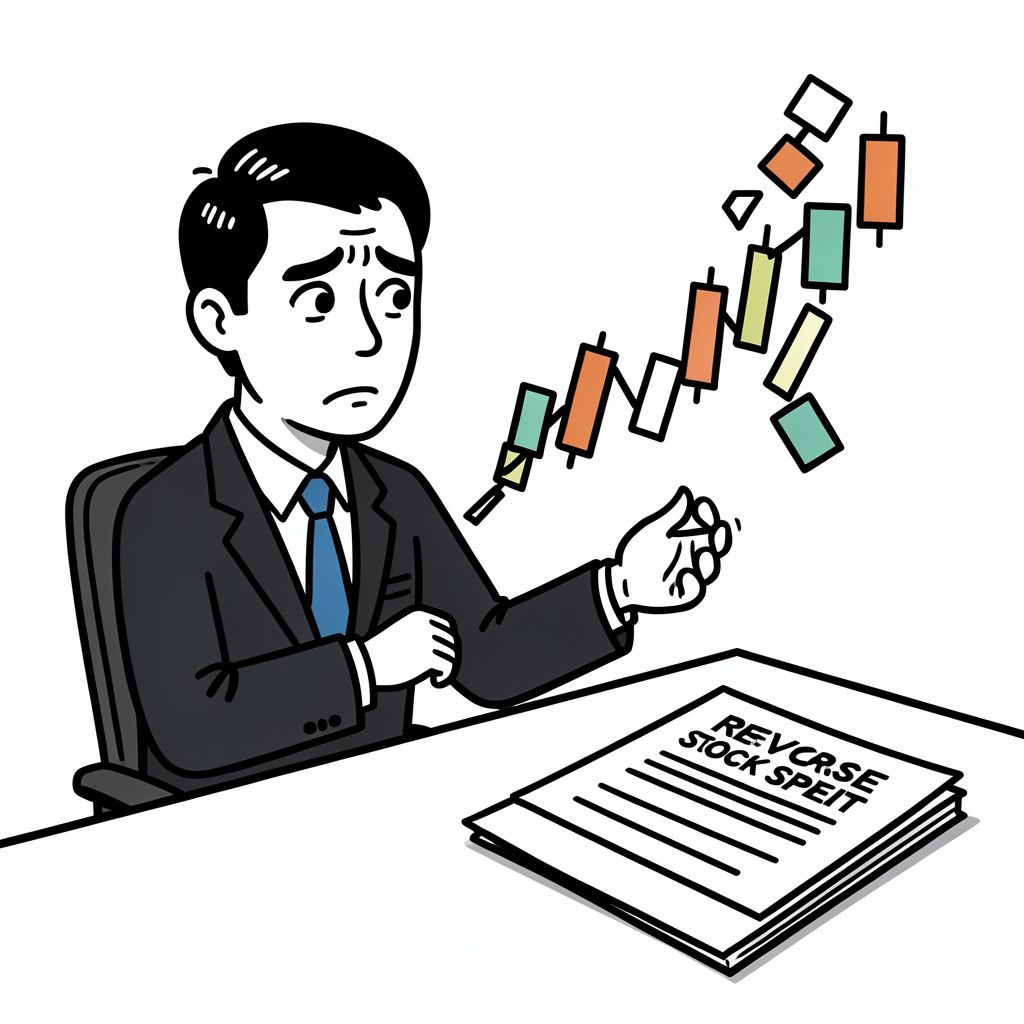
Scage Future, a Nanjing-based zero-emission technology leader, faces Nasdaq delisting after its stock price fell below $1 for 30 consecutive days. With just 180 days to recover, the firm must now execute a turnaround strategy—potentially a reverse stock split—or risk losing access to U.S. capital markets amid geopolitical and governance challenges.
Nasdaq Compliance Deadline Looms for Scage Future
Scage Future (Nasdaq: SCAG), a Nanjing-based provider of zero-emission technology solutions, is racing against a critical deadline to avoid delisting from the Nasdaq Capital Market. The company received a non-compliance notification on June 11, 2026, after its American Depositary Shares (ADS) failed to maintain the minimum bid price of $1.00 per share for 30 consecutive business days, from April 27, 2026, to June 10, 2026 [1][2]. Under Nasdaq Listing Rule 5550(a)(2), Scage Future now has 180 calendar days—until December 8, 2026—to regain compliance by achieving a closing bid price of at least $1.00 for a minimum of ten consecutive trading days [1]. As of June 18, 2026, the company remains listed on the Nasdaq, but failure to meet the requirement could result in delisting, a move that would significantly limit its access to U.S. capital markets and potentially erode investor confidence [1][2].
Market Performance and Strategic Options
Scage Future’s stock has struggled to maintain momentum in a volatile market environment. The company’s market capitalization stood at $26.77 million as of the latest available data, with an average trading volume of 2.07 million shares [3]. Despite these challenges, the company has not yet disclosed a definitive plan to address the bid price deficiency. Industry analysts suggest that Scage Future may explore a reverse stock split, a common strategy for companies facing delisting risks, as it can artificially inflate the share price by reducing the number of outstanding shares [1][3]. Other potential options include strategic partnerships, equity infusions, or operational restructuring to bolster investor sentiment and valuation [GPT]. However, the company’s leadership has remained tight-lipped about specific measures, leaving shareholders and market observers in a state of uncertainty [1].
Governance Concerns Add to Investor Unease
The Nasdaq compliance issue is not the only challenge facing Scage Future. On April 8, 2026, independent director Calvin Kung resigned from the company’s board, citing unresolved disagreements over operational strategies [2]. The resignation has left a vacancy on the board, raising concerns about corporate governance at a time when the company can least afford distractions [2]. While Scage Future has not yet appointed a successor, the lack of independent oversight could further undermine investor confidence, particularly as the company navigates its compliance deadline [2]. Governance issues, combined with geopolitical tensions between the U.S. and China, have created a precarious environment for Chinese tech firms listed on U.S. exchanges, many of which have faced similar delisting risks in recent years [GPT].
Broader Implications for Chinese Tech Listings
Scage Future’s predicament underscores the broader challenges faced by Chinese technology companies listed on U.S. exchanges. Geopolitical tensions, regulatory scrutiny, and market volatility have contributed to a wave of delisting risks for firms operating in this space [GPT]. For Scage Future, the stakes are particularly high given its focus on zero-emission heavy-duty commercial vehicles and e-fuel solutions, sectors that have attracted significant investor interest amid global efforts to reduce carbon emissions [1]. The company’s portfolio includes the Dragon II plug-in hybrid dump truck, the Galaxy II plug-in hybrid truck, and the Q-Truck autonomous tractor trailer, all of which position it at the intersection of clean energy and industrial innovation [1]. However, without access to U.S. capital markets, Scage Future’s ability to scale these technologies could be severely constrained, potentially ceding ground to competitors in the rapidly evolving green tech sector [GPT].
What Lies Ahead for Scage Future?
As the December 8, 2026, deadline approaches, all eyes will be on Scage Future’s next moves. The company’s ability to execute a successful turnaround strategy—whether through a reverse stock split, strategic partnerships, or operational improvements—will be critical to its survival on the Nasdaq [1][3]. Market sentiment remains cautious, with technical analysts issuing a “Sell” signal for SCAG stock, reflecting skepticism about the company’s short-term prospects [3]. For investors, the coming months will be a test of patience and resilience, as Scage Future works to stabilize its valuation and restore confidence in its long-term vision. Failure to do so could not only result in delisting but also signal broader vulnerabilities for Chinese tech firms navigating the complexities of U.S. capital markets [GPT].