American Metal Tariffs Cause Price Spikes Without Creating Expected Jobs
Washington, Friday, 23 October 2026.
A Montreal Economic Institute study reveals U.S. steel prices surged 33.9% and aluminum 58% since February 2025 tariffs, driving up manufacturing costs while creating almost no domestic employment growth.
Montreal Economic Institute Report Labels Tariffs a Disaster
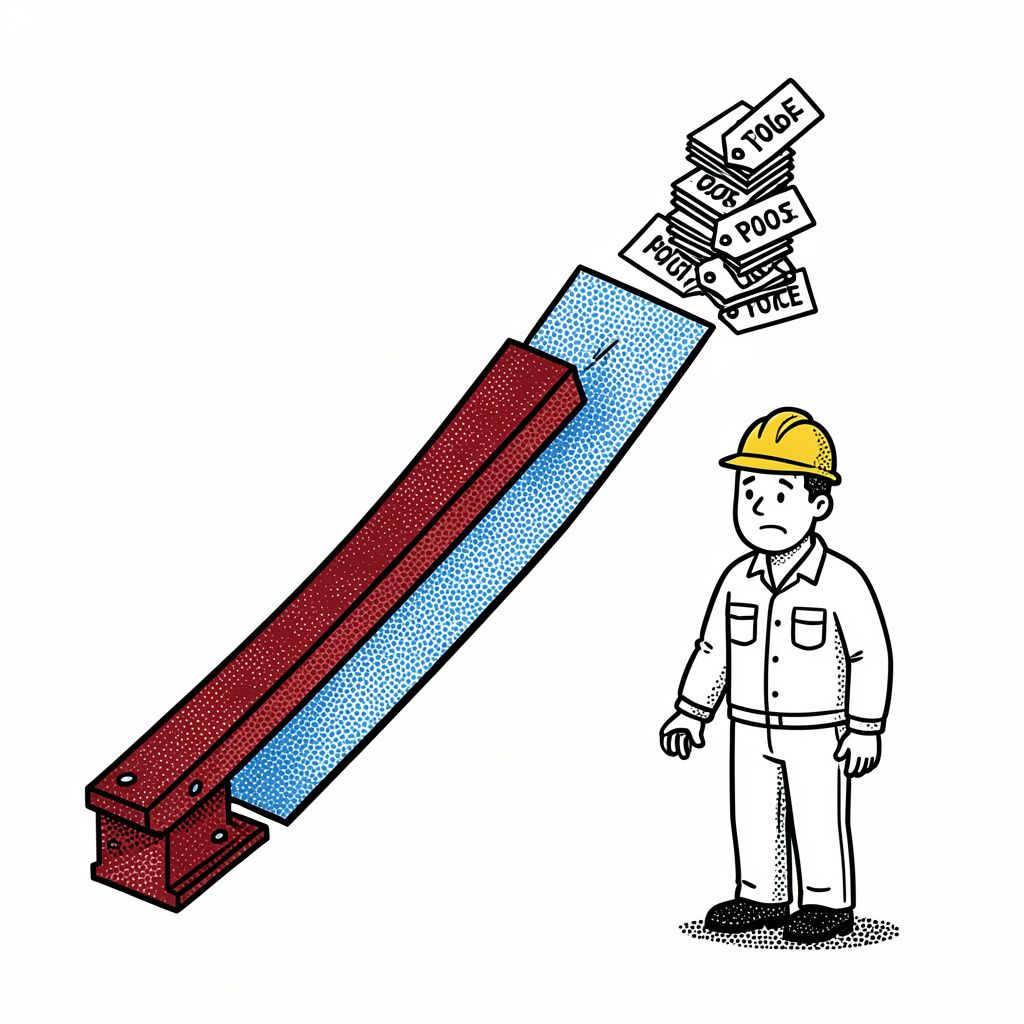
A comprehensive study released on October 22, 2026, by the Montreal Economic Institute (MEI) characterizes the steel and aluminum tariffs imposed by the Trump administration as a economic disaster for the United States [1][4]. The report, titled Tariffs Deliver a Price Shock, Not an Industrial Revival, concludes that the duties have failed to stimulate domestic industrial growth while significantly driving up inflation for manufacturers and consumers [2][4]. Joseph Steinberg, an economics professor at the University of Toronto and the study’s primary author, stated that the United States has imposed a historically large price shock on itself with little protected sector employment or output growth to show for it [2][4]. The analysis indicates that rather than revitalizing the industry as promised, the policy has resulted in higher costs for American manufacturers of processed goods and their customers [3][4].
Sharp Price Increases Outpace Production Gains
Since February 2025, the U.S. producer price index for steel mill products has increased by 33.9%, while the index for aluminum mill shapes rose by 58.0% [3][4]. The disparity between aluminum and steel price hikes is significant, with aluminum prices rising 24.1 percentage points more than steel over the same period [3][4]. In contrast, Canadian steel prices rose by only 1% and aluminum by 26% between December 2024 and June 2026, highlighting the specific impact of U.S. policy [1][3]. Despite these price increases, U.S. steel production grew by only 7.6% with employment growth of 0.7% over the 19-month period following tariff implementation [2][4]. Aluminum production actually fell by 0.1% during this timeframe, even as employment in the aluminum and nonferrous metals sector rose by a marginal 0.6% [3][4].
Downstream Manufacturing and Employment Losses
The economic burden has shifted heavily to downstream industries, with fabricated-metal product manufacturers requiring approximately 31 cents of steel and aluminum per dollar of output [3][4]. Automakers require about 16 cents of these metals per dollar of output, leading to potential production cost increases of 6.5% for the auto sector and 13% for fabricated metals if price shocks are fully passed through [3][4]. Broader manufacturing data reveals that between February 2025 and July 2026, overall U.S. manufacturing employment decreased by 60,000 jobs, coinciding with the imposition of the steel and aluminum tariffs [3][4]. Historical data from the U.S. International Trade Commission suggests a similar trend during the 2018 tariff episode, where downstream production decreased by $3.5 billion by 2021 while domestic steel and aluminum production gains totaled only $2.25 billion [3][4].
Policy Timeline and Investment Barriers
The current tariff regime began in March 2025, when the White House invoked Section 232 of the Trade Expansion Act of 1962 to impose 25% tariffs on steel and aluminum [3][4]. These duties were subsequently increased to 50% in June 2025, provoking the sharp price increases observed in the market [4]. While President Trump has promised industrial growth, including a recent announcement of a $15 billion steel plant planned for southeast Iowa expected to bring thousands of new jobs, the MEI report suggests high tariffs and uncertain trade policy hurt downstream metal-using firms without producing incentives for metal-producers to invest [4][5]. Steinberg noted that each dollar of additional profits earned by protected industries comes from increased prices for U.S. customers, arguing that building a strong economy requires favorable investment conditions rather than ever-higher taxes [3][4].