Defense Startup Raises $200 Million to Genetically Engineer Military Dogs
Costa Mesa, Friday, 23 October 2026.
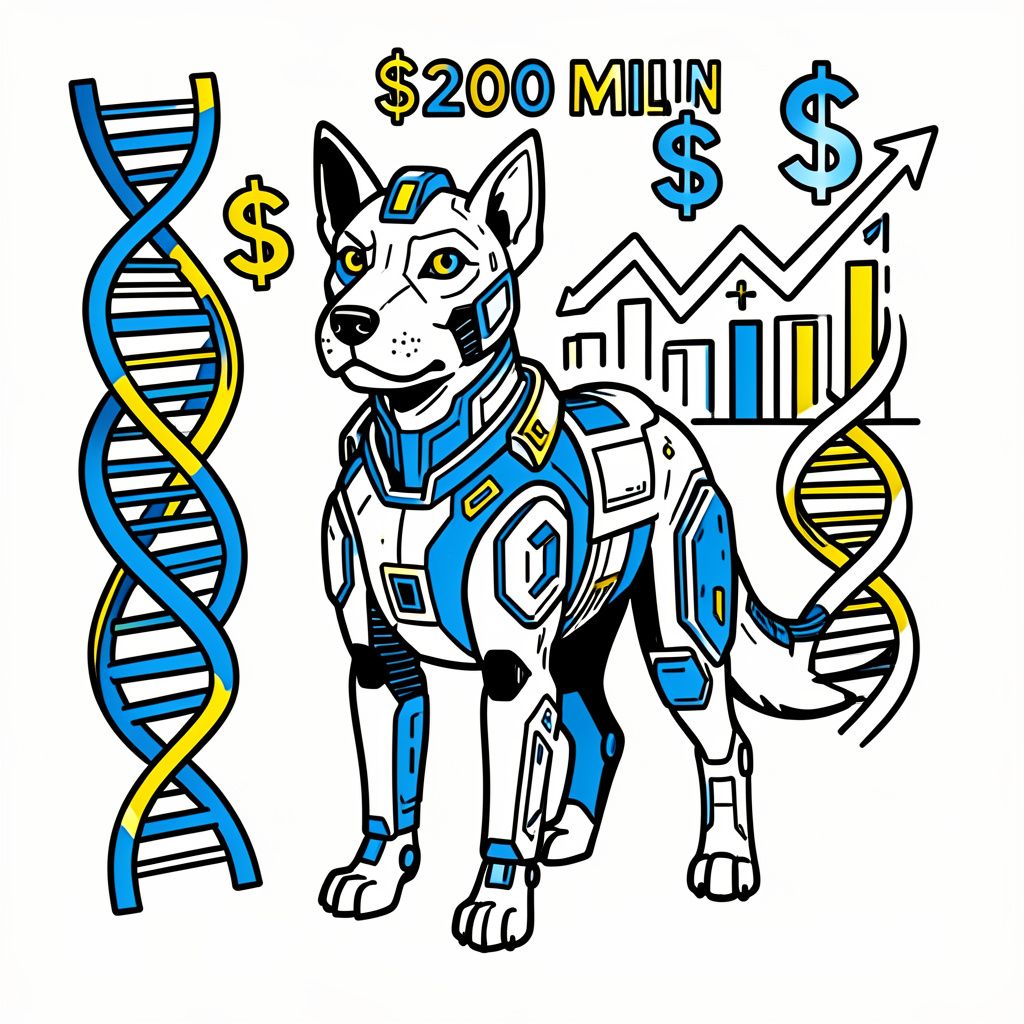
Defense startup Warhound raised $200 million to genetically edit and clone military working dogs, addressing critical U.S. supply shortages where over 80 percent of service canines are currently imported.
Defense Startup Raises $200 Million to Genetically Engineer Military Dogs
Defense startup Warhound raised $200 million to genetically edit and clone military working dogs, addressing critical U.S. supply shortages where over 80 percent of service canines are currently imported [1][3][6]. The company officially emerged from stealth mode on October 21, 2026, revealing a strategy to leverage advanced genetic engineering and hardware integration to optimize dogs for military and law enforcement applications [1][7]. This substantial funding round highlights a growing appetite among venture capitalists and defense contractors for next-generation biological and hardware integration in modern warfare capabilities [1][5]. The initiative aims to domesticize the supply chain for working dogs, reducing reliance on foreign breeders amidst rising geopolitical competition [6].
Capital Infusion and Valuation Milestones
Warhound secured the $200 million in seed capital at a post-money valuation of $1.2 billion, marking it as a significant entrant in the defense technology sector [1][2][5]. The funding round was led by Sequoia Capital, with participation from prominent investors including In-Q-Tel, ARK Invest, Franklin Templeton, 8VC, and Lux Capital [2][3][6]. This financial backing supports the company’s mission to rebuild America’s domestic supply of elite working dogs through biotechnology [7]. The valuation reflects investor confidence in the convergence of biosciences and defense technology, a sector previously less capitalized than traditional hardware defense startups [5][6]. The company is co-founded by Ben Lamm, known for Colossal Biosciences, and Palmer Luckey, founder of Anduril Industries, though Anduril itself holds no equity in the venture [6][7].
Genetic Engineering and Supply Chain Security
The U.S. Department of Defense currently manages over 2,200 military working dog teams, with more than 80 percent of these animals procured from Europe [2][3][6]. Current acquisition pipelines face significant inefficiencies, with fewer than 50 percent of purchased dogs successfully completing the approximately three-year training pipeline [3][6]. This attrition rate forces the military to buy and train 200 dogs to field 100 working animals, highlighting the need for optimized breeding stock [6]. Warhound plans to utilize cell lines from Belgian Malinois and German Shepherd breeds to edit genes for enhanced health, longevity, and olfactory capabilities while removing predispositions for hip dysplasia and cancer [1][2]. The company acquired animal cloning specialist Viagen in November 2025 to facilitate these operations, leveraging existing success in protecting endangered species [2][3].
Technology Integration and Deployment Timeline
Warhound intends to equip the genetically engineered dogs with specialized hardware integrated with Anduril Industries’ defense suite, functioning on top of the dog rather than inside it [1][7]. This includes sensor-equipped protective vests, goggles, and Eagle Eye technology to improve situational awareness and coordination for handlers [3][6]. The first batch of genetically engineered dogs is scheduled to be cloned and incubated with birth expected in early 2027 [1][7]. Service entry is anticipated within the next two years, targeting deployment by late 2028 [6][7]. The company is working with the American Humane Society to certify its training program and intends for retired dogs to enter the Society’s Military Working Dog Reunification Program [1][3]. Dave Spirk, former Department of Defense chief data officer, serves as CEO to guide the transition from scientific advance to field capability [3][6].