New Construction Slump Drives Drop in North Carolina Triangle Home Sales
Raleigh, Monday, 19 October 2026.
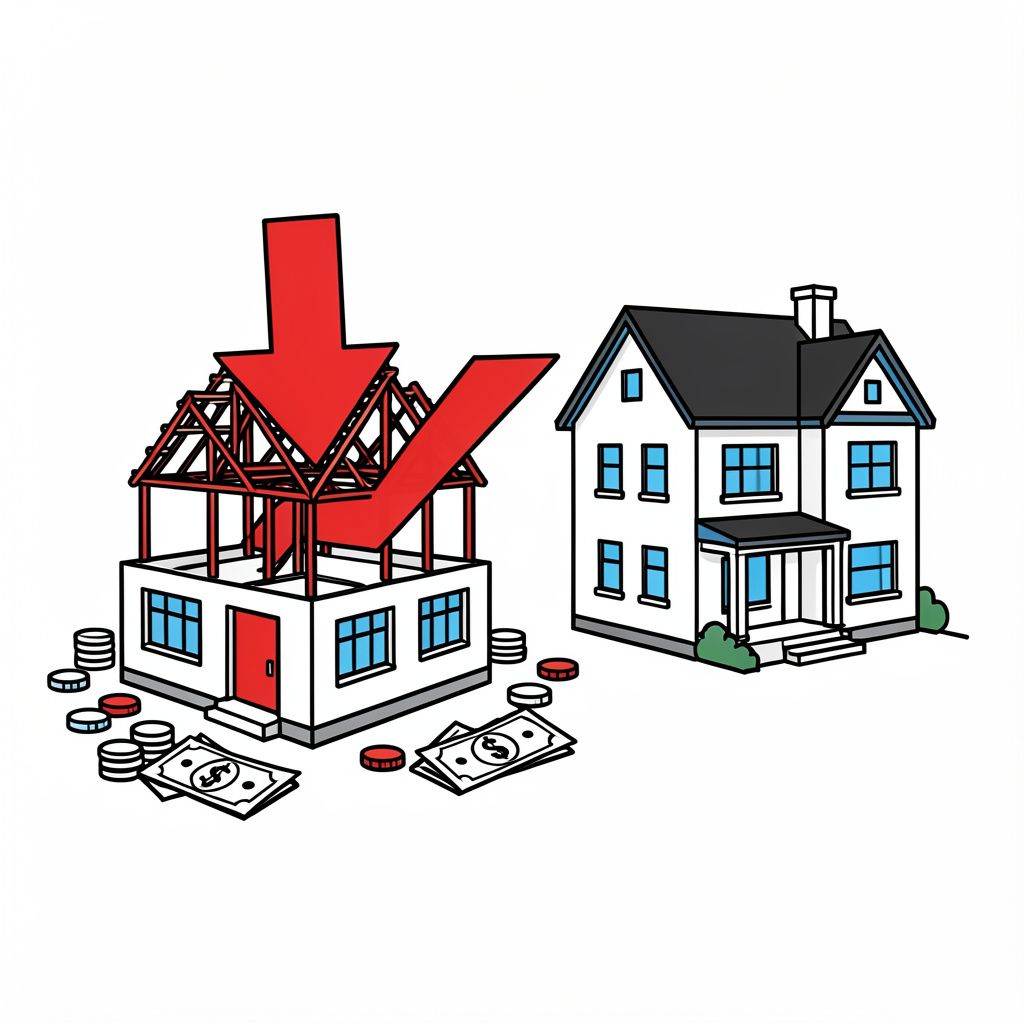
September’s 5.6% drop in Triangle home sales was driven almost entirely by a 16.4% slump in new construction, while existing home sales and prices remained remarkably stable.
New Construction Slump Drives Drop in North Carolina Triangle Home Sales
Home sales in the North Carolina Triangle region fell 5.6% year-over-year in September 2026, according to the September Triangle Report released by EasyDigz on October 19, 2026 [1]. Total closings reached 3,004, down from 3,182 closings in September 2025 [1]. This decline marks a shift in market momentum, particularly within the new construction segment [1]. The overall median sale price remained unchanged at $399,990, masking divergent trends between property types [1].
Divergence Between New and Existing Homes
The slowdown was largely driven by builders closing 16.4% fewer homes compared to the previous year [1]. In contrast, resale homes maintained steady sales volume, with 2,078 closings representing a 0.2% increase over September 2025 [1]. While new construction median prices fell 3.7% to $384,995, resale median prices rose 0.5% to $407,000 [1]. Signed contracts in September 2026 experienced the first year-over-year decline of 2026, down 2.0% [1].
County-Level Disparities and Economic Drivers
Regional data indicates significant variation across county lines, challenging the notion of a single unified market [2]. Wake County recorded a median price of $460,990 with prices down 1.1%, while Durham County saw a 6.7% decrease to $420,000 [2]. Conversely, Johnston County posted a 4.6% increase in median sales price to $366,000 [2]. The difference between Wake and Durham median prices is 40990 [2]. Higher borrowing costs are impacting buyer sentiment, with the 30-year fixed mortgage rate reaching 7.40% as of October 8, 2026 [1]. This rate is up from 6.30% a year prior, representing a 1.1 percentage point increase [1]. Additionally, rental-property insurance premiums in North Carolina increased by an average of 5% effective October 1, 2026 [3]. Market participants are monitoring October 2026 closing figures as the next indicator of demand [1].