Barron Trump’s $39 Yerba Mate Drink Sparks Debate Over Celebrity-Backed Luxury Beverages
Miami, Monday, 15 June 2026.
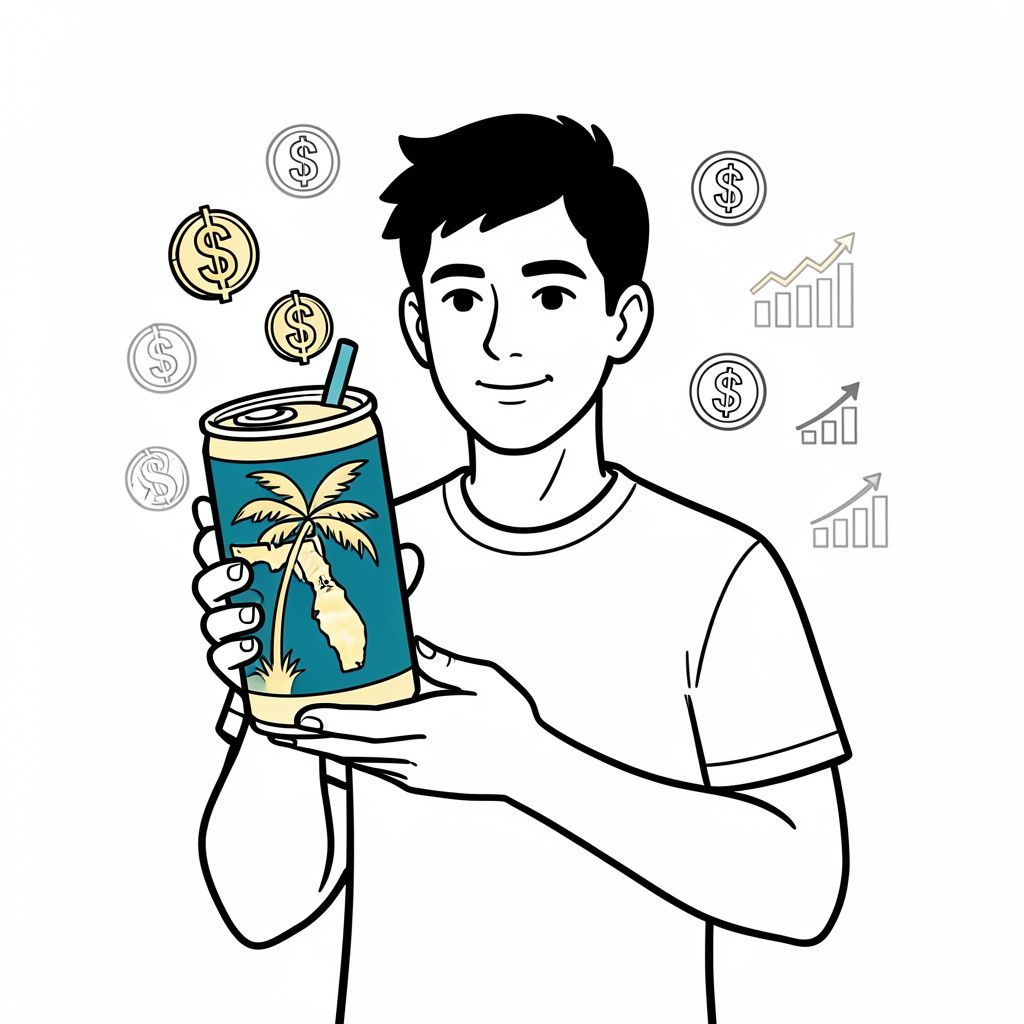
A new Florida-themed yerba mate drink, backed by Barron Trump, has hit the market at $39 for a 12-pack—sparking criticism over its premium pricing amid economic uncertainty. The USDA Organic-certified beverage, launched by a group of young founders including Trump, aims to redefine energy drinks with plant-based caffeine. But can a luxury-priced drink succeed in a saturated market, or is this a case of celebrity influence over substance?
The Launch: A Premium Yerba Mate with Celebrity Backing
On 14 June 2026, SOLLOS Yerba Mate Inc. officially launched its first product—a Pineapple + Coconut yerba mate drink—priced at $39 for a 12-pack (12 × 355 mL cans) [1][2][3]. The company, founded by a group of friends aged 19 to 23 from South Florida, is headquartered in Palm Beach, just minutes from the Trump family’s Mar-a-Lago Club [1][4]. Barron Trump, the 20-year-old son of former U.S. President Donald Trump and a student at New York University, serves as one of five directors of the company, according to January 2026 filings in Florida and Delaware [1][2]. The launch comes at a time when consumer spending on non-essential goods is under scrutiny due to persistent inflation and economic uncertainty [GPT].
A Florida Lifestyle Brand with Organic Credentials
SOLLOS markets itself as a “beverage brand built around the Florida lifestyle,” emphasizing its USDA Organic certification and the use of high-quality, plant-based ingredients [1][5]. The drink contains 120 mg of caffeine per 355 mL can, a ratio comparable to Red Bull, and is positioned as a smooth, antioxidant-rich alternative to coffee and synthetic energy drinks [3][6]. Co-founder Spencer Bernstein stated that the team spent over a year refining the formula, creating more than 100 recipe iterations before settling on the final product [1]. “Most brands launch with four flavors hoping you’ll like one of them; we have been obsessing over one flavor until it was flawless,” the company’s website claims [6].
Pricing Controversy: $39 for a 12-Pack in a Saturated Market
The $39 price point for a 12-pack of SOLLOS has drawn significant criticism, particularly on social media. Comparisons to mainstream energy drinks highlight the premium: a 12-pack of Red Bull typically retails for $18–$22, while a 12-pack of Monster Energy ranges from $15–$20 [GPT]. One user on X posted on 10 June 2026, “$39 for a 12 pack? A fool and his money are soon parted,” reflecting broader skepticism about the product’s value proposition [3]. Another commenter noted, “12 pack for $39? Insane… More expensive than a 12 pack of craft beer” [3]. Industry analysts question whether the brand can justify its pricing through perceived quality, celebrity association, or niche appeal in an already crowded beverage market [GPT].
Celebrity Influence and Cultural Backlash
The involvement of Barron Trump has amplified both the brand’s visibility and its controversies. SOLLOS has faced accusations of cultural appropriation, given yerba mate’s deep roots in Indigenous Guaraní, Paraguayan, and broader South American culture [4]. Critics on social media have pointed to the Trump administration’s immigration policies, which targeted Latino communities, as hypocritical given the brand’s reliance on a traditionally Latino product [4]. One commenter wrote, “Oh wow, a family tied to anti-Latino rhetoric profiting off something deeply rooted in Indigenous (Guaraní), Paraguayan, and South American culture” [4]. The brand’s positioning as “Latino-rooted” has further fueled the debate, with some consumers questioning whether the Trump family’s involvement is an attempt to capitalize on cultural trends without genuine engagement [4].
Early Reception and Market Challenges
Initial reviews of SOLLOS have been mixed. Food writer Christopher J. Yates, reviewing the drink for The Times of London, described it as having a “creamy mouthfeel” and tasting “like sipping a non-alcoholic piña colada,” though he noted it “felt like I was drinking from a bottle of tanning oil” [3]. Heather Schwedel of Slate Magazine acknowledged the drink’s quality but questioned the brand’s broader appeal, writing, “I guess I do think Barron and his twerp cofounders made a pretty good drink. (Heartbreaking: I would have preferred a good point!)” [6]. The brand’s early sales performance remains undisclosed, but its success may hinge on whether it can convert curiosity into repeat purchases in a market dominated by established players like Red Bull, Monster, and Bang Energy [GPT].
The Bigger Picture: Can Celebrity-Backed Luxury Beverages Succeed?
SOLLOS enters a beverage market that is both highly competitive and increasingly fragmented. The global energy drink market was valued at $86.3 billion in 2025 and is projected to grow at a compound annual growth rate (CAGR) of 7.1% through 2030 [GPT]. However, premium-priced beverages face additional hurdles, particularly in an economic climate where discretionary spending is under pressure. The brand’s reliance on Barron Trump’s celebrity status may drive initial interest, but long-term success will likely depend on its ability to cultivate a loyal customer base beyond the novelty factor [GPT]. As Spencer Bernstein noted, “We’ve received very positive feedback about the taste of SOLLOS, even from people we expected to dislike it because of preconceived notions” [1]. Whether that feedback translates into sustainable sales remains to be seen.
Sources
- www.foxbusiness.com
- www.aol.com
- nymag.com
- www.latintimes.com
- www.indexbox.io
- www.facebook.com
- nymag.com