China's Economy Defies Global Shocks with Strong 5% First-Quarter Growth
Beijing, Saturday, 18 April 2026.
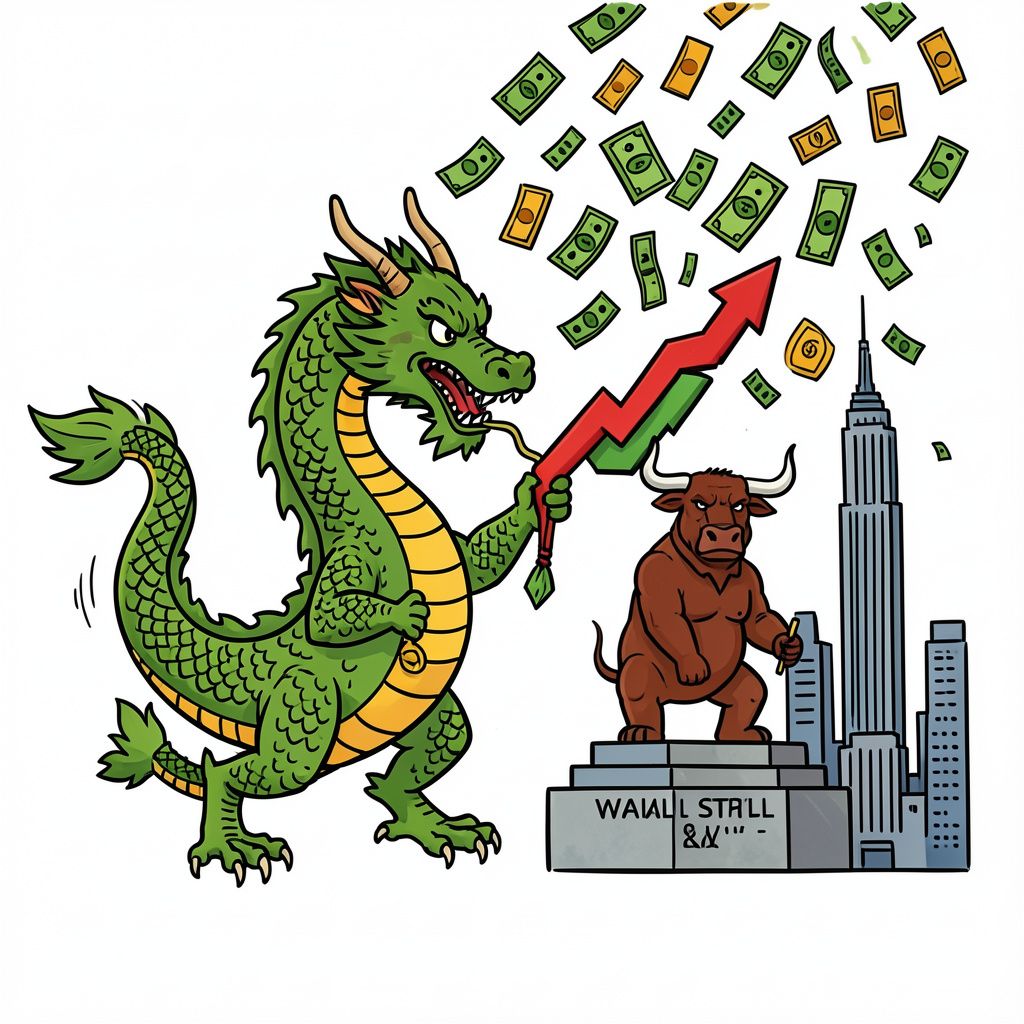
China’s economy unexpectedly expanded by 5% in early 2026, defying global energy shocks and signaling a successful structural shift away from its five-year property sector slump.
Beating Expectations Amidst Geopolitical Headwinds
Official data released on Thursday, April 16, 2026, revealed that China’s gross domestic product (GDP) expanded by 5.0% in the first quarter of the year compared to the same period a year earlier [1]. This performance surpassed the 4.8% growth forecast by analysts and represented a 0.5 percentage point acceleration from the 4.5% growth recorded in the final quarter of the previous year [1][4]. On a quarter-over-quarter basis, the economy grew by 1.3%, slightly edging out the previous quarter’s 1.2% gain and aligning perfectly with market expectations [1][2]. According to Carol Kong, an international economist at the Commonwealth Bank of Australia, the year-to-date growth effectively hit the upper boundary of Beijing’s official target range of 4.5% to 5.0% for 2026 [2][4].
The Property Sector Turns a Corner
The surprisingly resilient GDP data coincides with growing evidence that China’s protracted real estate crisis is finally bottoming out. Since 2021, following Beijing’s implementation of the “three red lines” policy in 2020 to aggressively deflate a massive housing bubble, the property sector has been mired in a severe bear market [3]. During this five-year downturn, average property prices plummeted by 40% to 50%, with the sharpest contraction occurring in late 2024 [3]. Despite these headwinds, the broader economy managed to sustain an average annual real GDP growth rate of 5% [3]. This resilience stands in stark contrast to Japan’s 1997 banking crisis, where an 80% collapse in property prices triggered a deflationary trap that took a quarter of a century to arrest [3].
Industrial Vigor Masking Consumer Caution
The underlying data reveals a distinctly bifurcated economy. The first-quarter growth was heavily propelled by the industrial and export sectors, while domestic consumption lagged [5]. Industrial output surged by 5.7% year-on-year in March 2026, beating the 5.5% forecast and marking a notable victory for Beijing’s “Made in China 2025” initiative, which aims to elevate the country up the global value chain [2][3]. Furthermore, factory-gate prices exited deflationary territory in March for the first time in over three years [4]. This industrial strength is exemplified by domestic champions like BYD, which now earns an average of $3,000 per vehicle sold internationally compared to just $440 domestically, and AI firms like DeepSeek, which released highly competitive, cost-effective language models in early 2025 [3].
Navigating the Iran War’s Economic Shockwaves
Looking ahead, China’s export-led recovery faces immediate threats from the ongoing war in Iran. While Q1 data showed limited initial spillover, the conflict has exposed a critical vulnerability for the world’s largest energy importer [1][5]. The war has driven up global oil prices and increased shipping costs, threatening to squeeze profit margins for Chinese manufacturers [1][2]. The impact is already visible in the trade data: after a blistering 21.8% surge in January and February, export growth plummeted by 19.3 percentage points to just 2.5% in March [4].