How Russian and Chinese Alliances Are Fueling North Korea's Economic Recovery
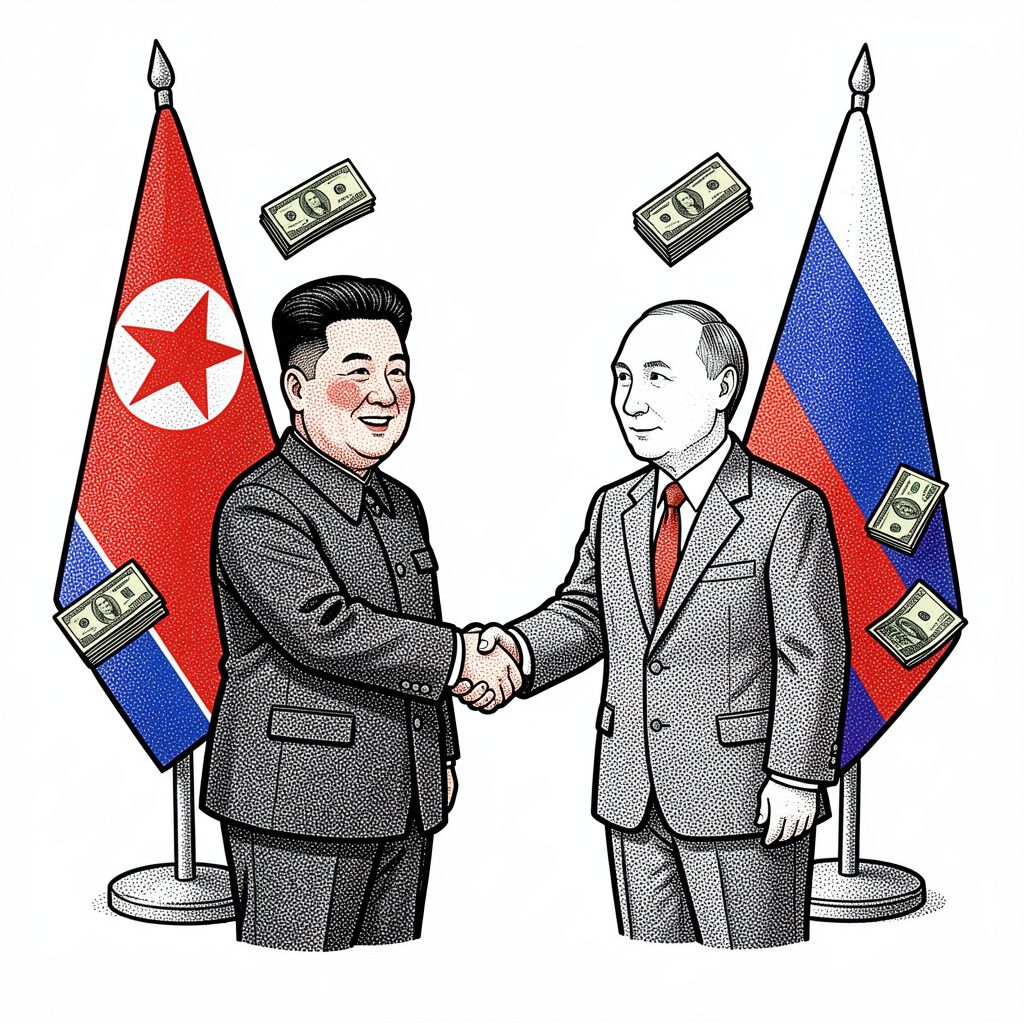
Seoul, Saturday, 18 April 2026.
In April 2026, Seoul reported North Korea’s economy is gradually recovering, intriguingly fueled by weapons transfers to Russia and leveraging U.S.-China tensions to boost its strategic autonomy.
A Geopolitical Lifeline for a Stagnant Economy
On April 15, 2026, South Korea’s Ministry of Unification presented a comprehensive assessment to the National Assembly’s Foreign Affairs and Unification Committee, concluding that North Korea’s economy is transitioning from a severe contraction phase into a period of gradual recovery [2][4]. This shift is not the result of internal structural reforms, but rather a calculated leveraging of shifting global power dynamics [3]. Pyongyang has successfully forged what Seoul describes as “alliance-level” cooperation with Moscow, characterized by the transfer of advanced military technology and weaponry [1][2]. By exploiting the ongoing geopolitical friction between the United States and China, North Korea has managed to carve out renewed strategic autonomy and bolster its bargaining power on the international stage [1][4].
Domestic Vulnerabilities Beneath the Surface
Despite these macroeconomic indicators of recovery, the North Korean economy remains fundamentally fragile, lacking the self-sustaining mechanisms required for genuine economic growth [3]. The current rebound is precariously tethered to external variables—specifically, the demands generated by the war in Ukraine and broader geopolitical conflicts [3][GPT]. Because the state continues to grapple with outdated industrial infrastructure, severe energy shortages, and excessive central control, any sudden shift in international relations could rapidly reverse these recent economic gains [3].