How Local Lenders Are Breaking Into Multi-Million Dollar Clean Energy Investments
Las Vegas, Wednesday, 11 November 2026.
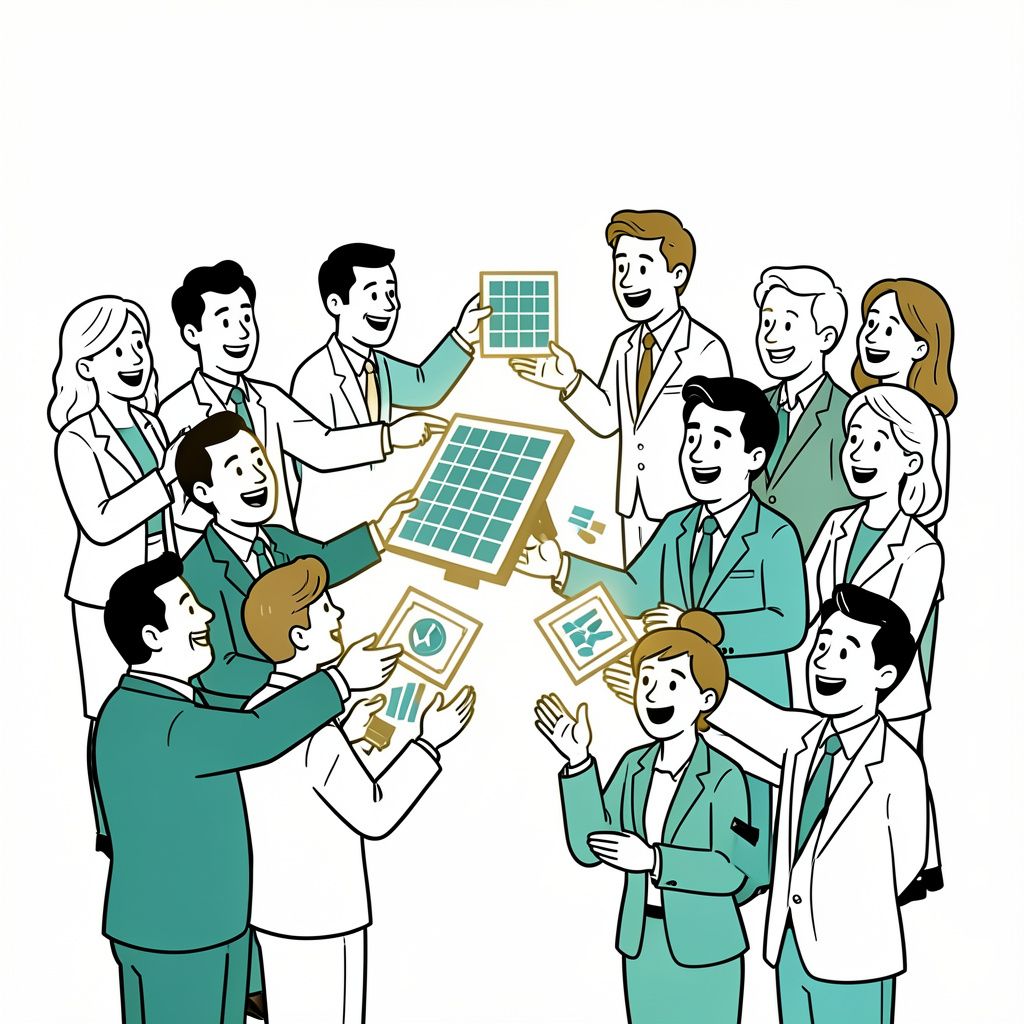
KeyState united regional banks to acquire a $98.6 million solar tax credit, enabling smaller institutions to access institutional-scale clean energy deals previously reserved for Wall Street giants.
A Historic Tax Credit Transaction Unlocks Clean Energy for Community Banks
On November 10, 2026, KeyState finalized a $98.6 million Investment Tax Credit (ITC) transfer transaction, enabling a consortium of community banks to acquire tax credits tied to a utility-scale solar project in the Southeastern United States[1][2][3][4]. This deal, executed through KeyState’s SOLCAP platform, marks a significant shift in how regional lenders can participate in large-scale clean energy financing—a market historically dominated by institutional investors and Wall Street firms[1][2][3][4]. The transaction was officially announced on November 11, 2026, by Newswire, amplifying its reach to financial institutions and investors alike[1].
Bridging the Gap: How SOLCAP Democratizes Institutional-Scale Investments
Community banks have long faced barriers to accessing large-scale tax credit investments due to transaction sizes that typically exceed their individual capacities. KeyState’s SOLCAP platform addresses this gap by aggregating smaller institutional transactions and enabling community banks to participate in pools ranging from $5 million to $20 million per institution[2][3][4]. Allan Riska, Chief Investment Officer of KeyState, emphasized this strategic role: ‘Community banks want access to high-quality ITC investments, but their individual investment needs are often much smaller than the transactions available from large institutional sellers’[2][3][4]. SOLCAP’s model provides not only access but also end-to-end management, including underwriting, negotiation, due diligence, and regulatory compliance[2][3][4].
A Decade of Growth: SOLCAP’s Role in Renewable Energy Investment
Launched in 2019, KeyState’s SOLCAP platform has become a cornerstone in the renewable energy tax credit ecosystem, facilitating over $1 billion in investments across more than 200 projects nationwide[1][2][3][4]. This expansion reflects broader trends in climate finance, where tax-advantaged instruments like ITCs are increasingly used to accelerate clean energy adoption[GPT]. The $98.6 million transaction represents approximately 9.8% of SOLCAP’s cumulative investment volume[alert! ‘This percentage is calculated as 9.86 based on reported $1 billion total; however, exact transaction counts per project are not publicly disclosed’]. Since its inception, SOLCAP has supported utility-scale solar, wind, and other renewable projects, positioning community banks as active participants in the energy transition[1][2][3][4].
Economic Implications: Strengthening Regional Banks and Clean Energy Markets
The participation of community banks in large-scale clean energy tax credits could have far-reaching economic implications. By diversifying their portfolios into renewable energy, these institutions reduce exposure to traditional loan risks while aligning with ESG (Environmental, Social, and Governance) mandates increasingly adopted by regional lenders[GPT]. Additionally, the transaction underscores the growing role of non-traditional financial intermediaries in climate finance. As Allan Riska noted, ‘Access is only part of the value we provide. Our team manages the process from start to finish, making ITC transfer investments more efficient and accessible for community banks’[2][3][4]. This model could spur further innovation in syndicated tax equity markets, where smaller players historically lacked entry points[GPT].
Looking Ahead: The Future of Community Bank Participation in Tax Equity
The $98.6 million ITC transfer is likely just the beginning of a broader trend. With the Inflation Reduction Act (IRA) extending and expanding tax credits for clean energy, demand for such transactions is expected to rise[GPT]. KeyState’s platform could serve as a template for similar initiatives, particularly as regional banks seek to balance profitability with sustainability goals[2][3][4]. Industry observers suggest that if replicated at scale, these transactions could unlock billions in additional capital for renewable energy projects nationwide[GPT]. For now, the November 2026 transaction stands as a milestone in financial democratization, proving that community banks can—and should—play a pivotal role in the energy transition.
Sources
- www.newswire.com
- www.key-state.com
- markets.businessinsider.com
- www.bdtonline.com
- x.com
- www.usatoday.com
- www.usatoday.com
- usinsider.co