Artificial Intelligence Boom Threatens Interest Rate Cuts as Infrastructure Spending Drives Up Economy-Wide Costs
Chicago, Monday, 19 October 2026.
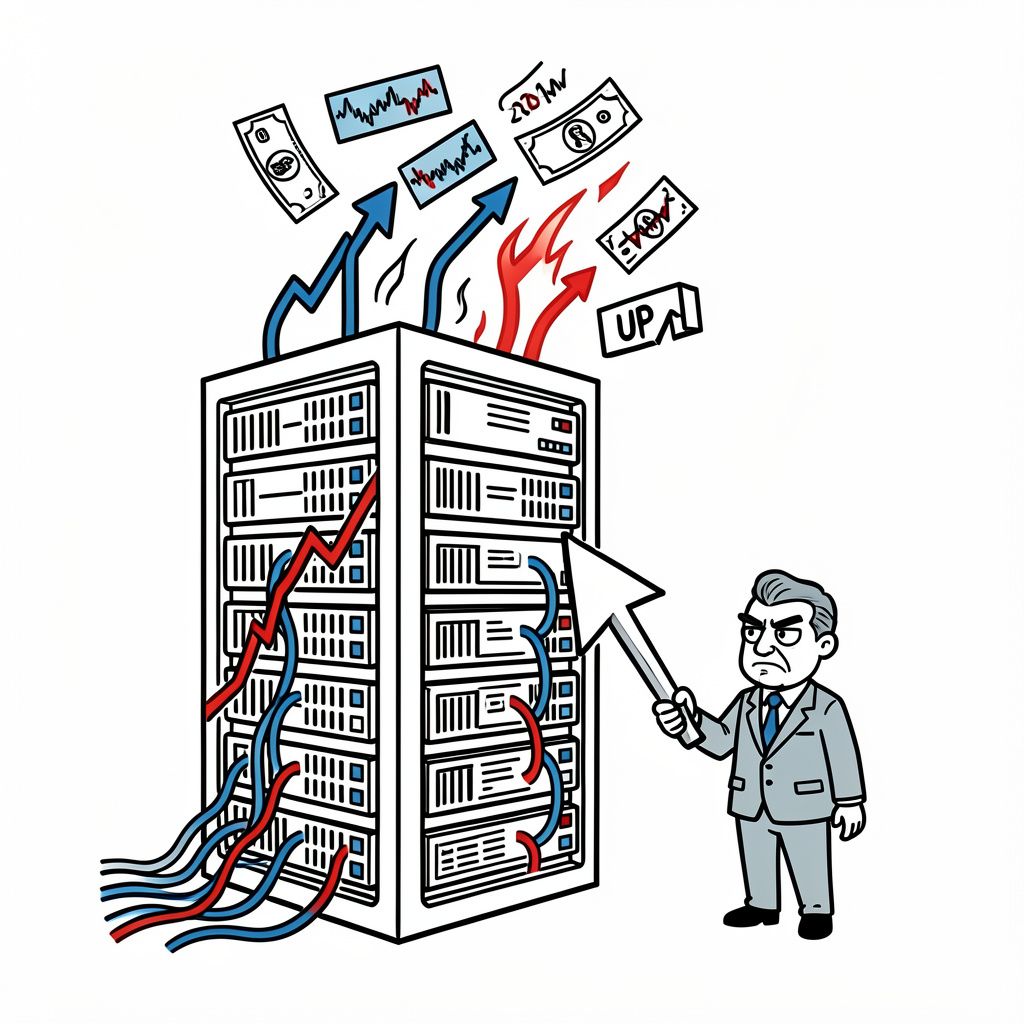
Federal Reserve officials warn that massive, rate-insensitive spending on artificial intelligence data centers is causing broad economic overheating, forcing central bankers to consider additional interest rate hikes to curb persistent inflation.
Infrastructure Demand Spills Over
Federal Reserve Bank of Chicago President Austan Goolsbee stated on October 12, 2026, that AI-induced inflationary pressure is broad-based rather than isolated to specific tech sectors [2]. He noted that prices are rising in spaces not just adjacent to data centers, signaling straight, old-fashioned overheating demand [1]. Goolsbee noted inflation has already run above the Fed’s 2% target for more than five years [7]. This competition for power grid access and industrial real estate is spilling over into other sector costs, presenting a complex variable for monetary policymakers [1].
The scale of this investment is historic, with AI infrastructure investment expected to total $10.3 trillion between 2025 and 2032 [6]. This figure represents more than 3.6% of U.S. gross domestic product each year over that period, exceeding previous investment booms like the railroad and telecommunications networks [6]. Demand shocks are creating inflation through competition for construction workers, electricians, and building supplies where supply cannot keep pace [6]. Goolsbee warned in a speech in London on September 21 that if demand overheats, there is no ambiguity about how the Fed needs to respond [6].
Financial Strain and CPI Data
Recent economic data supports concerns regarding persistent inflation, with the Bureau of Labor Statistics releasing the September Consumer Price Index report on October 14, 2026 [2]. Headline inflation registered at 3.7% year-over-year, up from 3.4% in August, while core CPI reached 2.6%, exceeding the 2.5% forecast [2]. Concurrently, financial strain is visible in specific sectors, such as CoreWeave, where default insurance costs hit 881 basis points during the week of October 12–16, 2026 [2]. This represents a significant increase from 547 basis points in late June 2026, calculated as 61.06 [2].
Yields on 9.625% senior notes due 2032 climbed from approximately 13.4% on October 1 to greater than 15% [2]. CoreWeave shares fell by up to 16% on October 14, 2026, coincident with the hotter-than-expected CPI print [2]. Investors are distinguishing between hyperscalers with substantial existing cash flows and leveraged infrastructure providers facing upfront capital expenditure borrowing [5]. This differentiation highlights the risk where spending is running well ahead of realized productivity gains [5].
Monetary Policy and Future Outlook
Federal Reserve officials indicate that persistent inflation driven by AI infrastructure spending necessitates further interest rate hikes [1]. Futures markets anticipated a Federal Reserve interest rate hike later in October 2026, following a rate increase in September 2026 which marked the first increase in three years [1]. Fed Governor Lisa Cook has identified AI-related spending as a risk factor capable of maintaining elevated inflation levels into 2027 [2]. Analysis suggests Fed rate hikes will likely continue into 2027, initially squeezing small caps and consumers [4].
Goolsbee drew a parallel between current AI infrastructure spending and the internet-era bubble, where infrastructure was built for 20% annual growth but only 7% materialized [3]. He warned that financial bubble unwinds can get ugly depending on the leverage associated with them [3]. The Federal Reserve Bank of Chicago brought together payments leaders for discussion on AI and modernization on October 16, 2026 [8]. Goolsbee opened the Chicago Payments Symposium, setting the tone for conversations on opportunities and challenges shaping the industry [8].
Sources
- futurism.com
- startupfortune.com
- stocktwits.com
- seekingalpha.com
- www.linkedin.com
- x.com
- www.threads.com
- www.instagram.com