Hurricane Isaias Hits Gulf Coast, Threatening Power Outages and Offshore Energy
Tallahassee, Friday, 9 October 2026.
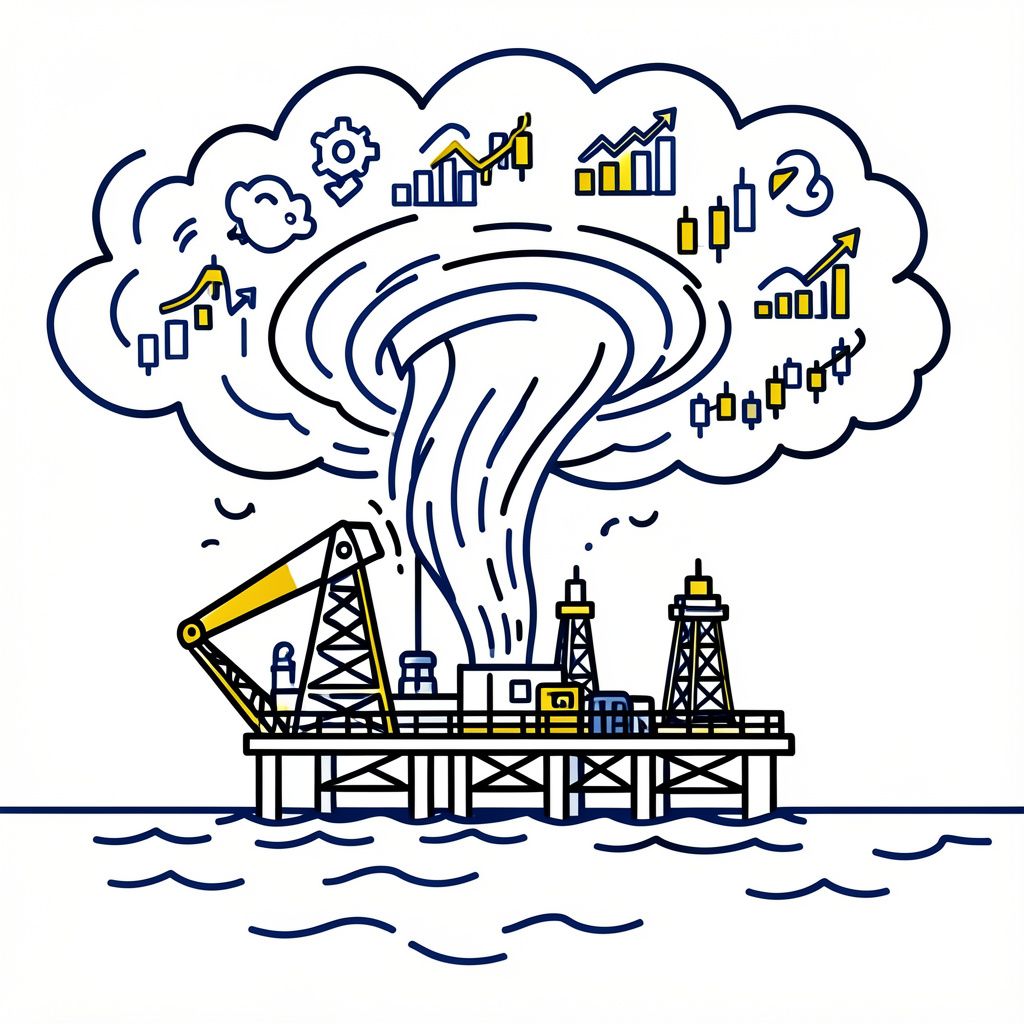
Making landfall on October 9, 2026, record-late Hurricane Isaias shut down 63 percent of Gulf oil production and threatened severe power grid disruption across the U.S. Southeast.
Hurricane Isaias Hits Gulf Coast, Threatening Power Outages and Offshore Energy
Hurricane Isaias made landfall on October 9, 2026, as a major Category 3 storm, shutting down 63 percent of regional oil production and threatening severe power grid disruption across the U.S. Southeast [1][3]. Utility provider Duke Energy Florida (NYSE: DUK) and regional power companies have deployed emergency response teams to handle potential grid damage and widespread outages affecting Florida, Alabama, and Mississippi [5]. The storm poses significant operational and financial risks to regional commerce, supply chains, and energy distribution as it moves inland [1][7].
Storm Intensity and Trajectory
On Friday, October 9, 2026, Hurricane Isaias intensified into a Category 3 hurricane with 193 km/h (120 mph) winds, located 290 km south of Pensacola [1][5]. The storm previously tracked at 110 mph before intensifying, representing a wind speed increase of 10 mph in a short period [5][7]. Landfall was projected for the evening of October 9, 2026, on the western Florida Panhandle, with hurricane warnings extending from the Florida Bay-Gulf County line to Ocean Springs, Mississippi [1][7].
Wind and Rain Forecasts
The National Hurricane Center forecasts life-threatening storm surges of 0.6 m to 2.7 m (2-9 feet) from Florida’s Big Bend to southeastern Louisiana [1]. Rainfall totals are expected to reach up to 381 mm (15 inches) in the Florida Panhandle and Big Bend, with hazardous conditions persisting through October 10, 2026 [1][7]. Meteorologists note that even if the storm weakens slightly before landfall, it is expected to grow in size, threatening a broader geographic region with flood waters [2].
Energy Infrastructure and Economic Impact
The storm threatens critical energy infrastructure, with 63% of regional oil production—accounting for 1.3 million barrels per day—temporarily halted as of October 8, 2026 [3]. Duke Energy is the utility provider associated with the affected region and is monitoring the grid for rapid power restoration needs [5][3]. While 63% of regional production halted, approximately 25% of Gulf oil production was suspended overall, a difference of 38 percentage points between regional and Gulf-wide impacts [3].
Oil Production Halts
Major companies like Chevron and Shell are shutting down offshore production and evacuating workers, causing Brent crude oil prices to surge nearly 5% on October 8, 2026 [2][3]. As of October 7, 2026, 25% of Gulf oil production (approximately 511,000 barrels per day) was halted, and 8 of the 371 manned oil platforms in the Gulf were evacuated [3]. Energy companies are bracing for potential damage to pipelines and refineries as the storm tracks northeastward [3][5].
Emergency Response and Evacuation Protocols
Florida Governor Ron DeSantis issued urgent warnings for residents from Pensacola to the Big Bend to evacuate, noting the storm is “lopsided” with significant impacts extending east of the landfall point [1]. States of emergency were declared across the states of Florida and Alabama in preparation for the storm, with mandatory evacuations initiated in specific regions [2][6]. Santa Rosa County issued an evacuation order for Zones A and B effective at 12:30 p.m. on October 8, 2026, encompassing low-lying areas and mobile homes [6].
Outlook and Preparation
Residents are instructed to prepare for power outages by stocking food, water, gas, and medications for a 72-hour duration [7]. Emergency services warned that they will be unable to respond to calls during the height of the storm due to unsafe conditions, emphasizing the need for early evacuation [3]. The storm is forecast to track inland and accelerate northeastward over the weekend, bringing rain to the Southeast and Mid-Atlantic through October 11, 2026 [5][7].
Sources
- www.sun-sentinel.com
- www.cnn.com
- www.nbcnews.com
- www.facebook.com
- www.foxweather.com
- www.santarosa.fl.gov
- abcnews.com
- www.facebook.com