Why the American Dream Is Slipping Away for Low-Income Households
New York, Monday, 10 August 2026.
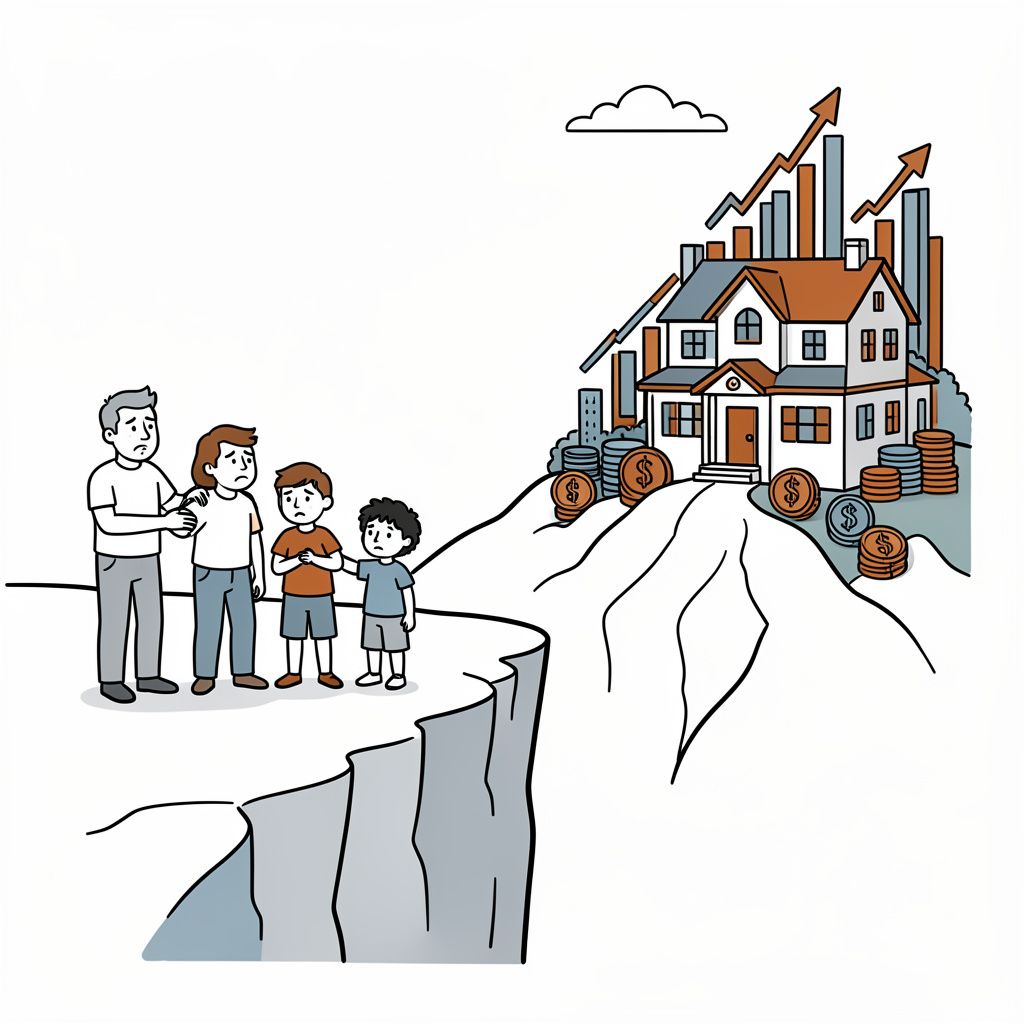
JPMorgan Chase CEO Jamie Dimon warns that incomes for the bottom 20 percent of American households have stagnated for 20 years, fueling deep economic anxiety and societal division.
Why the American Dream Is Slipping Away for Low-Income Households
JPMorgan Chase CEO Jamie Dimon warns that incomes for the bottom 20 percent of American households have stagnated for 20 years, fueling deep economic anxiety and societal division [1]. Speaking on August 10, 2026, Dimon emphasized that while the American Dream remains achievable for many, the reality is increasingly slipping away for the most vulnerable populations [1]. This stagnation poses a long-term risk to domestic consumer health and overall economic stability, according to the banking executive [1]. Dimon noted that even those who are not directly affected by the inequality are unhappy seeing fellow citizens suffer, highlighting a moral dimension to the economic data [1].
Generational Shifts in Economic Confidence
Recent data underscores the depth of the pessimism among younger generations. An AP-NORC report published in June 2026 found that only 20% of adults aged 18 to 29 believe the American Dream is possible [1]. This sentiment is compounded by broader institutional distrust; Gallup released data in August 2026 showing that public faith in institutions has reached a record low [2]. Additionally, a July 2026 Glassdoor Employee Confidence Index report indicated that employee confidence reached an all-time low, reflecting widespread workplace unease [2]. Dimon argued that this economic anxiety is a primary driver of current societal polarization, as people observe others doing very well while they are not [1].
Capitalism, Polarization, and Political Response
The economic discontent has political ramifications, with Pew Research Center data from June 30, 2026, indicating approximately one-third of US Democrats favor political leaders identifying as democratic socialists [1]. BlackRock CEO Larry Fink noted in his March 23, 2026, letter to shareholders that economic anxiety stems from a perception that capitalism is not benefiting enough people [1]. Dimon countered that capitalism, despite flaws, remains superior to alternatives, stating that every system has flaws and bad people exist in all societies [1]. He urged leaders from both parties to acknowledge the problem and work on solutions rather than ignoring the disparity [1].
Technological Disruption and Labor Market Dynamics
Looking toward the future, Dimon advised against hyperventilating regarding AI-driven job displacement, asserting that the technology will create more jobs than it destroys [2]. This comment came during an on-stage conversation at an SF Standard event in San Francisco on August 3, 2026, where he also addressed wealth tax proposals [2]. Dimon argued that wealth taxes would be excessively complex and counterproductive, potentially creating millions of jobs for lawyers and compliance officers rather than providing societal benefits [2]. Meanwhile, JPMorgan executive Noah Wintroub stated at the same event that the Bay Area holds 35% of the world’s market capitalization, highlighting the concentration of wealth in tech hubs [2].