Japan’s Top Startups Head to Silicon Valley: Why These Five Could Change Global Markets
San Francisco, Wednesday, 17 June 2026.
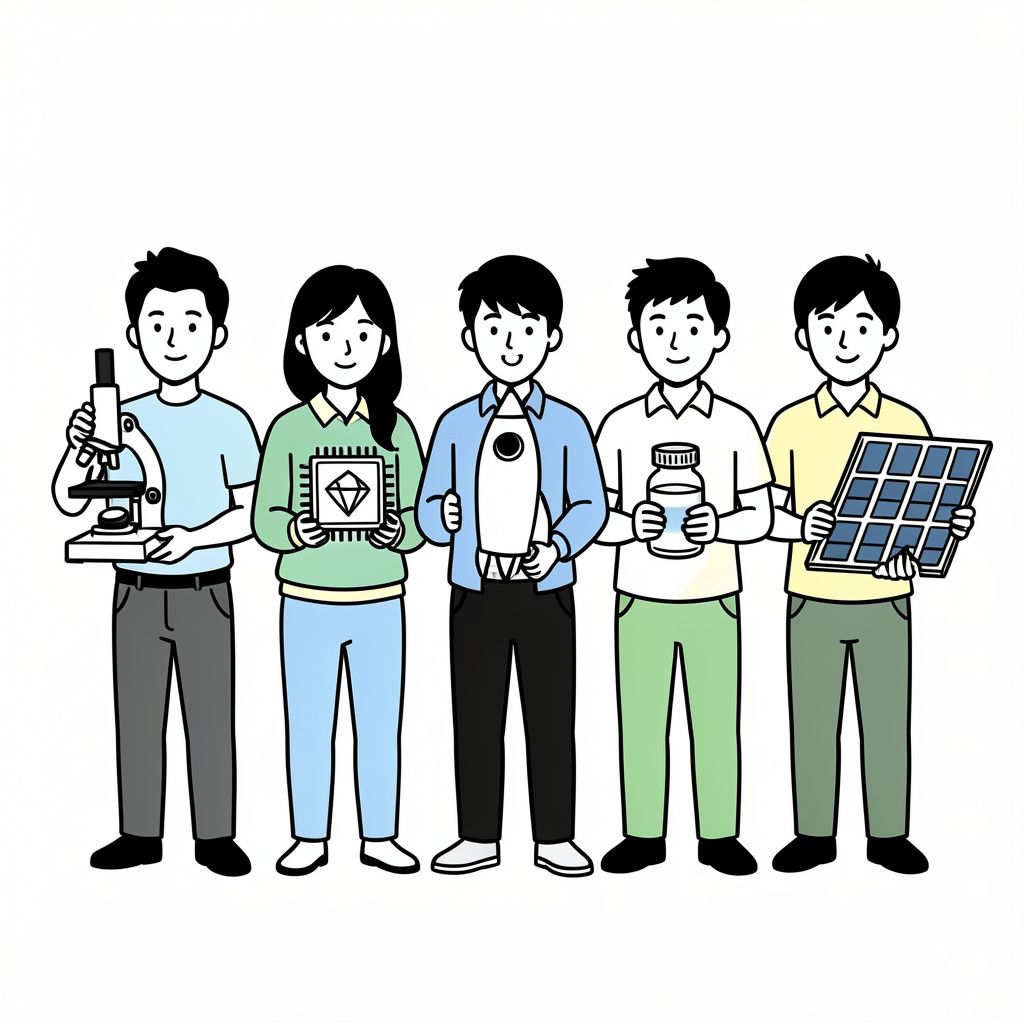
Five Japanese startups—pioneering cancer treatment, diamond semiconductors, and space propulsion—will debut at Silicon Valley’s 2026 Japan–U.S. Innovation Showcase. One has already treated over 1,300 patients, while another is building the world’s first diamond semiconductor facility. Their selection signals Japan’s rising influence in AI, biotech, and clean energy, offering U.S. investors a rare glimpse of tomorrow’s disruptors.
The Startups: From Cancer Treatment to Space Propulsion
The 2026 Japan–U.S. Innovation Awards Innovation Showcase, produced by the Japan Society of Northern California and Stanford University’s U.S.–Asia Technology Management Center, has selected five Japanese startups that exemplify the country’s technological prowess in high-growth sectors. Among them, Oxyrest Inc. stands out for its clinical impact, having already treated over 1,300 patients with its proprietary technology. The startup is now advancing international clinical trials in the United Kingdom, Europe, and the United States, targeting breast, cervical, and rectal cancers [1]. This milestone underscores Japan’s leadership in biotechnology, a sector projected to reach a global market value of $3.44 trillion by 2030, with oncology innovations driving a significant share of growth [GPT].
Space Tech and AI: Expanding Japan’s Innovation Footprint
Pale Blue, founded in 2020, is revolutionizing small-satellite propulsion with its compact, efficient systems. The startup has demonstrated multiple in-orbit operations, enabling commercial space activities from low-Earth orbit to deep space. Its technology addresses a critical need in the burgeoning space economy, valued at $469 billion in 2021 and expected to exceed $1 trillion by 2030. Pale Blue’s propulsion systems could reduce satellite launch costs by up to 30%, making space more accessible for private enterprises and research institutions [1][GPT]. The company’s inclusion in the Innovation Showcase reflects Japan’s strategic focus on space technology, a sector where the country has historically lagged behind the U.S. and China but is now gaining momentum.
Why Silicon Valley? The Strategic Importance of the Innovation Showcase
The Japan–U.S. Innovation Awards Symposium, scheduled for 16 July 2026 at Stanford University’s Frances C. Arrillaga Alumni Center, serves as a critical bridge between Japanese innovators and American investors. Registration for the event is open at www.usjinnovate.org, offering attendees a firsthand look at technologies poised to disrupt global markets [1]. The symposium, now in its 16th year, has a track record of fostering cross-border partnerships, with past participants securing over $500 million in combined funding and strategic alliances [GPT].
The Broader Context: U.S.–Japan Collaboration in a Competitive Landscape
The 2026 Innovation Showcase arrives at a pivotal moment for U.S.–Japan relations, as both nations seek to counterbalance China’s technological dominance. Japan’s startup ecosystem has grown significantly in recent years, with the number of unicorns increasing from 2 in 2018 to 10 in 2023, and venture capital investments reaching a record $8.2 billion in 2022 [GPT]. However, Japanese startups still face challenges in scaling globally, including limited access to international markets and a risk-averse corporate culture. Initiatives like the Innovation Showcase aim to address these gaps by providing a platform for high-potential firms to engage with U.S. stakeholders.
What’s Next? The Road to Commercialization and Global Impact
For the five selected startups, the Innovation Showcase is just the beginning. Oxyrest’s international clinical trials, Ookuma’s diamond semiconductor facility, and Pale Blue’s in-orbit demonstrations are all critical steps toward commercialization. However, scaling these technologies will require significant capital, regulatory approvals, and strategic partnerships—areas where U.S. expertise can be invaluable. The event’s organizers emphasize that the showcase is not merely a pitch competition but a launchpad for long-term collaboration [1].
A Glimpse into the Future: What These Startups Could Mean for Global Markets
The technologies showcased at the 2026 Innovation Showcase have the potential to reshape industries far beyond Japan and the U.S. Oxyrest’s cancer treatment platform, for instance, could accelerate the shift toward personalized medicine, a market expected to reach $796.8 billion by 2028. Ookuma’s diamond semiconductors may enable faster, more energy-efficient electronics, reducing the carbon footprint of data centers and telecommunications networks. Pale Blue’s propulsion systems could lower the cost of satellite launches, democratizing access to space for emerging economies [GPT].