The 2026 Retirement Deficit: Why Millions of Aging Americans Face Financial Insecurity
New York, Friday, 24 April 2026.
In 2026, 40% of older United States workers lack retirement accounts. While experts suggest needing $2.1 million, this massive shortfall threatens social safety nets and long-term economic growth.
The Reality of the Savings Deficit
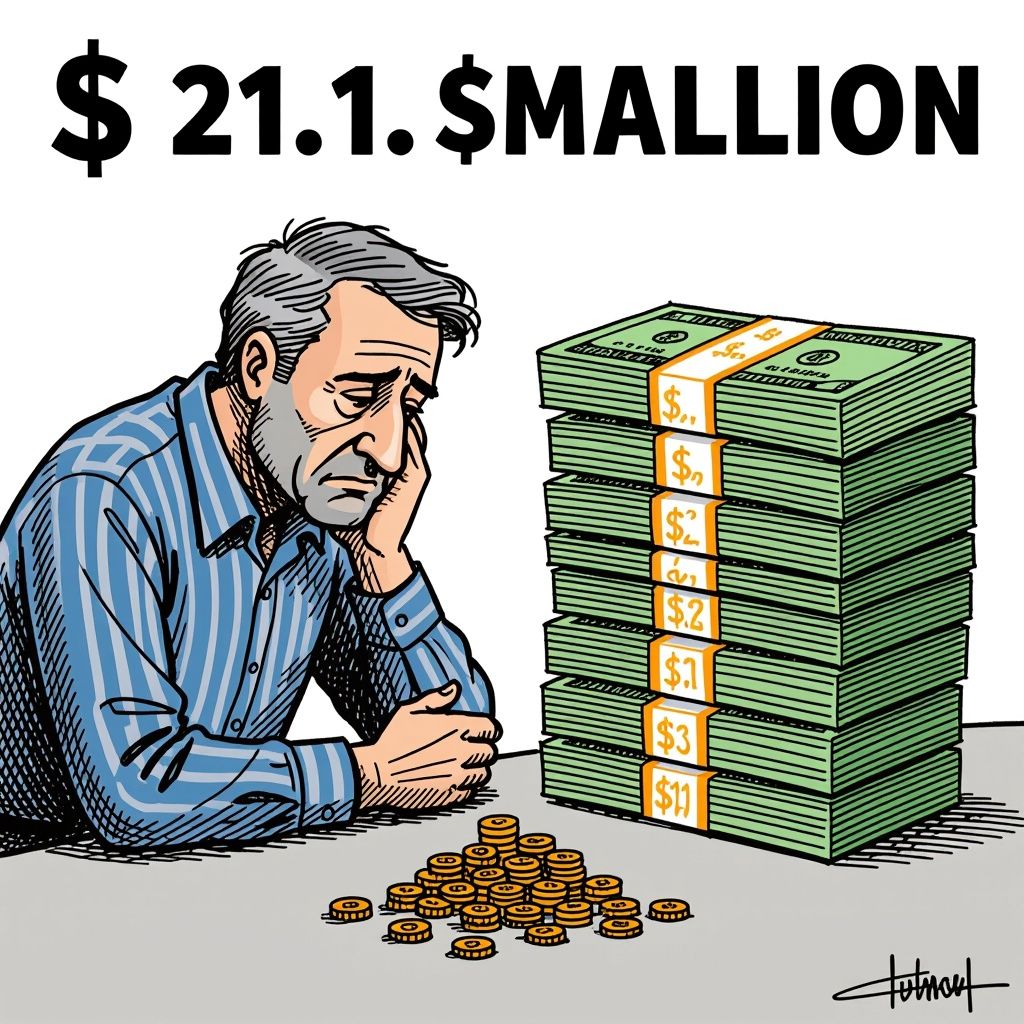
A recent survey conducted by BlackRock in early 2026 reveals a stark disconnect between retirement expectations and financial reality. Americans currently believe they require an average of $2.1 million to retire comfortably [1]. However, Larry Fink, BlackRock’s CEO, noted that “almost no one” is actually approaching this target [1]. The data underscores this reality: 62% of surveyed individuals have accumulated less than $150,000 in retirement savings [1]. This implies that a significant majority of the population has saved merely 7.143% of their perceived $2.1 million goal [1]. If this present trajectory continues, the broader economy will likely face severe contractions in future consumer spending as a massive cohort of aging Americans dramatically reduces their discretionary purchases to survive [GPT].
Demographic Shifts and Delayed Retirements
As savings dwindle, the traditional timeline for leaving the workforce is fundamentally altering. According to a 2023 analysis from the Pew Research Center, the number of Americans choosing or needing to work past the age of 65 has quadrupled since the 1980s [1]. The economic implications of this shift are profound. When older adults remain in the labor pool out of financial necessity, it can impact wage dynamics and alter the availability of senior roles for younger generations entering the market [GPT]. A 2025 study by Schroders highlighted the human cost of this trend, revealing that nearly 20% of American retirees describe themselves as “struggling” or “living the nightmare,” compared to a mere 5% who feel they are “living the dream” [1].
The Compounding Effect of Debt and Economic Stress
The retirement crisis is further exacerbated by immediate economic pressures that force individuals to raid their future security. A 2025 report from Payroll Integrations showed that 38% of professionals across all generations have executed early withdrawals from their retirement accounts [1]. More specifically, 41% of Generation X and baby boomers, alongside 31% of millennials, have tapped into these funds, frequently to manage emergencies or pay down debt [1]. The broader economic climate heavily influences this behavior. The American Psychological Association noted in 2025 that the economy and the future of the nation remain the primary stressors for the American public [3].
Strategic Pathways Forward
Addressing this deficit requires actionable financial strategies, particularly for the 60% of adults aged 30 to 60 who view their current life stage as a chance for reinvention [2]. J.P. Morgan Personal Investing advocates for a multi-step approach, beginning with the establishment of a three-to-six-month emergency fund to buffer against economic shocks [2]. Experts broadly agree on this baseline, noting that the exact amount should be calibrated to a household’s specific monthly needs, which can be substantial given that the average U.S. household reported $78,535 in annual expenses in 2024 [2][4].