European Union Prepares New Tariffs Following China's Signals on Trade Imbalances
Brussels, Monday, 3 August 2026.
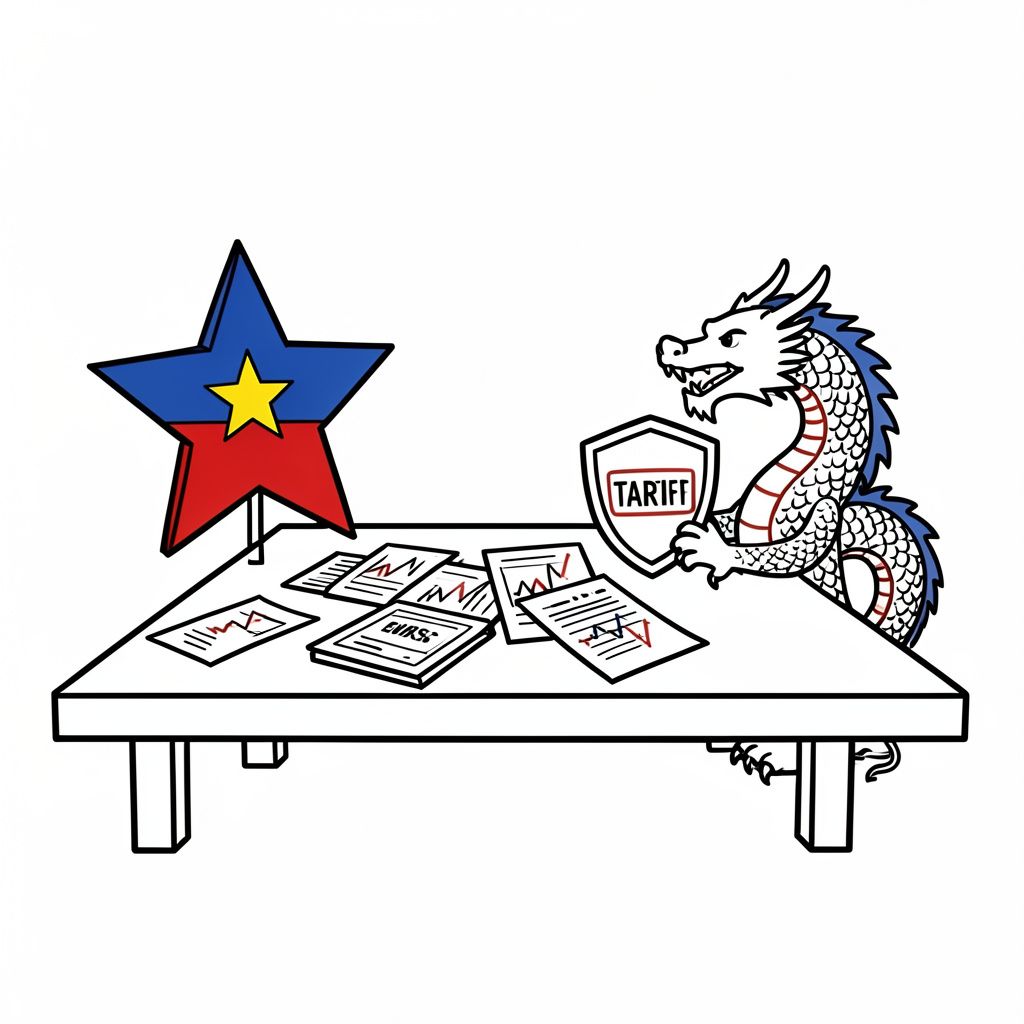
With the trade deficit reaching €1 billion daily, Beijing’s refusal to curb industrial subsidies forces Brussels toward protectionist tariffs, risking major retaliatory strikes against European defence sectors.
Escalating Trade Tensions
The economic relationship between the European Union and China faces escalating tension following a policy document published by Beijing in late July 2026 [1]. The communication indicates China has little intention of altering its industrial subsidies or addressing the growing trade surplus with Europe [1]. As a result, Brussels is moving closer to implementing retaliatory protectionist measures, including targeted import tariffs [1]. For American business leaders and global supply chain managers, this widening rift threatens to disrupt international trade flows and reshape global manufacturing corridors [1].
Record Deficit Data
The EU-China trade deficit reached a record €1 billion per day in 2025, with the total annual deficit increasing from €182 billion in 2020 to €360 billion in 2025 [2]. This represents a significant expansion in the trade imbalance over the five-year period 97.802 [2]. EU Trade Commissioner Maroš Šefčovič and Chinese counterpart Wang Wentao met in Brussels on 29 June 2026 to address these trade imbalances and subsidies [2]. Despite a joint statement calling for a stabilising relationship, structural issues remain unresolved [2].
Sanctions and Retaliation
In recent months, the EU implemented a sanctions package which blacklisted 14 Chinese and Hong Kong-based companies [2]. In retaliation, Beijing barred 14 European companies from receiving dual-use goods, including major defence organisations [4]. Unlike the long notice afforded to their own diplomats, China gave Brussels just a one-hour warning before firing back ferociously [4]. The firms named are effectively cut off from receiving Chinese-origin materials via overseas suppliers, an extraterritorial reach that could send a chilling effect through supply chains [4].
EU Trade Measures
On 28 July 2026, the Commission imposed anti-dumping duties on imports into the EU of polyamide yarns from the People’s Republic of China [3]. Additionally, on 30 July 2026, the European Commission launched a targeted consultation seeking stakeholders’ feedback on the product scope under the EU Steel Regulation [3]. EU trade policy is currently targeting Chinese entities regarding illegal products, public subsidies, and foreign direct investment, leading to potential retaliation threats from Beijing [2].
Future Deadlines and Outlook
The EU has set an October 2026 deadline for tangible results from dialogue, with EU leaders scheduled to meet in Brussels that same month to discuss macroeconomic imbalances [2]. Brussels and Beijing are heading toward a trade confrontation in the coming months, but the concessions Europe can extract will depend on how much economic pain the EU is willing to endure [5]. Experts suggest China’s economic adjustments internally are unlikely to happen as Beijing is stuck in a system that needs to gain export market shares [2].