United States and Japan Join Forces to Strengthen the Yen
Tokyo, Sunday, 2 August 2026.
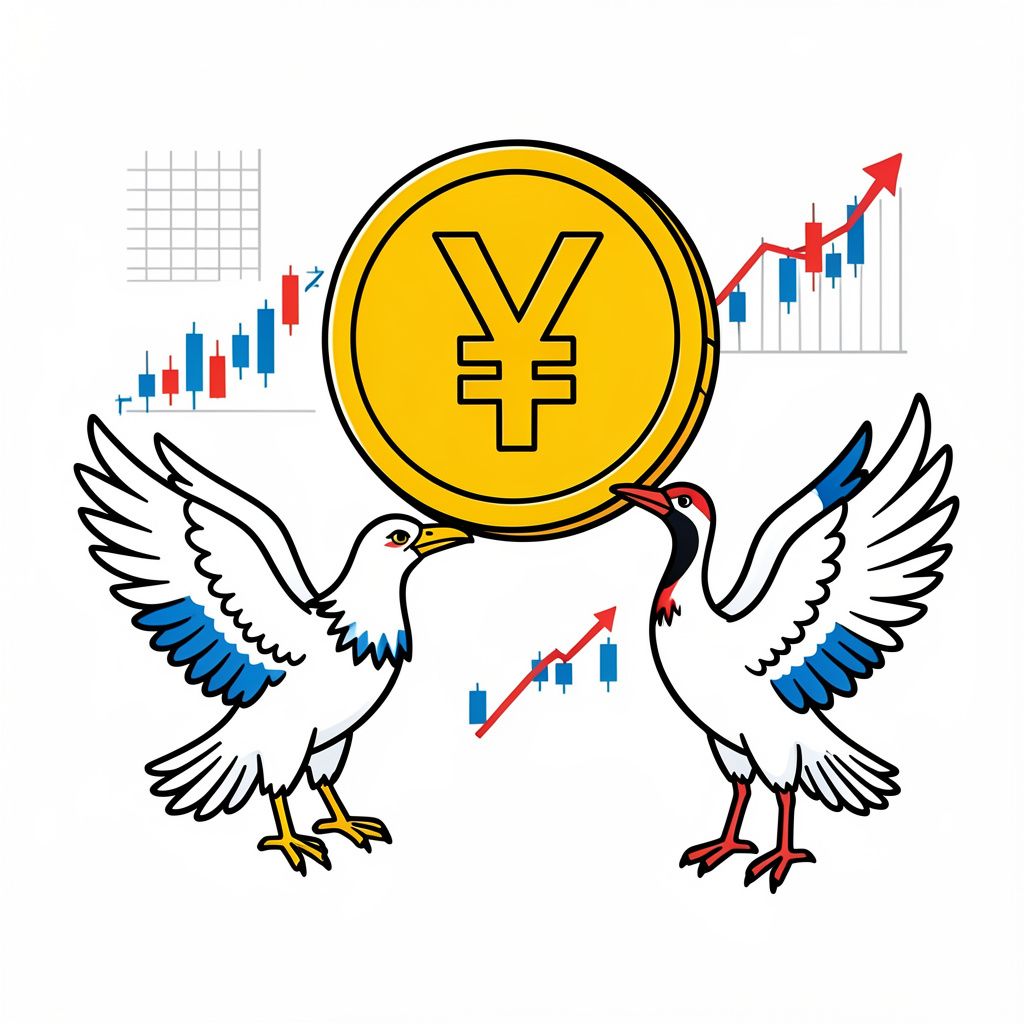
On July 31, 2026, the U.S. and Japan launched a coordinated multi-billion-dollar intervention to strengthen the yen, propelling the currency to its highest level since mid-May.
Intervention Mechanics and Market Reaction
Specifics regarding the currency stabilization effort emerged on July 31, 2026, when U.S. Treasury Secretary Scott Bessent was photographed at Camp David with a note referencing a plan to buy between $5 billion and $10 billion in yen [2]. This coordinated action between the U.S. Treasury and the Japanese government aimed to address the currency’s recent depreciation, resulting in the yen strengthening to levels not observed since mid-May 2026 by August 1, 2026 [1][2]. Market analysts noted that the intervention signaled a shift in monetary policy coordination, impacting capital flows across the region [3]. The timing coincided with broader market volatility driven by geopolitical tensions and artificial intelligence investment surges [3].
Corporate Strategies Pivot Amidst Demographic Shifts
In the corporate sector, Japanese baby goods manufacturer Pigeon is shifting its strategic focus to the U.S. market, treating it as a “new China” due to record-low birth rates in its primary market [1]. Although Pigeon has operated in China since 2002 and currently derives over 60% of its total operating profit from the region, demographic pressures are forcing a reevaluation of long-term growth models [1]. Simultaneously, four major U.S. technology companies reported a collective $95 billion cash outflow in Q2 2026 due to surging investments in artificial intelligence [1]. In contrast, memory chip manufacturers reported a $90 billion cash flow boost driven by the ongoing AI sector expansion, creating a net difference of 5 billion between these specific tech segments [1]. To support infrastructure demands related to this growth, Mitsubishi Electric announced plans on July 31, 2026, to localize production of data center cooling systems within the United States [1].
Security Protocols and Regional Stability
National security concerns are also reshaping economic policies, with the Japanese government officially launching a new intelligence agency on July 31, 2026, with a primary mandate to counter industrial espionage [1]. This move reflects heightened concerns over supply chain security and technology protection amidst rising global tensions [1]. In East Asia, Taiwan implemented regulatory easing for foreign telecom satellite operators on July 25, 2026, signaling an intent to integrate services like Elon Musk’s Starlink [1]. However, regional stability remains fragile, as territorial tensions between Thailand and Cambodia have escalated, with the Thai military constructing a border wall resulting in negative impacts on bilateral trade [1]. These security dynamics are critical for American executives monitoring supply chain resilience in Southeast Asia [1].
Economic Forecasts and Infrastructure Development
Looking ahead, Vietnam is pursuing a 10% economic growth target, though economists warn this rapid expansion risks fueling inflation and exposing structural economic weaknesses [2]. In Japan, Finance Minister Satsuki Katayama announced on July 30, 2026, that the government will remove the cap on growth-related spending requests for the fiscal 2027 budget [2]. Infrastructure development continues elsewhere in the region, evidenced when Indian Prime Minister Narendra Modi inaugurated the Alluri Sitarama Raju International Airport in Vizag on August 1, 2026 [2]. The GMR-built facility has an initial handling capacity of 6 million passengers annually and aims to attract Southeast Asian travelers [2]. These developments underscore the complex interplay of fiscal policy and infrastructure investment driving Asian economies in August 2026 [2].