New Global Rules Ban AI Authors and Forged Citations in Medical Research
Geneva, Monday, 25 May 2026.
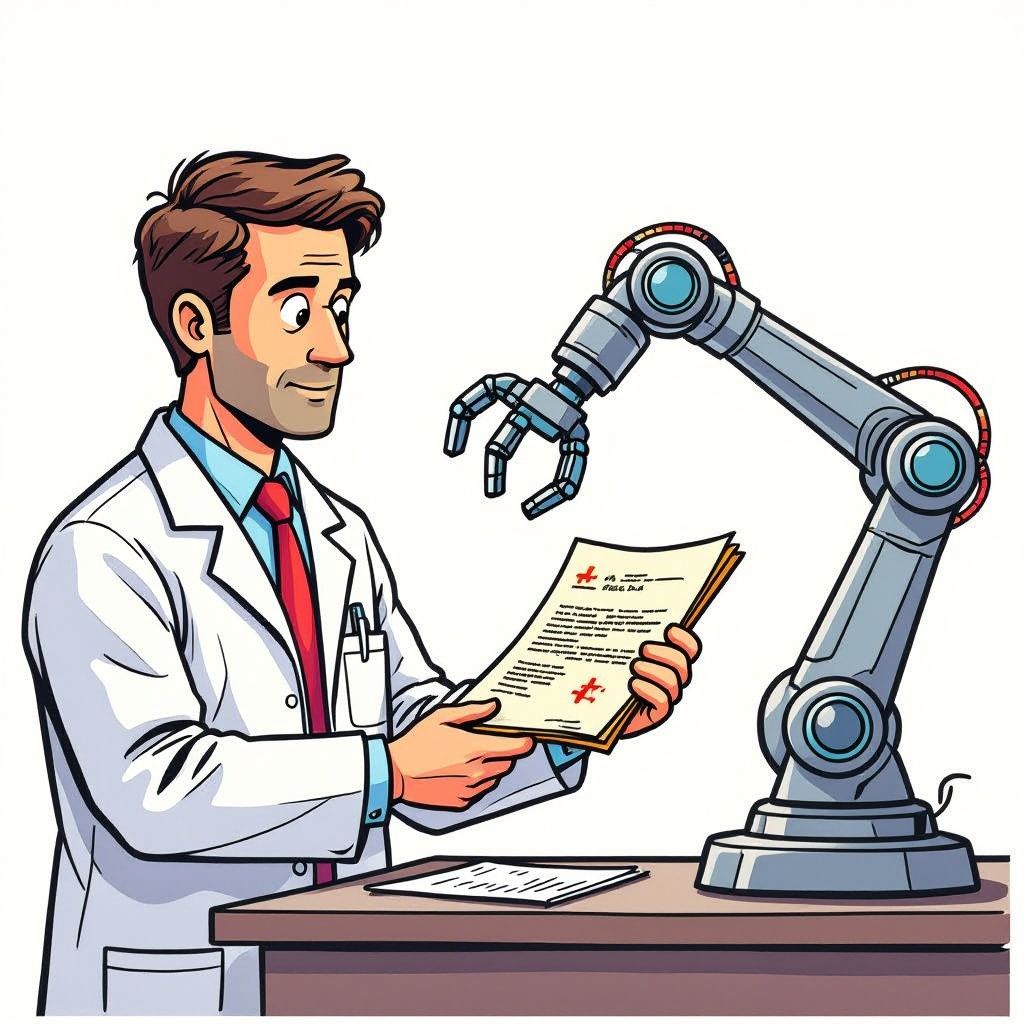
Released today, new global medical guidelines strictly ban AI from being named as authors or generating citations, setting a crucial standard to protect data accuracy and human accountability.
Establishing Boundaries in Generative AI
On May 25, 2026, a new set of global consensus guidelines was published to govern the responsible use of generative artificial intelligence in medical research [1]. Prior to this unified framework, a review of AI policies across 15 major publishers, including the JAMA Network and Elsevier, highlighted significant inconsistencies [1]. The newly minted rules unequivocally prohibit listing AI as an author, generating fake references, or utilizing AI to create or manipulate primary research images [1]. This definitive stance aims to address persistent concerns regarding data leaks and AI masquerading as human researchers, ensuring that human authors remain fully accountable for scientific integrity [1].
The Push for Evidence-Based AI Tools
As medical publishing tightens its regulations against generative fabrications, the demand for evidence-based AI tools has surged [GPT]. One such platform is Consensus AI, an academic search engine that analyzes over 200 million peer-reviewed scientific papers sourced from databases like Semantic Scholar and PubMed [2][3]. Unlike standard predictive text models that require independent fact-checking to avoid hallucinations, Consensus AI grounds its responses directly in published evidence, covering publications spanning from the 1960s to May 2026 [2][3]. The platform continuously indexes new papers, typically incorporating peer-reviewed research within two to four weeks of publication [3].
Layered Risk Management in Clinical Settings
The push for AI regulation extends beyond academic publishing and directly into clinical workflows [4]. Artificial intelligence is already active in emergency departments through ambient documentation pilots, sepsis alerts, and staffing forecasts [4]. Following a consensus statement issued by the American College of Emergency Physicians on March 18, 2026, emergency physicians are now navigating how to safely integrate these tools [4]. The core challenge lies in differentiating low-risk administrative tools from high-stakes predictive models that actively influence patient disposition [4].
Global Disparities and Development Frameworks
Developing tailored digital health technologies (DHTs) for these clinical settings requires structured methodologies, a need recently addressed by the “Co-Develop-IT!” guideline published in the Journal of Medical Internet Research on May 22, 2026 [5]. Created by a multidisciplinary team of 10 researchers across four countries, this consensus-based guideline outlines an eight-phase iterative process for designing and evaluating DHT-enhanced training and rehabilitation concepts [5]. By introducing five preparatory contextual research phases before any generative co-development begins, the framework aims to bridge the evidence-to-practice gap and align the fast-paced expectations of industry partners with the rigorous demands of public research institutions [5].
Sources
- www.einpresswire.com
- roadmapaitools.com
- growwingassistant.com
- www.acep.org
- www.jmir.org
- www.icthealth.org