China’s Economic Slowdown: A Pandemic-Era Slump Threatens Global Growth
Beijing, Tuesday, 16 June 2026.
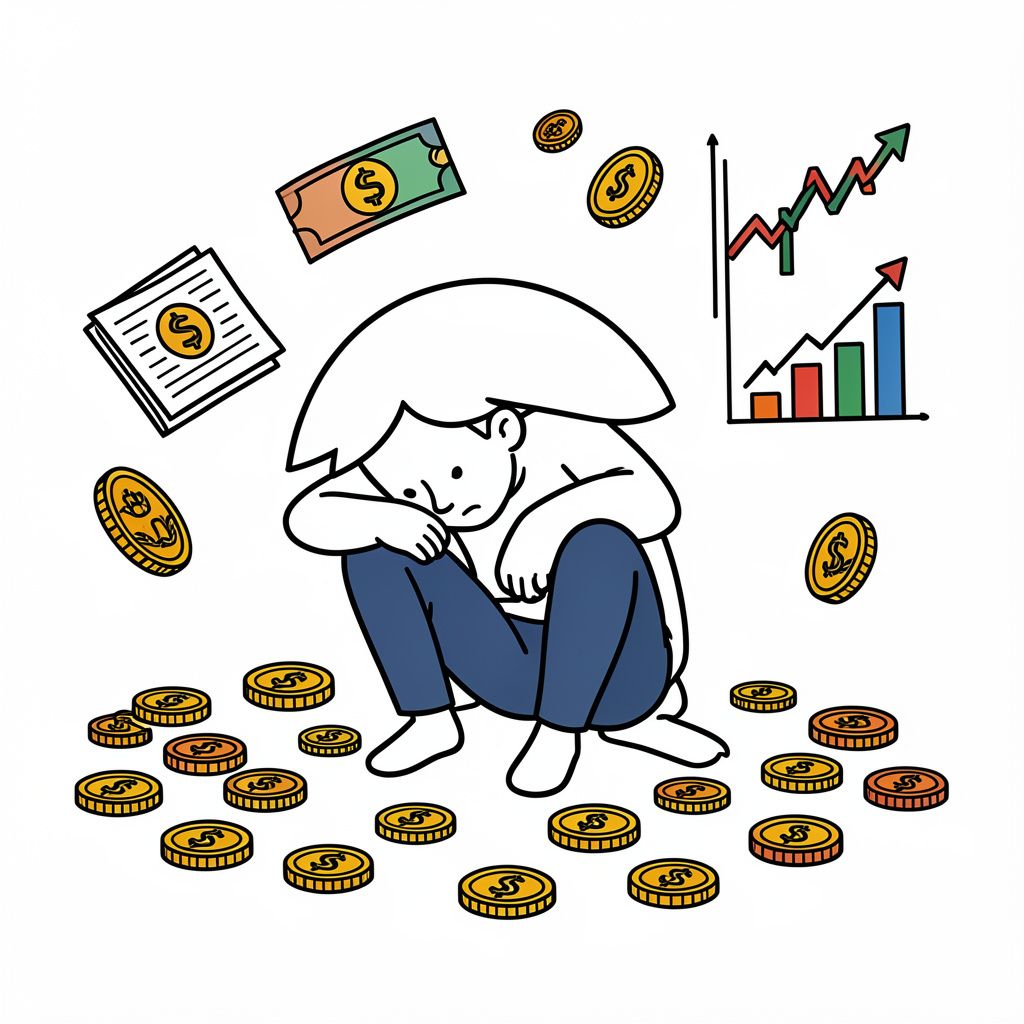
China’s economy is facing its deepest slowdown since the COVID-19 pandemic, with consumer spending and investment plummeting to historic lows. The downturn, driven by deflation and a collapsing property sector, has slashed GDP growth forecasts for 2026 and sent shockwaves through global supply chains. Analysts warn of a ‘two-speed’ economy—where AI-driven exports surge while domestic demand crumbles—raising urgent questions about Beijing’s ability to revive confidence without effective stimulus.
Deflation and Demand Collapse: The Core of China’s Economic Crisis
China’s consumer spending and investment have slumped to levels not seen since the height of the COVID-19 pandemic, with May 2026 retail sales data revealing a stark 16% year-on-year decline in automobile sales and an 11.1% drop when excluding autos [1]. The downturn extends beyond durable goods: home prices fell at an accelerated pace in May 2026 compared to April, signaling a deepening property sector crisis that has eroded household wealth and confidence [1]. The deflationary spiral, now in its third year, has pushed producer prices to five-year lows, compounded by the economic fallout from the Iran war, which has squeezed manufacturing margins and dampened consumer sentiment [2]. Jeremy Stevens, Chief China Economist at Standard Bank, warns that ‘the Iran war has smashed manufacturing margins already squeezed to five-year lows, dented consumer confidence, and fortified arguments favoring precautionary cash-hoarding’ [2].
The Two-Speed Economy: AI Exports Surge While Domestic Demand Falters
While China’s domestic economy struggles, a bifurcated growth pattern has emerged, with high-tech manufacturing and AI-driven exports acting as rare bright spots. Industrial output in May 2026 showed high-tech manufacturing rising 15% year-on-year and electronics surging 17%, driven by insatiable global demand for semiconductors and AI-related hardware [1]. Exports in May 2026 grew at their fastest pace in three months, with semiconductor exports alone jumping 111% year-on-year [1]. However, this export resilience masks a stark reality: private capital expenditure from January to May 2026 plunged 7.1% year-on-year, the worst performance since 2020, while overall manufacturing investment declined for the first time in six years [1]. The divergence underscores Beijing’s challenge in rebalancing growth toward domestic consumption, a goal that has eluded policymakers despite repeated stimulus efforts.
Property Sector Crisis: The Anchor Weighing Down Growth
China’s property sector, once a cornerstone of economic growth, has become the single largest drag on the economy. Real estate investment fell 13.7% year-to-date in the first five months of 2026, while fixed-asset investment is forecast to contract by 2% for the year [2]. KKR estimates that the property crisis will shave 1.0 percentage point off China’s GDP growth in 2026, narrowing only marginally to 0.6 points in 2027 [2]. The sector’s woes are not just a cyclical downturn but a structural shift, with unsold housing inventory prolonging the slump and weighing on construction activity. ‘Property remains the single biggest reason we are not more bullish on China,’ KKR analysts noted in their mid-year outlook, highlighting the sector’s outsized role in household wealth and local government finances [2]. The crisis has also spilled over into consumer behavior, with discretionary spending on FMCG categories like foreign spirits (-17%), wine (-7%), and candy (-5%) plummeting in 2025 as households prioritize essentials [7].
Global Ripple Effects: Supply Chains, Commodities, and Geopolitical Tensions
China’s economic slowdown is reverberating across global supply chains and commodity markets, with potential consequences for inflation and growth in advanced economies. The country’s reduced demand for raw materials has already weighed on prices for iron ore, copper, and crude oil, while its export strength in semiconductors and AI hardware is creating bottlenecks in global tech supply chains [4]. The Strait of Hormuz’s partial closure due to the Middle East conflict has further disrupted energy markets, with oil and natural gas prices rising rapidly in June 2026 [4]. Meanwhile, geopolitical tensions are escalating: the U.S. Pentagon expanded its military-linked China firm list in June 2026 to include Alibaba and Baidu, adding another layer of uncertainty for foreign investors [3]. Emerging markets, particularly in Asia, are feeling the pinch. South Korea and Taiwan, both heavily exposed to China’s tech supply chain, have seen GDP growth accelerate ahead of expectations in 2026, but this is largely due to export resilience rather than domestic demand [4].
The AI Paradox: A Lifeline or a False Dawn?
China’s AI-driven export boom offers a glimmer of hope, but it may not be enough to offset the broader economic malaise. AI-related industries are driving growth in high-tech manufacturing and exports, with hyperscalers like Alibaba, Tencent, and Baidu investing heavily in data center construction and semiconductor production [2][4]. However, the AI sector’s expansion is creating its own challenges, including energy bottlenecks and supply chain constraints. Data centers are increasingly adopting ‘bring-your-own-generation’ models, using natural gas turbines and even small modular nuclear reactors to bypass utility-level energy shortages [5]. These solutions come with multi-year lead times, suggesting that energy constraints will persist well into 2027 [5]. Moreover, the AI boom is not translating into broader economic benefits. While semiconductor exports surged 111% year-on-year in May 2026, overall manufacturing investment declined for the first time since 2020, highlighting the limited spillover effects of AI-driven growth [1].
Consumer Behavior in Crisis: Value-Seeking and Channel Shifts
China’s consumers are adapting to economic uncertainty by prioritizing value, leading to structural shifts in spending patterns and retail channels. In 2025, FMCG spending grew marginally, driven by higher volume (+3.1%) rather than price increases, as average selling prices (ASP) fell across nearly all categories [6]. Packaged food was the most resilient sector, with value growth of 2.2%, while beverages saw a 1.2% decline due to a 5.0% drop in ASP [8]. The shift toward value is evident in channel polarization: e-commerce now accounts for 38% of urban FMCG sales, up from 32% in 2024, while hypermarkets’ share has fallen from 16% in 2021 to 11% in 2025 [7]. Online-to-offline (O2O) delivery platforms, such as Meituan and Alibaba’s Hema, have seen explosive growth, with the O2O market expanding from RMB 1.3 trillion in 2021 to an estimated RMB 2.7 trillion in 2025 [9]. Membership clubs like Sam’s Club and Costco have also gained traction, increasing their channel share from 1.3% in 2023 to 2.0% in 2025 [9]. These shifts reflect a broader trend: consumers are trading down to cheaper brands, smaller pack sizes, and discount channels, while domestic brands and private labels gain market share at the expense of foreign incumbents [7].
The Road Ahead: Can China Avoid a Lost Decade?
China’s economic outlook for the remainder of 2026 and beyond hinges on three critical factors: the effectiveness of stimulus measures, the trajectory of the property sector, and the global demand for AI and tech exports. Analysts have revised downward their GDP growth forecasts for 2026, with KKR projecting growth of 4.4% in 2027, down from 4.6% in 2026 [2]. The official target range of 4.5% to 5% for 2026 now appears optimistic, particularly as deflationary pressures persist and domestic demand remains weak [1]. Beijing’s policy options are constrained by high debt levels, particularly among local governments and property developers, which limit the scope for large-scale fiscal stimulus [2]. Meanwhile, the Federal Reserve’s expected rate cuts in the second half of 2026 could provide some relief by weakening the U.S. dollar and reducing hedging costs for Chinese exporters [4]. However, structural challenges—including demographic decline, geopolitical tensions, and the property sector’s overhang—suggest that China’s economic slowdown may not be a temporary blip but the beginning of a prolonged adjustment period. As UBS’s Yu Song puts it, ‘The second-quarter GDP data looks to be weak, but not quite as weak as one would expect from April data’—a sentiment that captures both the fragility and the resilience of China’s economy in 2026 [1].
Sources
- financialpost.com
- www.cnbc.com
- www.bain.com
- www.invesco.com
- www.invesco.com
- www.bain.com
- www.bain.com
- www.bain.com
- www.bain.com