US and Israel Plan Joint Strikes on Iran After Midterm Elections
Washington, Thursday, 22 October 2026.
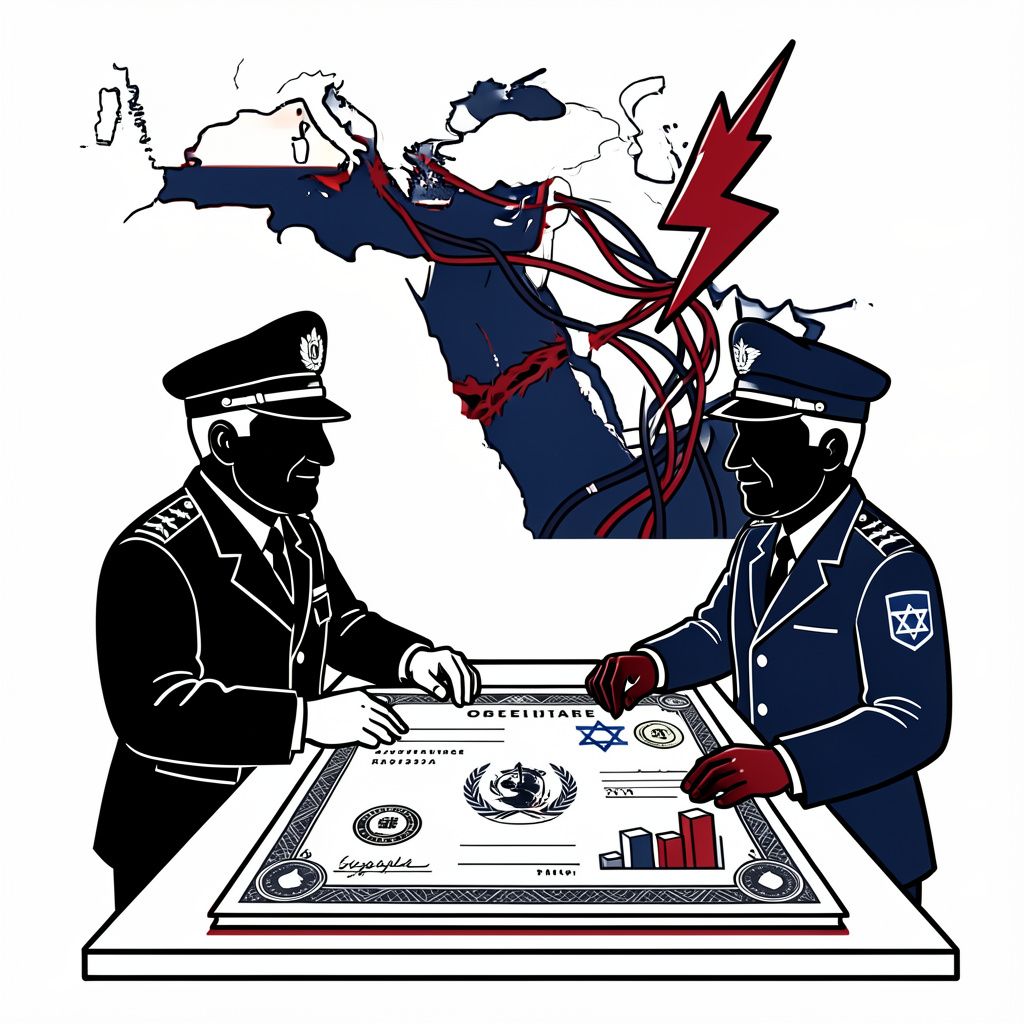
The United States and Israel are planning intensive joint military strikes against Iran following November elections, while Tehran threatens retaliation against critical undersea global internet cables.
Strategic Shifts Following Previous Escalations
Building on previous reporting regarding exchanged war threats and rising oil prices, the geopolitical landscape has shifted toward concrete operational planning [GPT]. United States and Israeli military officials have developed specific plans for renewed strikes against Iran following the American midterm elections scheduled for November 3, 2026 [1][2]. This contingency planning signals a potential escalation in geopolitical tensions that could significantly impact global energy markets and defense sector strategy in late 2026 [1]. Defense Secretary Pete Hegseth met with Israeli Prime Minister Benjamin Netanyahu in Israel earlier in October to discuss these new strikes, according to US officials [1][2]. The targets under consideration would likely include Iran’s energy infrastructure, nuclear facilities, and missile and drone arsenal [1][4].
Strategic Timing and Operational Readiness
Military preparations have intensified, with US and Israeli forces stepping up exercises, including flying planes over Iraq to practise strike manoeuvres [1][4]. On October 20, 2026, Israeli fighter jets conducted an exercise flying eastward over Syria and Iraq toward Iran, turning back before entering Iranian territory [4][6]. Despite these preparations, there is significant political scrutiny regarding the timeline, as there are 12 days remaining until the US midterm elections [GPT]. President Donald Trump has repeatedly vetoed plans in 2026 for a return to major combat operations, citing the need to avoid conflict before the voting concludes [2][4]. Additionally, Israel’s election on October 27, 2026, could complicate the plans, as a caretaker prime minister may face difficulties launching a war [1][6].
Regional Escalation and Retaliatory Threats
Iranian officials have promised to retaliate against any renewed attacks by expanding their targets beyond commercial ships to include data centres and underwater internet cables [1][8]. Brigadier General Yadollah Javani of the IRGC threatened that if Iranian infrastructure is attacked, the Islamic Republic will use all capabilities to destroy assets including internet cables beneath the Strait of Hormuz [3][8]. Tensions flared on October 21, 2026, when an attack at King Fahd International Airport in Saudi Arabia resulted in one fatality and eight injuries [3]. Simultaneously, debris from an intercepted drone targeting the Shaybah oil field killed two individuals and injured two others, prompting the US State Department to order non-emergency government employees to depart Saudi Arabia [3][6].
Diplomatic Implications and Economic Risks
While the United States is assembling a massive arsenal that will be fully in place by early November, diplomatic efforts have continued alongside military posturing [1]. Iranian Foreign Minister Abbas Araghchi confirmed ongoing indirect negotiations with the US regarding a seven-day ceasefire proposal, though Iran remains unwilling to make concessions on its nuclear programme during these talks [1][3]. To counter Iran’s economic resilience, the US Treasury sanctioned the Panamanian-Greek law firm Karnakis and Karnakis and various shipping agents for supporting Iran’s shadow fleet under Operation Economic Outcast [3]. Analysts remain sceptical that a renewed war would be more successful than the first phase of intense US-Israeli strikes between February and April 2026, which previously drove up energy prices and inflation worldwide [1][2].
Sources
- www.straitstimes.com
- www.nytimes.com
- www.cbsnews.com
- www.jpost.com
- www.aljazeera.com
- www.timesofisrael.com
- www.facebook.com
- www.newarab.com