Meta Taps Space-Based Solar Power to Fuel Its Expanding AI Data Centers
Menlo Park, Tuesday, 28 April 2026.
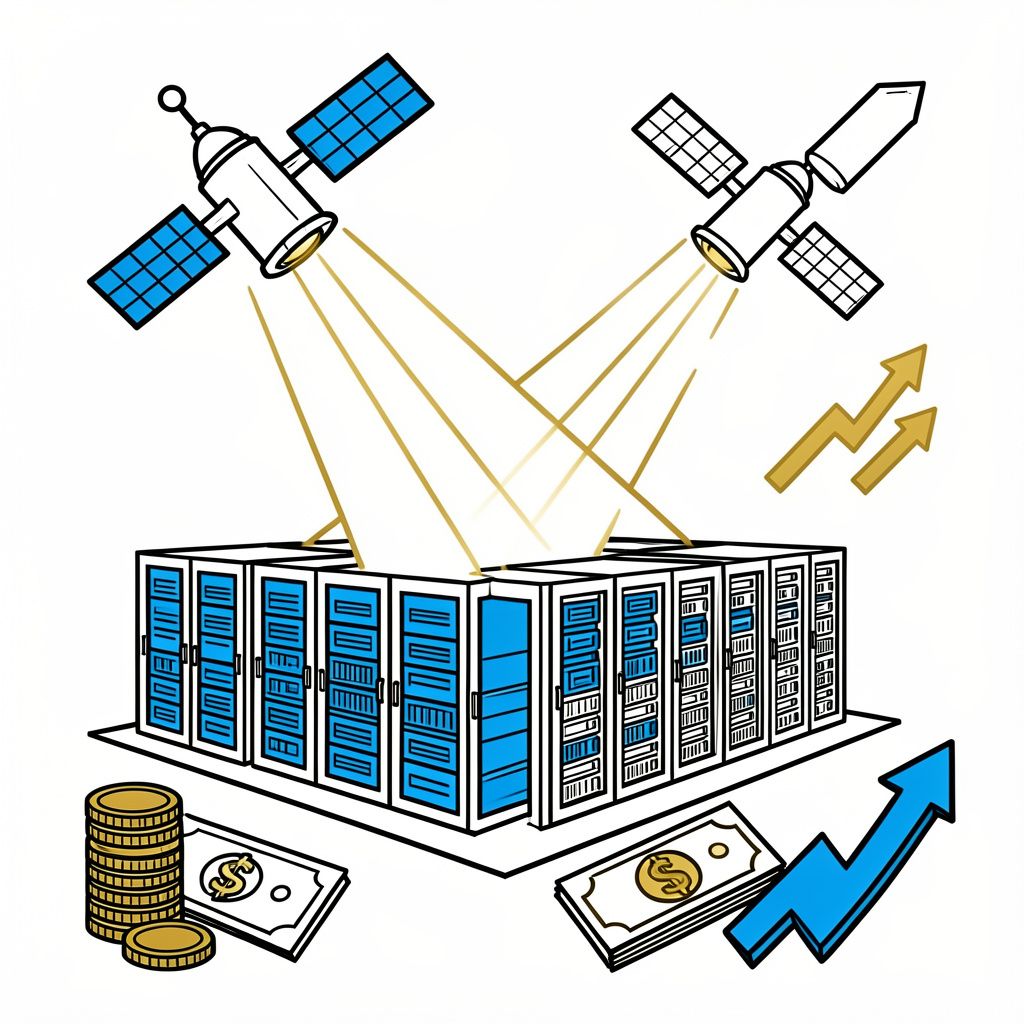
To bypass terrestrial grid limits, Meta plans to beam up to 1 gigawatt of continuous solar energy directly from orbiting satellites to power its growing artificial intelligence infrastructure.
Beaming Power from Orbit
On April 26, 2026, Meta Platforms Inc. (NASDAQ: META) revealed two significant capacity reservation agreements aimed at providing firm, 24/7 electricity to its power-hungry artificial intelligence infrastructure [1][6]. The centerpiece of this strategy is a partnership with Overview Energy, a Virginia-based startup backed by venture capital firms Lowercarbon Capital and Engine Ventures [3][7]. Under the agreement, Meta has secured early access to up to 1 gigawatt (GW) of space-based solar power—an amount of electricity roughly equivalent to the output of a traditional nuclear reactor [2][4]. By the end of the decade, Overview Energy aims to deliver this power to the United States grid, fundamentally altering how hyperscalers source renewable energy [4].
Bridging the Intermittency Gap with Ultra-Long Storage
While space-based solar addresses the generation side of the equation, Meta is simultaneously tackling the intermittency of terrestrial renewables through ultra-long-duration energy storage. Alongside the Overview Energy deal, Meta announced a capacity reservation for up to 1 GW, or 100 gigawatt-hours (GWh), of storage from Noon Energy [1][6]. This translates to a system capable of discharging 1 GW of power continuously for 100 hours, far exceeding the multi-hour limitations of conventional lithium-ion batteries [1].
An Alternative to Orbital Data Centers
Meta’s strategy of beaming power down to Earth presents a stark contrast to competing visions within the technology and aerospace sectors. In recent months, several companies have filed applications with the Federal Communications Commission to bypass terrestrial grid constraints by placing the data centers themselves directly into orbit [5]. In January 2026, SpaceX proposed deploying up to 1,000,000 orbital data-center satellites, arguing that harnessing near-constant solar power in space would yield transformative energy efficiency [5]. Blue Origin followed suit in March 2026 with a filing for 51,600 satellites, while startup Starcloud recently raised $170 million to support a planned 88,000-satellite constellation [5].
The Broader Hyperscaler Energy Strategy
These futuristic energy procurement deals underscore the sheer scale of Meta’s growing electricity demands. In 2024, the company’s data centers consumed more than 18,000 GWh of electricity [3]. To put the scale of the Noon Energy agreement into perspective, securing a 100 GWh storage reserve equates to approximately 0.556 percent of the company’s entire 2024 global data center energy usage [1][3]. As the company builds out gigawatt-scale facilities—including a massive rural Louisiana data center project estimated to cost $50 billion—securing reliable power has become an existential business priority [4]. To date, Meta has contracted more than 30 GW of clean and renewable energy [1].
Sources
- about.fb.com
- www.bloomberg.com
- techcrunch.com
- www.reuters.com
- spacenews.com
- www.theregister.com
- www.axios.com