Prolonged Illinois Refinery Outage Threatens Midwest Fuel Supply During Crucial Harvest
Chicago, Friday, 18 September 2026.
An extended shutdown at ExxonMobil’s Illinois refinery has halted 41.6 million liters of daily fuel production, threatening Midwest agricultural harvesting and pushing regional diesel prices toward historic highs.
Refinery Operations Halted Following Power Failure
An unexpected and prolonged closure of a major oil refinery in Illinois has sparked significant concerns over an imminent fuel price shock across the U.S. Midwest. ExxonMobil’s Joliet facility, which processes approximately 275,000 barrels of crude oil per day, remains offline as of 17 September 2026 following a power outage on 13 September 2026 [2][4]. Although electricity was restored hours after the initial incident, subsequent flooding in a pump system has prevented a restart, halting approximately 41.6 million liters of daily fuel production intended for regional distribution [4]. While operations were originally anticipated to resume by the end of the week, the facility remains closed as of 18 September 2026, threatening supply chain stability for Illinois, Indiana, Iowa, Michigan, Ohio, Pennsylvania, and Wisconsin [1][4].
Regional Fuel Prices Surge Amid Supply Constraints
The disruption has contributed to immediate upward pressure on consumer fuel costs, with the U.S. national average for a gallon of regular gas reaching $4.47 on 18 September 2026 [1]. In Illinois, the cost for a regular gallon of fuel was recorded at $4.53 on 16 September 2026, representing an increase of roughly 23 cents in the past week, which calculates to a 5.349 percent rise over the prior period [3]. Diesel prices have experienced even sharper increases, with records showing Illinois and Indiana at $6.22 per gallon and Michigan at $6.26 per gallon, surpassing all-time highs recorded earlier in the spring of 2026 [3]. Analysts suggest that wholesale gasoline futures are increasing and regional wholesale-price differentials are expected to widen as the outage persists without a confirmed restart date [1][4].
Agricultural Impact and Harvest Season Risks
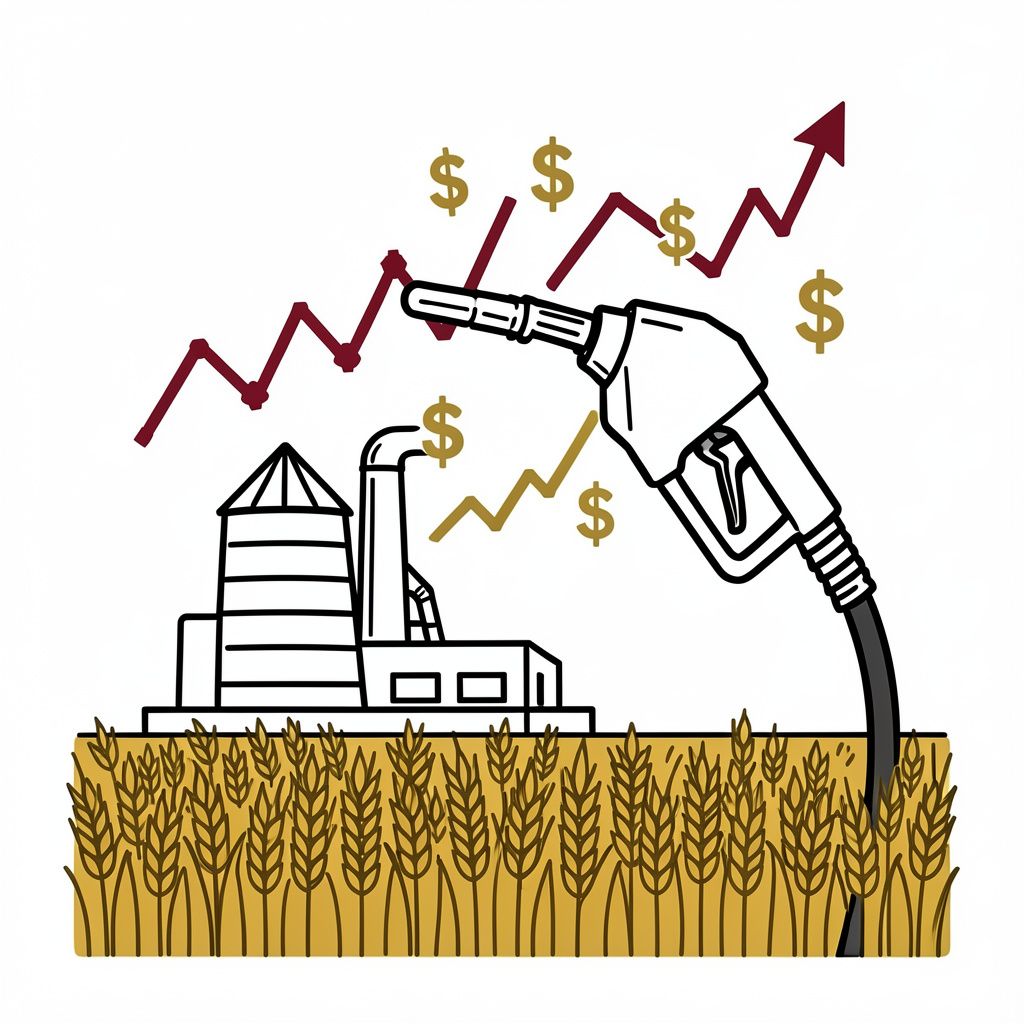
The timing of the outage poses specific risks to the Midwest agricultural sector, which is currently entering the critical corn and soybean harvest season. The Joliet disruption is particularly important for agriculture because it comes as diesel demand rises for combines, grain trucks, and freight transport [2]. Supply constraints risk widening regional wholesale-price differentials despite national inventory rebuilding, potentially forcing farmers to absorb higher operational costs during the harvest window [2]. Experts warn that diesel in the Midwest could soon reach $7 per gallon at some stations in the coming days, driven by the refinery issues and heightened demand [3].
Global Context and Market Outlook
This regional supply shock is compounded by global market tightness, including refinery damage in Russia where the Yaroslavl refinery halted crude processing as of 17 September 2026 [2]. Global diesel markets remain tight due to refinery damage and limited spare capacity, causing a disconnect from crude oil prices which settled above $100 per barrel despite recent declines [2]. ExxonMobil has deployed a containment boom for cleanup at the Joliet facility, but no specific restart date has been communicated to the public as of 18 September 2026 [2][4]. The duration of the outage will determine the extent of the price impact on the Midwest fuel market, with inflationary risks remaining for regional transport and logistics operations [1][4].