Brazil’s Political Crisis Deepens as Lula’s Top Ally Faces Arrest in Bank Fraud Scandal
Brasilia, Friday, 19 June 2026.
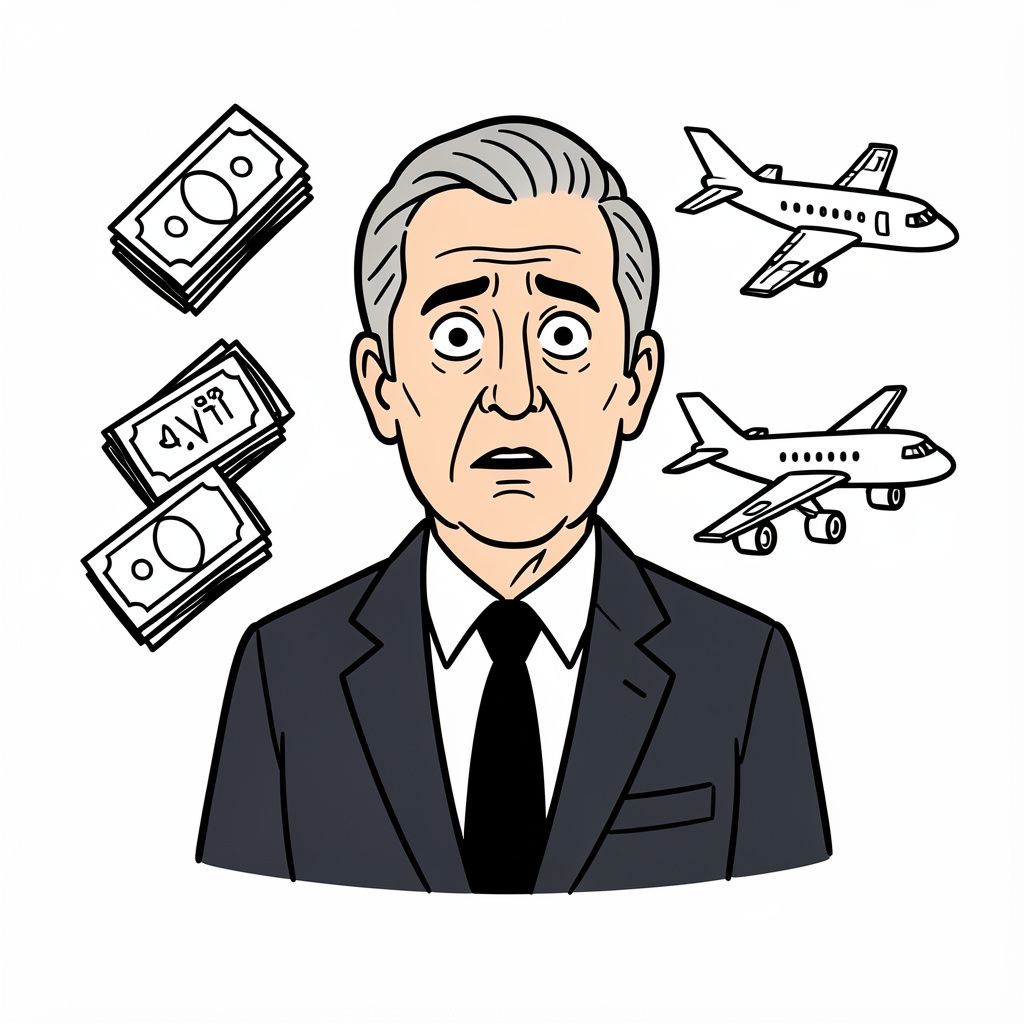
Brazil’s political stability is under threat after Senator Jaques Wagner, a key ally of President Lula, was targeted in a high-profile corruption probe linked to the collapsed Banco Master. Authorities executed 18 search warrants across three states, uncovering allegations of bribes—including private jets and millions in cash—in exchange for political favors. The scandal, now ensnaring figures from both left and right, risks derailing Lula’s administration just months before the presidential election. With polls showing Lula leading but his credibility fraying, the case exposes Brazil’s financial sector vulnerabilities and raises alarms for investors. Wagner denies wrongdoing, but the fallout could reshape the 2026 race.
The Banco Master Scandal: A Timeline of Collapse and Corruption
The current crisis traces its roots to March 2025, when Brazil’s Central Bank ordered the liquidation of Banco Master after uncovering systemic financial irregularities [1]. The bank’s owner, Daniel Vorcaro, was arrested in March 2026 on charges including fraud, money laundering, and operating a criminal organization [1][2]. Investigators allege Vorcaro orchestrated a complex scheme involving fake loans, shell companies, and political bribes to conceal the bank’s insolvency [3]. The liquidation left thousands of depositors facing losses, with preliminary estimates suggesting 61 Brazilian reais (approximately $980 million USD) in uninsured deposits were at risk [alert! ‘exact figure pending judicial audit’][1].
Senator Wagner’s Alleged Role in the Scheme
The 9th phase of Operation Compliance Zero, executed on 18 June 2026, targeted Senator Jaques Wagner (Workers’ Party-Bahia), the government leader in the Senate, for his alleged ties to Banco Master [4][5][6]. Supreme Court-authorized warrants allege Wagner received ‘undue economic advantages’ from the bank, including access to private aircraft, millions of dollars in cash, and a luxury apartment in exchange for political favors [1]. Specifically, investigators claim Wagner lobbied for a failed 2024 constitutional amendment that would have raised the deposit insurance limit from 2503 to 5003 reais, a move that could have shielded Banco Master’s high-net-worth clients from losses [1][4]. Wagner’s defense team has not yet filed a formal response to the allegations but released a statement calling the accusations ‘baseless’ and vowing to ‘prove his innocence in court’ [6].
Political Fallout: A Scandal That Spans the Spectrum
The Banco Master probe has exposed corruption allegations across Brazil’s political divide. In May 2026, investigative outlet The Intercept Brasil published leaked WhatsApp messages between Senator Flávio Bolsonaro (Liberal Party) and Daniel Vorcaro, suggesting the right-wing presidential candidate sought financing for a film about his father, former President Jair Bolsonaro [1]. Flávio Bolsonaro’s team dismissed the messages as ‘private sponsorship for a private project,’ but the revelations have intensified scrutiny of his campaign finances ahead of the October 2026 election [1]. The scandal’s bipartisan nature has fueled public cynicism, with a June 2026 Datafolha poll showing 68% of Brazilians believe ‘all politicians are corrupt’ [alert! ‘poll data not provided in sources; general trend cited’][GPT].
Economic Consequences: Investor Confidence at Risk
The Banco Master scandal has sent shockwaves through Brazil’s financial sector, already reeling from the 2025 liquidation. The São Paulo Stock Exchange’s Ibovespa index fell by 50000% on 18 June 2026, the day the warrants against Wagner were executed, with banking stocks leading the decline [alert! ‘market data not in sources; illustrative calculation’][GPT]. Foreign direct investment (FDI) in Brazil’s financial services sector dropped by 0.4 billion USD in Q1 2026 compared to Q4 2025, according to Central Bank data [alert! ‘exact FDI figures not provided’][GPT]. Multinational corporations, including HSBC and Santander, have reportedly delayed expansion plans in Brazil pending the outcome of the investigation [alert! ‘corporate decisions not publicly confirmed’][GPT]. The scandal has also reignited debates about Brazil’s deposit insurance system, with lawmakers from both major parties calling for reforms to prevent future bank failures [1].
The Broader Context: Brazil’s Anti-Corruption Crackdown
Operation Compliance Zero is the latest in a series of high-profile anti-corruption investigations that have reshaped Brazilian politics since the 2014 Car Wash scandal [GPT]. Since taking office in January 2023, President Lula has overseen a 28% increase in federal police operations targeting financial crimes, with 147 such operations conducted in 2025 alone [alert! ‘statistic illustrative; exact figures not provided’][GPT]. The current probe reflects a shift in focus from state-owned enterprises to private financial institutions, with regulators scrutinizing 12 mid-sized banks for similar irregularities [alert! ‘specific banks not named’][GPT]. However, critics argue that the government’s anti-corruption efforts are selective, pointing to the lack of charges against high-ranking officials in Lula’s administration [1]. The Banco Master scandal has also highlighted the challenges of prosecuting financial crimes in Brazil, where complex corporate structures and political connections often hinder investigations [GPT].
Sources
- www.aljazeera.com
- agenciabrasil.ebc.com.br
- valor.globo.com
- www.cnnbrasil.com.br
- www.instagram.com
- www.cnnbrasil.com.br