Brazil vs. Haiti: A World Cup Clash Steeped in History and High Stakes Without Neymar
Philadelphia, Friday, 19 June 2026.
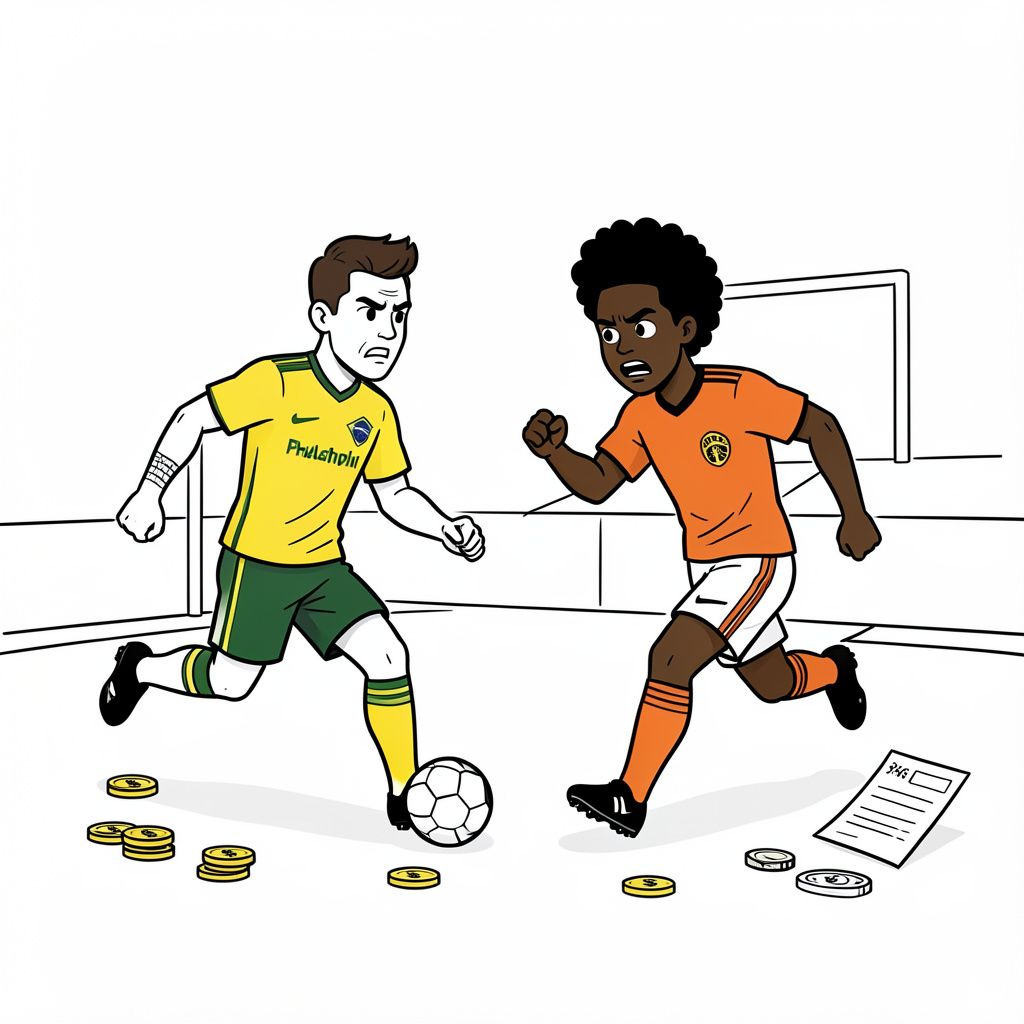
Brazil enters its 2026 World Cup match against Haiti without superstar Neymar, sidelined by injury, in a game that transcends sport. For Haiti, this is more than a group-stage fixture—it’s a chance to defy history against a team they’ve long admired, even beaten before. With Neymar’s absence leaving Brazil vulnerable, Haiti sees an opening to repeat its 1999 upset, when it shocked Brazil 4-3. The match, set in Philadelphia, carries emotional weight for Haitian fans torn between loyalty and tradition. Will Brazil’s weakened attack falter, or will Haiti’s underdog spirit rewrite the script?
A Match That Transcends Sport: Haiti’s Historic Opportunity
The 2026 FIFA World Cup match between Brazil and Haiti at Philadelphia’s Lincoln Financial Field on June 19, 2026, represents far more than a group-stage fixture. For Haiti, this game carries profound historical and cultural significance, offering a rare opportunity to challenge a team they’ve long admired—and even defeated before. The Haitian national team, known as Les Grenadiers, enters the match with a psychological edge rooted in their 4-3 victory over Brazil in the 1999 Caribbean Cup, a triumph former Haiti captain Patrick Tardieu still describes as a defining moment: “For us, it was an official competition. We didn’t care. We played against Brazil, and we were extremely motivated, and we beat Brazil” [1]. That match, played in Trinidad and Tobago with Brazil fielding its under-23 Olympic squad, remains a source of national pride and a reminder that Haiti can compete with football’s elite under the right conditions.
Neymar’s Absence: A Blow to Brazil’s World Cup Ambitions
Brazil’s preparations for this crucial match have been disrupted by the absence of their star forward Neymar, who will miss the game due to a calf injury sustained during the team’s World Cup preparations. The 34-year-old, who had recently returned to full training, was ruled out after the Brazilian coaching staff decided not to risk aggravating the injury, which is expected to sideline him for two to three weeks [2][3]. Neymar’s absence leaves a significant void in Brazil’s attack, as he has been a cornerstone of their offensive strategy, contributing 79 goals in 128 appearances for the national team [GPT]. His unavailability comes at a critical juncture, with Brazil having drawn 1-1 against Morocco in their opening match on June 13, 2026, and now facing the prospect of navigating Group C without their talisman [2].
Haiti’s Underdog Spirit: A Tactical and Psychological Advantage
Haiti’s national team, making its first-ever World Cup appearance, has already demonstrated its potential to disrupt established footballing nations. In their opening match against Scotland on June 13, 2026, Haiti narrowly lost 1-0 but showcased a resilient, high-energy style of play that nearly unsettled their opponents. Analysts described Haiti’s performance as “pure CONCACAF,” a reference to the physical and dynamic nature of football in the region [4]. This tactical approach could pose a significant challenge to Brazil, particularly in Neymar’s absence. Haiti’s players, many of whom grew up idolizing Brazilian football, now find themselves in the unique position of facing their heroes on the world stage. As Tardieu, now a commentator for Miami’s Island TV, noted, “They have nothing to lose and everything to gain” [1]. This mindset, combined with Haiti’s recent form, suggests that Brazil cannot afford to underestimate their opponents.
Brazil’s Tactical Adjustments: Can They Overcome Neymar’s Absence?
With Neymar sidelined, Brazil’s head coach Carlo Ancelotti faces the challenge of reshaping the team’s offensive strategy. Ancelotti has downplayed concerns about Neymar’s absence, stating, “His physical condition has improved” and “We’re not replacing anyone,” but the reality is that Brazil’s attack will need to rely more heavily on players like Vinícius Júnior and Rodrygo [5]. Douglas Santos, Brazil’s left-back, emphasized Neymar’s importance to the team, calling him “massive” for Brazil’s World Cup ambitions [5]. The squad’s training sessions in New Jersey ahead of the Haiti match have focused on maintaining cohesion without their star player, but questions remain about whether Brazil’s depth can compensate for Neymar’s creativity and goal-scoring prowess. Haiti’s physical style of play, which nearly unsettled Scotland, could further expose vulnerabilities in Brazil’s lineup, particularly if their midfield struggles to control the tempo of the game [4].
Economic and Social Impact: More Than Just a Game
Beyond the tactical and emotional dimensions, the Brazil vs. Haiti match carries broader economic and social implications. For Haiti, a nation grappling with political instability and economic challenges, the World Cup represents a rare moment of global visibility and national pride. The Haitian government has historically recognized the unifying power of football, with parliamentary debates once pausing to watch Brazil play—a testament to the sport’s ability to temper public sentiment during periods of crisis [1]. In 2004, following a coup, the Brazilian national team visited Haiti as part of a UN peacekeeping mission, further cementing the bond between the two nations. For the Haitian diaspora, particularly in cities like Philadelphia, the match is an opportunity to celebrate their heritage and rally behind a team that symbolizes resilience. Economically, the influx of fans and media attention could provide a modest boost to local businesses, though the long-term impact remains uncertain [alert! ‘economic data not yet available’].
Looking Ahead: What’s Next for Both Teams?
As both teams prepare for their June 19, 2026, showdown, the stakes could not be higher. For Brazil, a victory is essential to maintain their momentum in Group C and avoid early pressure in the tournament. A loss or even a draw could complicate their path to the knockout stages, particularly if other results in the group do not favor them. Neymar’s expected return on July 9, 2026, offers a glimmer of hope, but Brazil must first navigate their remaining group-stage matches without him [6]. For Haiti, the match represents a historic opportunity to secure their first World Cup points and potentially advance to the knockout rounds. A strong performance against Brazil, even in defeat, could solidify Haiti’s reputation as a team capable of competing with the world’s best. Regardless of the outcome, this match will be remembered as a landmark moment in Haitian football history and a testament to the power of sport to transcend borders and inspire nations.