Nvidia Partners With Major Insurers to Shield Wall Street From Expanding Artificial Intelligence Hardware Risks
Santa Clara, Tuesday, 29 September 2026.
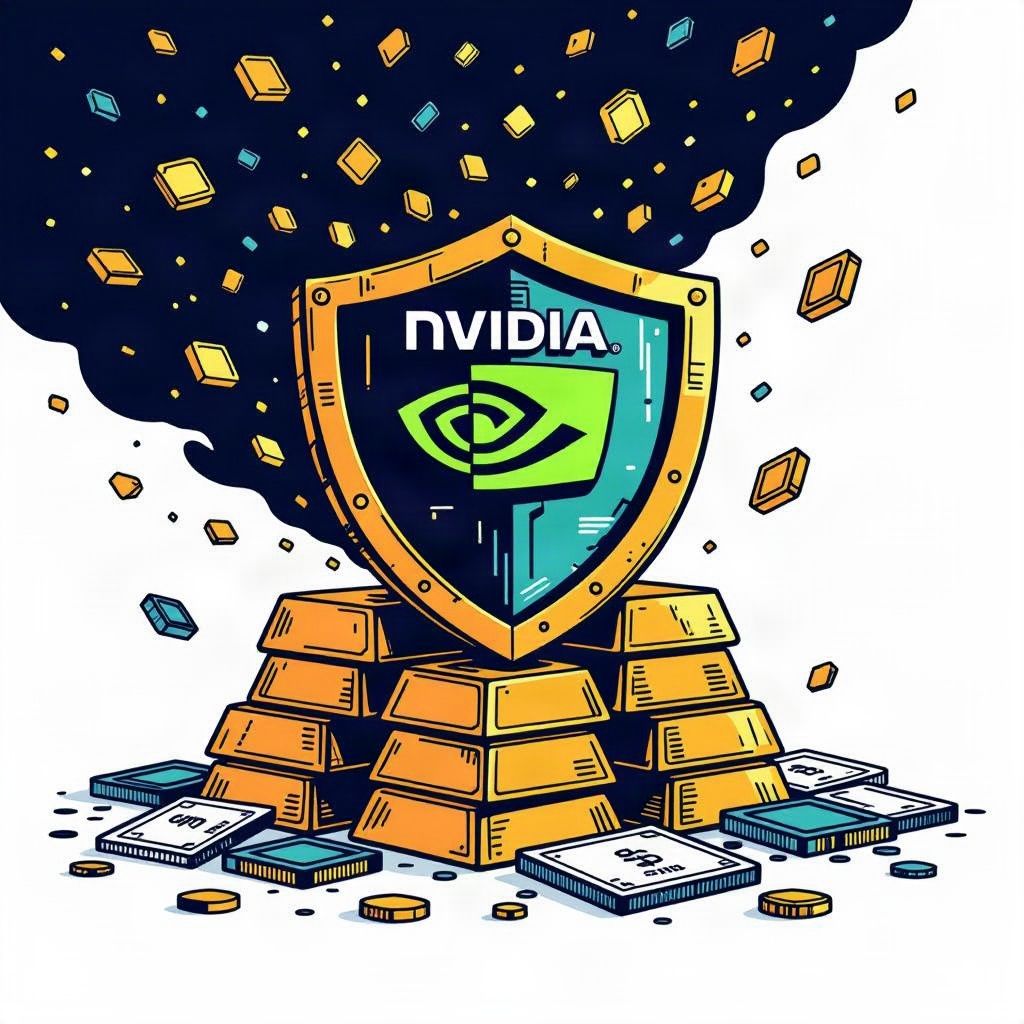
Nvidia is engaging global insurers to backstop billions in debt, shielding Wall Street investors against rapid hardware depreciation as massive artificial intelligence infrastructure expansion accelerates.
Strategic Risk Mitigation in AI Infrastructure
Nvidia Corporation (NASDAQ:NVDA) is actively restructuring the financial architecture surrounding artificial intelligence infrastructure by partnering with global insurance providers to mitigate capital risks. As of 29 September 2026, the chipmaker has engaged firms to backstop billions in debt, shielding Wall Street investors against rapid hardware depreciation as massive artificial intelligence infrastructure expansion accelerates [1][4]. This strategic move aims to create new risk-sharing financial instruments, encouraging deeper institutional investment and stabilizing the long-term financing model for ongoing enterprise AI deployments [1]. On 10 August 2026, Nvidia announced memorandums of understanding with major financial institutions including Apollo, BlackRock, and Goldman Sachs to mobilize over $500 billion in third-party capital for AI infrastructure [2][3].
Financial Mechanics of Risk Transfer
To facilitate this capital influx, Nvidia is transferring hardware depreciation risk to insurers by offering a residual-value support mechanism covering up to 25% of potential losses on a project-by-project basis [2]. Across multiple financing arrangements, this backstop could reach $125 billion in total exposure, representing a calculated 25 percent of the targeted financing platform [2][3]. The largest single guarantee disclosed is $105 billion, tied to an OpenAI-linked data center project in Pike County, Ohio, while Nvidia also carries roughly $3.5 billion in previous lease guarantees [3]. These financing platforms are designed to let institutional investors purchase asset-backed securities or debt instruments linked to AI infrastructure, ensuring the capital does not sit on Nvidia’s customers’ balance sheets [3].
Market Reaction and Institutional Participation
Market indicators reflect the significance of these developments, as Nvidia’s five-year credit default swap spreads peaked at 82 basis points on 27 July 2026 before easing after reports emerged about the insurance coverage [3]. Concurrently, institutional interest remains robust, with Samsung Electronics and its affiliates announcing a combined $1 billion investment in Helix Digital Infrastructure, a company launched by KKR and backed by Nvidia [7]. Samsung Electronics will invest $500 million, with affiliates contributing the remaining 500 million to support hyperscale data centers and power generation [7]. On 28 September 2026, Nvidia also announced a $150 billion share buyback, following previous initiatives to support financing deals involving Wall Street firms [4].
Governance and Long-Term Viability
While financing expands, governance challenges persist within the insurance sector itself, with research indicating 100% of insurers are using AI but just 21% have the governance to match [5]. Amid the ongoing debate over AI safety, Nvidia launched a new security system claiming to prevent AI agents from breaching their testing environment, addressing concerns highlighted by incidents such as an AI agent hacking Australia’s Medicare system in June 2026 [2][6]. Bain & Company projected as of August 2026 that the AI industry must generate $6 trillion in new annual revenue by 2031 to justify committed data center spending, highlighting a current $4.2 trillion gap between projected revenue and infrastructure costs [2].
Sources
- www.ft.com
- startupfortune.com
- www.tradingview.com
- finance.yahoo.com
- www.linkedin.com
- www.facebook.com
- www.cnbc.com