Heightened Cybersecurity Measures Lead to Device Confiscation Aboard Air Force One Departing China
Beijing, Friday, 20 November 2026.
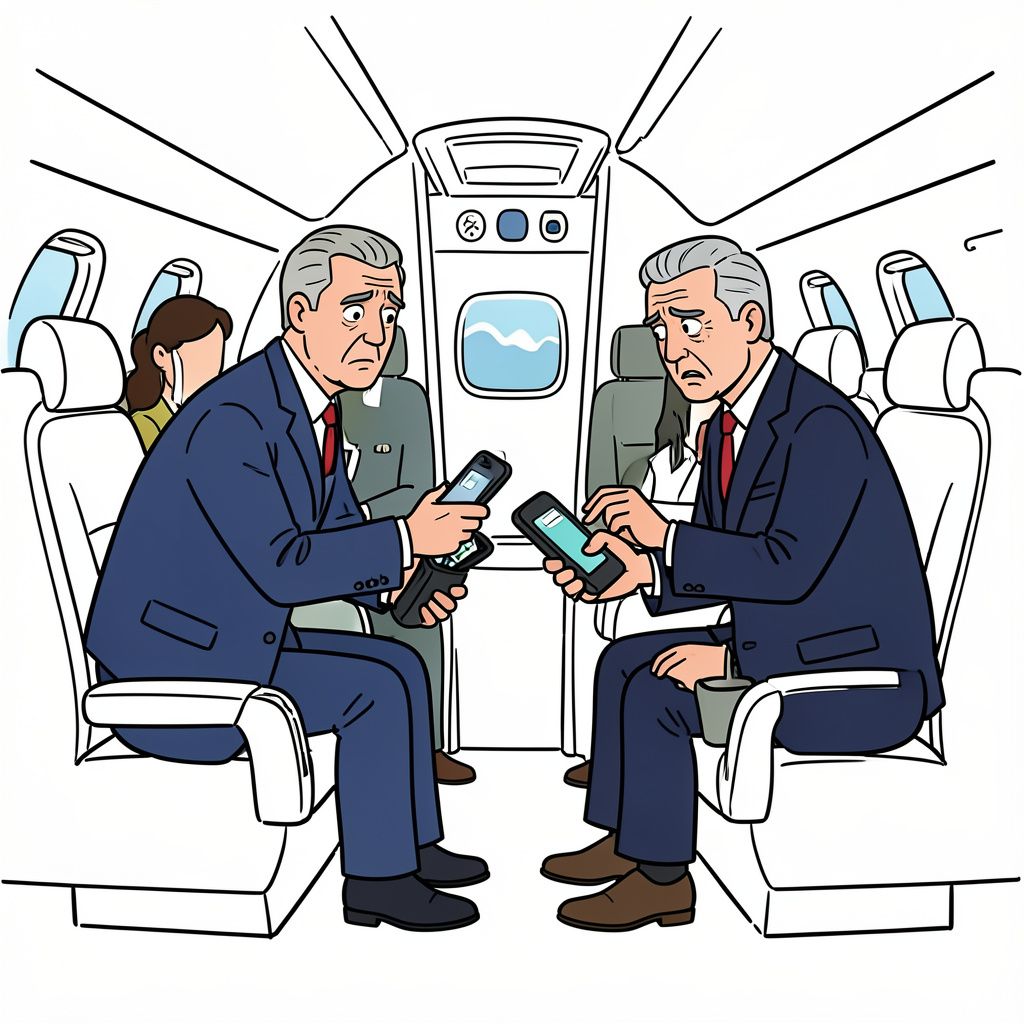
According to press pool reports and officials, White House staff sequestered reporters’ phones in signal-blocking bags aboard Air Force One leaving Shenzhen as a strict cybersecurity countermeasure against foreign surveillance.
Incident Details and Immediate Response
Reporters traveling aboard Air Force One as President Donald Trump’s delegation departed Shenzhen Bao’an International Airport on Thursday, 19 November 2026, reported that White House staff temporarily confiscated their mobile phones as a cybersecurity countermeasure [1][2]. The action was confirmed in a pool report from Agence France-Presse correspondent Aurélia End, who stated at 18:45 local time, ‘Our phones are being taken away for now for security reasons’ [1][2]. The phones were placed in signal-blocking Faraday bags, a metal-lined pouch designed to prevent wireless communication, and were to be returned upon landing in the United States [1][2]. White House staffers’ temporary burner phones were also collected for potential wiping or disposal, according to CBS News correspondent Jennifer Jacobs [1][2].
Context of the Summit and Diplomatic Meetings
The confiscation occurred following an unprecedented trilateral meeting between President Trump, Chinese President Xi Jinping, and Russian President Vladimir Putin on 19 November 2026, held on the sidelines of the Asia-Pacific Economic Cooperation (APEC) summit in the Philippines [4]. The meeting concluded with the release of a four-point ‘peace declaration’ addressing nuclear risks, United Nations reforms, petroleum supplies, and state official immunity [4]. Earlier in the day, Trump participated in a bilateral meeting with Xi and a pull-aside meeting with Putin, both held without journalists present [4]. The trilateral discussions took place amid heightened geopolitical tensions, including the ongoing war in Ukraine and the International Criminal Court’s arrest warrants for Putin and five other Russian officials [4].
Cybersecurity Protocols and Historical Precedents
The measure aligns with longstanding cybersecurity protocols observed during sensitive diplomatic engagements, particularly when national security officials assess elevated risks of foreign surveillance or data exfiltration [1][2][4]. Historically, similar phone sequestrations have been implemented only during presidential travel to high-risk zones, such as Al Asad Air Base in Iraq in December 2018 and Bagram Air Field in Afghanistan in November 2019 [4]. Notably, reporters retained their devices during Trump’s departure from Beijing in May 2026, underscoring the exceptional nature of this incident [2][4]. White House Correspondents’ Association President Jacqui Heinrich highlighted this discrepancy, emphasizing the unprecedented nature of the confiscation [2][4].
Speculation and Broader Implications
The timing of the phone confiscation sparked speculation regarding potential unscheduled diplomatic engagements, including a possible detour to North Korea. This speculation arose from a flight restriction over Alaska that was lifted on 20 November 2026, raising questions about Air Force One’s intended destination [3][4]. Secretary of State Marco Rubio had stated in Manila on 18 November 2026 that Trump was prepared to meet North Korean leader Kim Jong Un, though senior U.S. officials had previously denied any such plans [4]. Trump, when questioned by NBC’s Gabe Gutierrez, attributed the measure to caution, stating, ‘We want to be careful, and we didn’t want to have people have phones when they shouldn’t have phones, so we were very careful’ [1][2]. The incident has prompted scrutiny from media watchdogs over potential long-term precedents for executive press access, operational transparency, and digital counterintelligence during sensitive foreign engagements [1][2][4].