U.S. Clean Energy Hits a Wall as Billions in Projects Are Canceled
Washington, Saturday, 26 September 2026.
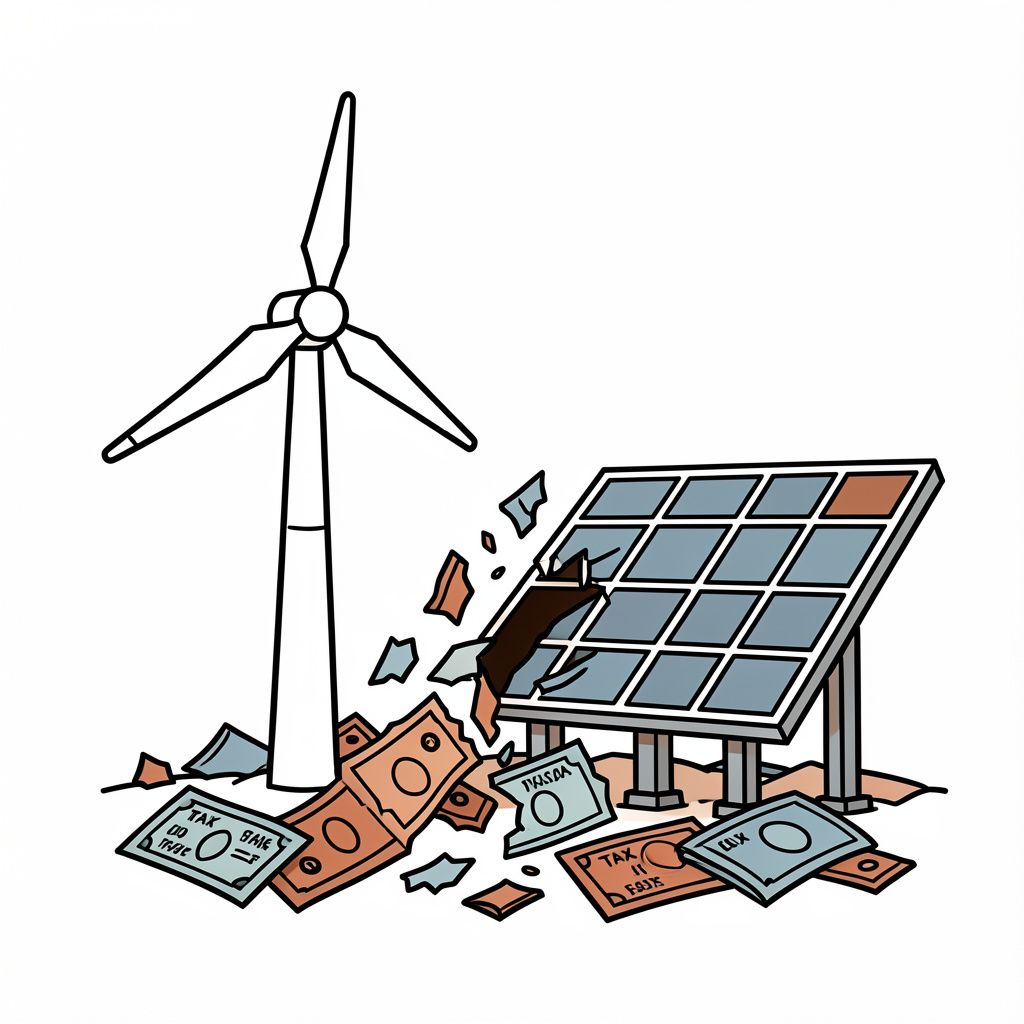
Policy shifts and tax uncertainty have wiped out $14 billion in U.S. clean energy projects, halting years of job growth and severely impacting investments across several conservative states.
Capital Flight and Policy Uncertainty
The clean energy transition in the United States is encountering severe headwinds as macroeconomic pressure, supply chain bottlenecks, and regulatory uncertainty lead to over $14 billion in canceled or postponed hydrogen, battery, and solar projects [1]. This instability is primarily driven by proposed Republican tax reforms that threaten tax credits established by the Inflation Reduction Act passed under the Biden Administration [1]. The House of Representatives’ proposed tax reform aims to dismantle these credits, creating market volatility that is causing companies to re-evaluate or reconsider commitments to U.S. clean technology investments [1]. Research from the BlueGreen Alliance indicates that largely due to the One Big Beautiful Bill Act, 223 manufacturing, clean energy, and industrial projects are already facing cancellations and delays [6].
Employment Reversal in the Clean Economy
In 2025, the U.S. clean energy sector lost 36,949 jobs, ending four consecutive years of growth and erasing approximately 40% of the new jobs created in 2024 [4]. The U.S. energy economy employed 8.4 million workers in 2025, meaning clean energy job losses accounted for a significant portion of the total 86,000 jobs lost across the sector [4]. The percentage of the total energy workforce lost in clean energy specifically was approximately 0.44 [4]. The E2 “Clean Jobs America” 2026 report attributes the downturn to the One Big Beautiful Bill Act, passed approximately in September 2025, which reduced incentives for clean energy manufacturing, generation, and job creation [4].
Legal Challenges and Hydrogen Struggles
Eight eastern states have sued the Trump administration over agreements to pay developers more than $1.4 billion to drop offshore wind leases held by Bluepoint Wind and Invenergy [2]. This legal challenge was reported on September 24, 2026, highlighting the ongoing friction between state and federal energy priorities [2]. In the hydrogen sector, the California ARCHES hydrogen hub agreement was terminated in October 2025 after receiving only 30 million USD of a 1.2 billion USD federal commitment [3]. As of September 23, 2026, no hydrogen project has demonstrated the ability to deliver power at market prices without relying on federal subsidies or tax credits [3].
Household Energy Insecurity
Municipalities are increasingly assuming responsibility for household energy insecurity due to federal program cuts, funding reductions, and shifting policy priorities [5]. The U.S. Department of Energy terminated 223 projects on October 1, 2025, saving over $7.5 billion, which caused the delay or cancellation of numerous local and state-level projects [5]. Household energy costs are projected to rise due to increased electricity demand from large industrial loads, specifically data centers, which exacerbate energy insecurity for low-income households and renters [5]. Energy insecurity affected 43.6 million US households in 2024, an increase from 33.6 million in 2020 [5].
Sources
- www.sustainability-times.com
- newenergyweekly.co.uk
- energynews.biz
- pv-magazine-usa.com
- www.energypolicy.columbia.edu
- www.bluegreenalliance.org