Oil Prices Drop as U.S. Signals Imminent Deal to Reopen Critical Shipping Route
Washington, Tuesday, 4 August 2026.
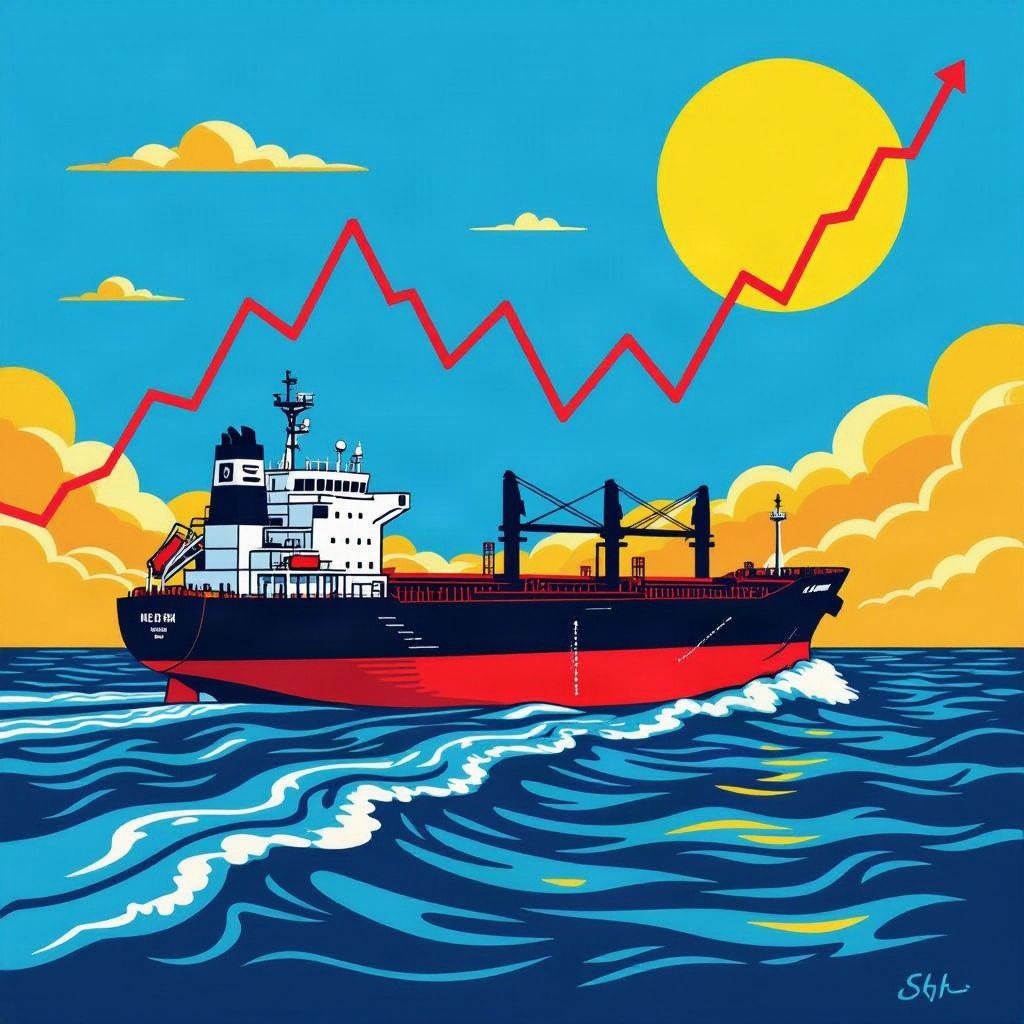
Crude oil prices fell 4% Tuesday after U.S. officials signaled an imminent deal with Iran to reopen the Strait of Hormuz, promising relief for nearly 1,000 stranded commercial vessels.
Market Reaction to Diplomatic Breakthrough
Global crude oil prices retreated significantly on Tuesday, 4 August 2026, following statements from U.S. Treasury Secretary Scott Bessent indicating that a diplomatic agreement to restore freedom of movement through the Strait of Hormuz could be reached by Wednesday [1]. Brent crude dropped approximately 4% as markets reacted to the news that Washington and Tehran could reach an agreement on Tuesday or Wednesday [2]. U.S. crude oil futures fell about 4% to trade below $77 per barrel after the secretary’s remarks, signaling immediate relief to global supply chain anxieties [1]. The critical maritime bottleneck, through which roughly a fifth of the world’s petroleum supply passes, has been severely disrupted by geopolitical tensions, making this potential development a pivotal moment for energy markets [1].
Secretary Bessent confirmed in an interview that hundreds if not 1,000 ships are currently waiting to exit the region, carrying not just energy but also fertilizer, refined products, and various industrial gases [1]. The Treasury Secretary stated that the deal would allow freedom of movement in the strait, specifically noting that Iran would not be allowed to charge a toll for passage [1]. This potential resolution offers a favorable macroeconomic tailwind against persistent inflationary pressures in the United States and global markets, as lower energy costs directly impact business operational expenses [1]. Market participants are now pricing in the likelihood of a normalized position in this conflict, though volatility remains high as negotiations conclude [1].
Contradictory Signals and Negotiation Status
Despite the optimism from Washington, conflicting reports emerged regarding the status of direct communications. Iran’s foreign ministry stated on 3 August 2026 that it is engaging in ongoing discussions with Oman regarding the management of maritime traffic through the Strait of Hormuz, while explicitly denying any talks with the U.S. regarding the passage [3]. This stands in contrast to Secretary Bessent’s assertion on 4 August 2026 that the U.S. is in talks with the Iranians and that a deal may be imminent [1]. This discrepancy highlights the delicate nature of the diplomacy involved, echoing previous tensions where Iran rejected Oman’s joint management plan for the Strait of Hormuz, demanding exclusive oversight and steep shipping fees [4].
President Donald Trump said over the weekend that he called off a major attack on Iran to allow for negotiations to reopen Hormuz, indicating that military options were paused to facilitate dialogue [1]. Trump has repeatedly indicated that a deal was close to resolve the conflict only for fighting with Tehran to escalate again, suggesting a history of false starts in this negotiation process [1]. The current situation requires careful monitoring, as the transition from denial to agreement often involves back-channel communications not immediately visible to public observers [3]. The timeline remains tight, with expectations set for a resolution by Wednesday, 5 August 2026 [1].
Economic Implications and Supply Chain Relief
The economic impact of reopening the Strait of Hormuz extends beyond immediate oil prices, affecting broader industrial inputs and logistics costs. Secretary Bessent noted that he expects prices to fall further when Hormuz opens, providing relief across multiple sectors [1]. An impending deal offers immediate relief to global supply chain anxieties, lowers energy costs for businesses, and provides a favorable macroeconomic tailwind against persistent inflationary pressures in the United States and global markets [1]. The potential reduction in the crude risk premium is expected to deflate inflationary pressures that have persisted throughout the first half of 2026 [7].
Furthermore, the stabilization of this region complements other macroeconomic efforts, such as the coordination between the U.S. and Japan to mitigate potential financial instability risks associated with the decline of the Japanese currency [6]. Strong US PMI data highlights economic resilience, yet a Fed credibility deficit keeps bond yields elevated, making the reduction in energy costs a critical factor for monetary policy flexibility [7]. If the supply chain disruptions are resolved, the relief trade could extend to various industrial gasses and refined products, stabilizing prices for downstream manufacturers [1]. This convergence of geopolitical de-escalation and monetary coordination aims to support risk assets and cushion market liquidity [7].
Broader Geopolitical Strategy and Asset Seizures
Beyond the immediate negotiations, the U.S. Treasury Department has been actively identifying Iranian assets worldwide as part of an expanded economic pressure campaign. On 1 August 2026, Secretary Bessent announced that any funds seized would ultimately benefit the Iranian people rather than the Iranian government [5]. This strategy of economic pressure, utilizing sanctions and efforts to disrupt financial networks linked to the Iranian state, runs parallel to the diplomatic efforts to reopen the waterway [5]. If implemented, the move could further intensify U.S.-Iran tensions while raising legal and diplomatic questions over the seizure and potential redistribution of state-linked assets [5].
Simultaneously, the U.S. has engaged in coordinated purchases of yen in decades, described by President Trump as a signal of friendship and by Treasury Secretary Bessent as delivering for America’s trusted partners [6]. Most observers doubt it was so simple, noting that there are no free lunches in such geopolitical maneuvering [6]. The interplay between asset seizures, currency intervention, and trade route security demonstrates a multifaceted approach to regional stability. As the Jackson Hole address approaches in late August, these developments will likely influence the Federal Reserve’s stance on interest rates and economic growth projections [7].
Sources
- www.cnbc.com
- www.ft.com
- www.morningstar.com
- wsnext.com
- www.instagram.com
- news.bloomberglaw.com
- x.com