How America’s Generational Divide Is Splitting the Economy in Two
New York, Sunday, 20 September 2026.
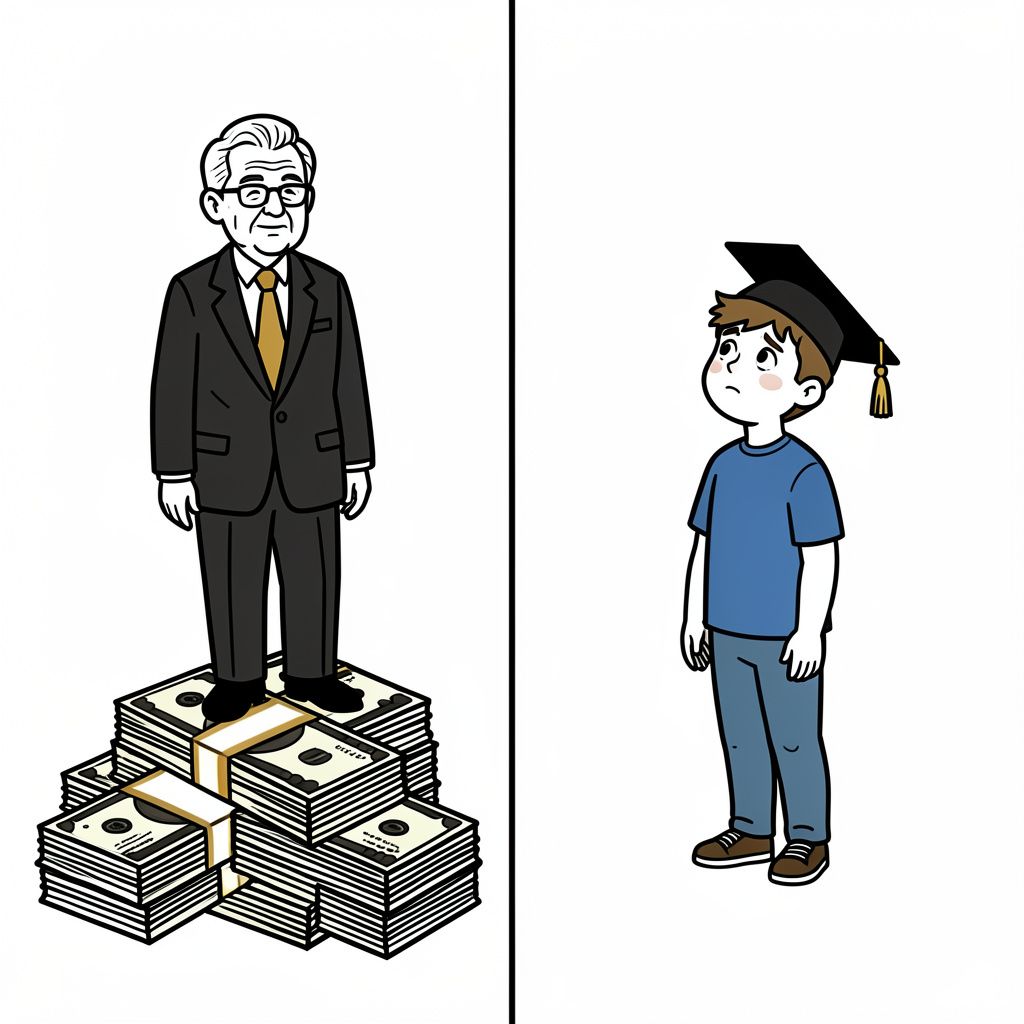
As of September 2026, the U.S. economy presents two strikingly different realities depending on age. Baby Boomers currently hold a record $85.4 trillion—representing roughly 50% of total national household wealth—benefiting from decades of asset accumulation and locked-in lower mortgage rates. In contrast, younger Americans face unprecedented barriers. Homes now cost nearly five times the average household income, up from three times in the 1990s, driving the median age of first-time homebuyers to a record high of 40. Compounding this issue, recent college graduates contend with a 5.7% unemployment rate, noticeably higher than the 4.1% national average. With 47% of adults aged 18 to 29 requiring external financial support, this widening gap is fundamentally altering consumer spending and long-term economic stability.
The Wealth Accumulation Gap
The disparity in asset ownership forms the bedrock of this economic divergence. Baby boomers currently hold a record $85.4 trillion in net worth, accounting for approximately 50% of all US household wealth [1]. In contrast, perceptions of what constitutes wealth vary significantly by age; while Gen Z respondents in recent surveys indicate $1.7 million is sufficient to be considered rich, baby boomers set the threshold near $2.8 million [3]. This gap is not merely nominal but reflects decades of compound growth favoring those who entered the market during periods of lower asset prices and higher yield stability [1].
Intergenerational Wealth Transfer
In response to these disparities, a significant transfer of wealth is underway. Older Americans increasingly possess the capacity to gift assets to children and grandchildren during their lifetimes, often preferring to provide support for housing or childcare rather than leaving inheritances posthumously [2]. This strategy, often referred to as giving with warm hands, is facilitated by tax codes that allow for substantial lifetime gifts without incurring immediate penalties, though the scale of this transfer remains insufficient to close the broader structural gap for the average young household [2].
Labor Market and Income Shifts
Income dynamics further exacerbate the divide, particularly for younger workers entering the workforce in 2026. As of the second quarter of 2026, workers received 52.8% of nonfarm business output as pay, a decline from approximately 64% in the early 2000s [1]. Recent college graduates face an unemployment rate of 5.7%, which is 1.6 percentage points higher than the general workforce rate of 4.1% recorded in September 2026 [1]. Furthermore, 42% of this cohort is considered underemployed, indicating a mismatch between educational attainment and available job quality [1].
Housing Affordability Crisis
The housing market presents perhaps the most visible barrier to economic stability for younger generations. Homes currently cost nearly five times the typical household’s annual income, a sharp increase from a ratio of approximately three times in the 1990s [1]. This represents a 66.667 percent increase in the income-to-price ratio over the intervening decades [1]. Consequently, the median age of first-time homebuyers reached a record high of 40 in 2025, and first-time buyers accounted for only 21% of home purchases, the lowest share since tracking began in 1981 [1].
Economic and Social Implications
These economic pressures correlate with broader social trends, including mental health outcomes. Research indicates that younger cohorts, particularly Gen Z, exhibit lower mental health baselines compared to older generations, driven by economic precarity and perceived social isolation [4]. As of late 2025, only 63% of adults aged 18–29 reported living comfortably or doing okay financially, compared to 83% of those aged 60 and older [1]. For policymakers, addressing this divide requires more than temporary relief; it demands structural adjustments to housing supply, labor compensation, and asset accumulation mechanisms to prevent long-term economic stagnation [1].