Voters Blame President Trump for Economic Struggles and Rising Prices
Washington, Saturday, 19 September 2026.
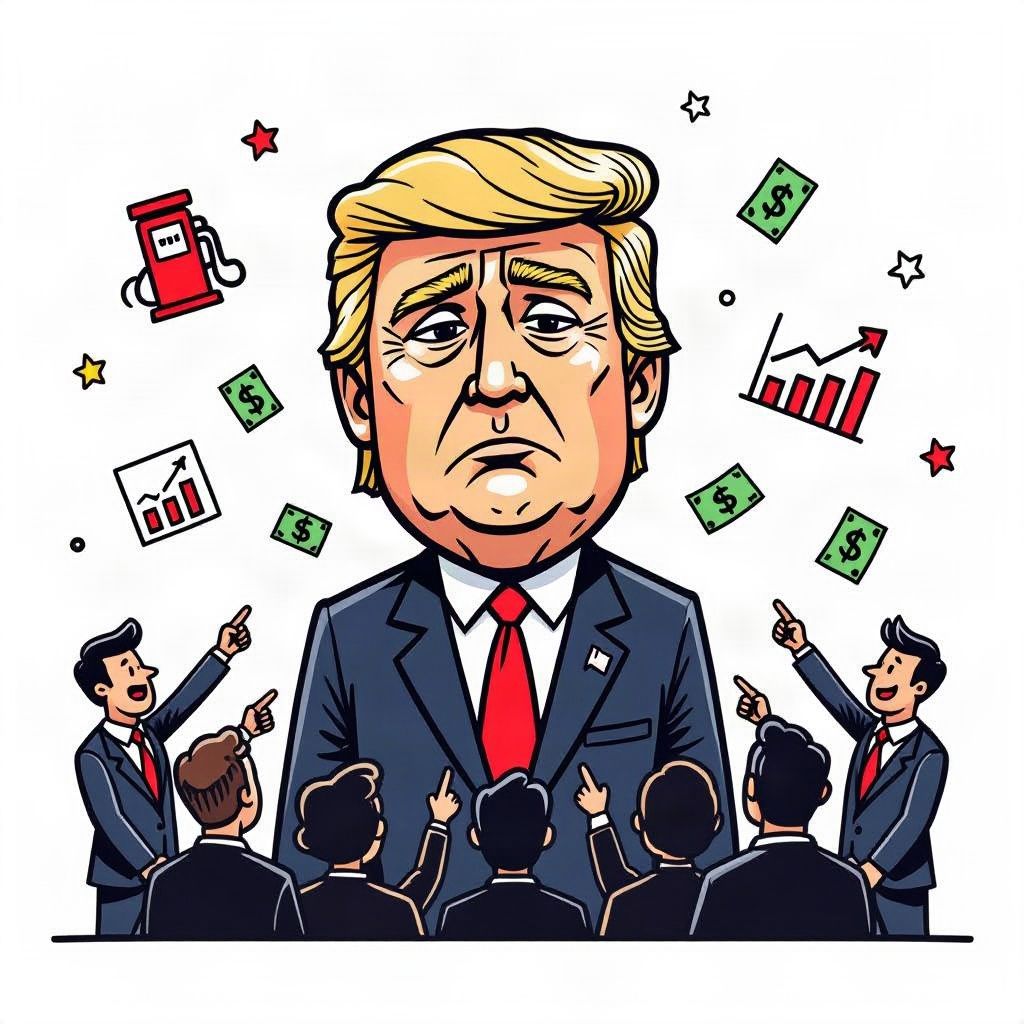
A September 2026 poll shows 43% of voters directly blame President Donald Trump for ongoing inflation and cost-of-living pressures, as skyrocketing gas prices further exacerbate widespread economic dissatisfaction.
Survey Data Reveals Economic Dissatisfaction
Recent polling data indicates a significant portion of the American electorate holds President Donald Trump directly responsible for current economic conditions. A Politico/Public First poll, released on Thursday, September 17, 2026, found that 43 percent of respondents believe the President is mostly or fully responsible for the state of the economy, including high inflation and affordability concerns [1]. This sentiment is characterized by a deep partisan split, with 70 percent of Democrats holding Trump accountable compared to only 19 percent of Republicans [1]. The survey, conducted from September 13 to September 15, 2026, across a sample of 2,064 Americans, highlights cost of living as the top issue facing the U.S., cited by a majority of respondents [1]. Concurrently, energy prices have seen sharp increases, with regular unleaded gas jumping from a national average of $4.31 to $4.43 in the span of four days, representing a percentage increase of 2.784 [1]. This surge occurs amidst ongoing U.S. military operations against Iran, which have strained global energy supplies and contributed to record-high diesel prices [1][4].
Comparative Polling and Historical Context
Broader polling metrics corroborate the trend of economic dissatisfaction leading into the autumn of 2026. A Fox News survey released on September 16, 2026, indicates that 63 percent of voters believe the Trump administration has made the economy worse, a figure consistent with the 63 percent who stated the administration worsened the economy in the same poll [2][7]. This represents a consolidation of negative sentiment compared to earlier in the year; a CNBC All-America Economic Survey conducted in July 2026 showed 61 percent of the public was pessimistic about the current economy and future outlook [3]. Historical data from January 2026 shows this dissatisfaction has been building, with a CBS News poll finding that most Americans felt the administration had not focused sufficiently on lowering prices during the President’s first year in his second term [5]. Furthermore, data from November 2025 indicated that 49 percent of respondents believed President Trump’s actions since his January 2025 inauguration had raised prices rather than lowering them [6]. The consistency across these timelines suggests a persistent narrative regarding affordability that has influenced voter perception over the course of the administration [2][6].
Political Implications for Midterm Elections
The economic sentiment is reshaping the political landscape ahead of the midterm elections scheduled for November 2026. Analysis suggests a ‘Trump hangover effect’ is impacting Republican candidates, even in traditionally secure districts [4]. For instance, polling in Kansas shows Senator Roger Marshall leading by only 5 points in a state Trump carried by 16 points in 2024, correlating with Trump’s minus-17 approval rating in Kansas as of August 2026 [4]. With 48 days remaining until Election Day, scheduled for November 3, 2026, President Trump’s job approval rating stands at 39 percent, with 61 percent disapproval [2]. While the Democratic Party holds a modest advantage in congressional preference, voter polarization remains high, with 57 percent unlikely to support ‘MAGA’ candidates and 50 percent unlikely to support a democratic socialist candidate [3]. As the administration seeks to calm concerns about affordability ahead of the midterms, the disconnect between macroeconomic indicators and voter sentiment remains a central challenge for policymakers and campaign strategists alike [1][4].
Sources
- thehill.com
- www.foxnews.com
- www.cnbc.com
- thehill.com
- www.cbsnews.com
- www.usatoday.com
- www.facebook.com