Total Fish Collapse Forces Indefinite Closure of Arizona's San Carlos Lake
San Carlos, Thursday, 11 June 2026.
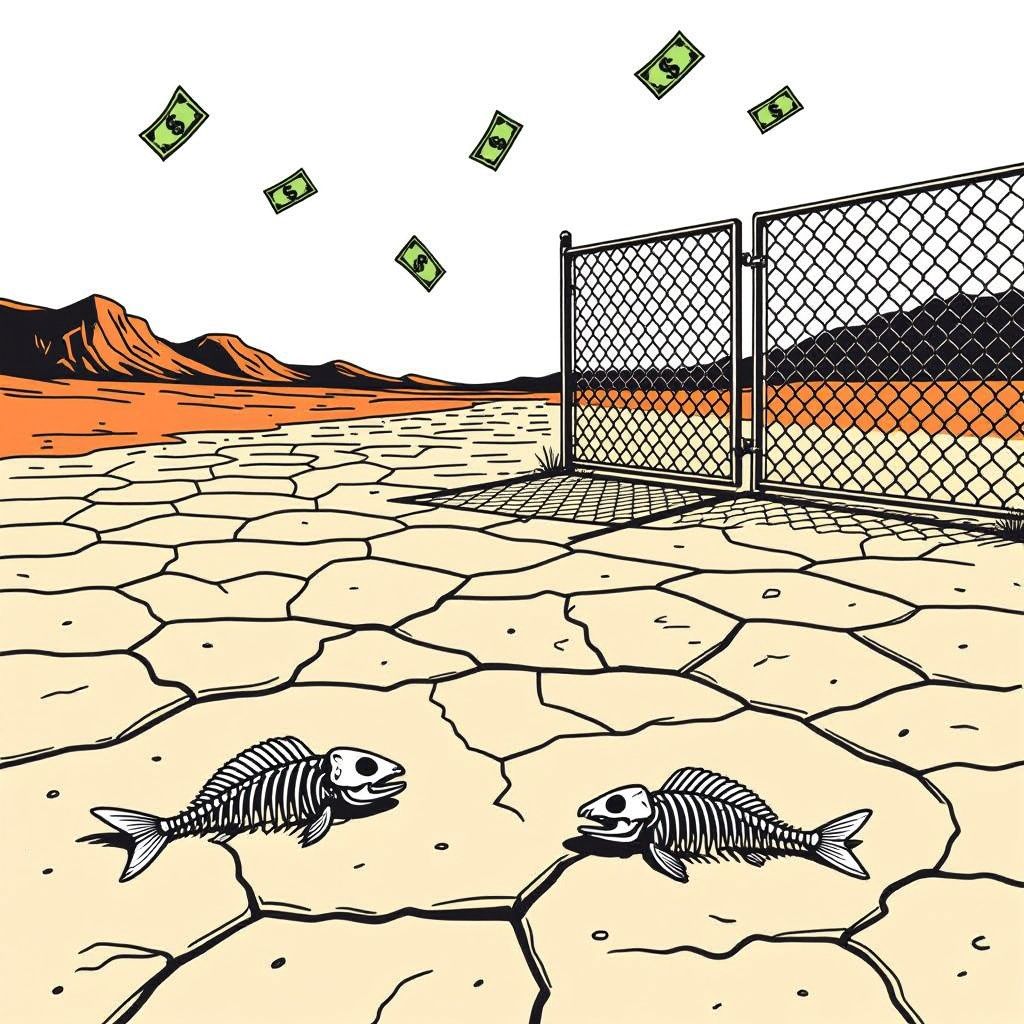
In early June 2026, severe drought and dam releases annihilated 100% of San Carlos Lake’s fish, forcing an indefinite closure that poses immediate health risks and disrupts local economies.
An Unprecedented Ecological Collapse
On June 5, 2026, the San Carlos Recreation and Wildlife Department issued an emergency closure for San Carlos Lake, citing a catastrophic event: the death of approximately 100% of the lake’s fish population [1][4][6]. The die-off was triggered by a severe combination of ongoing drought conditions and mandatory water releases from the Coolidge Dam, which supplies agricultural users in Florence and Coolidge [6]. As water levels plummeted, the shallow remaining water rapidly heated, leading to oxygen-depleting algal blooms that suffocated the fish [7]. The resulting blanket of decomposing carcasses now poses significant health hazards, prompting officials to indefinitely ban all fishing, harvesting, and recreational activities [4][7].
Economic Shockwaves in the Local Community
The timing of the collapse could not have been worse for the local economy. On Saturday, June 6, 2026, anglers across Arizona celebrated Free Fishing Day, but San Carlos Lake had absolutely nothing to offer [6]. Prior to the total collapse, tribal officials had actually eased catch limits in anticipation of falling water levels, hoping to maximize the utility of the resource before it vanished [4][7]. For local bait shops, guides, and hospitality businesses that rely on the summer influx of tourists, the indefinite closure represents a sudden and severe loss of revenue, highlighting the fragile intersection between local commerce and environmental stability [GPT].
A Historical Pattern of Environmental Volatility
While the current devastation is total, San Carlos Lake has a well-documented history of dramatic boom-and-bust cycles. Since its dedication in 1930, the reservoir has dried to near-empty levels approximately 20 times [6]. A severe drought between 1976 and 1977—which concluded 49 years ago—resulted in the death of an estimated 5 million fish, requiring a recovery period that lasted roughly five years [6][7]. More recently, in the summer of 2018, capacity fell below 1%, triggering another major fish kill [6]. These recurring events prompt serious questions about the long-term viability and financial sustainability of maintaining such fisheries in increasingly arid climates [GPT].
Sources
- local12.com
- www.12news.com
- www.federalregister.gov
- www.theguardian.com
- ein.az.gov
- www.western-water.com
- www.newser.com