Supreme Court Voting Rights Ruling Triggers Major Rollbacks in Workplace Discrimination Protections
Washington, Thursday, 11 June 2026.
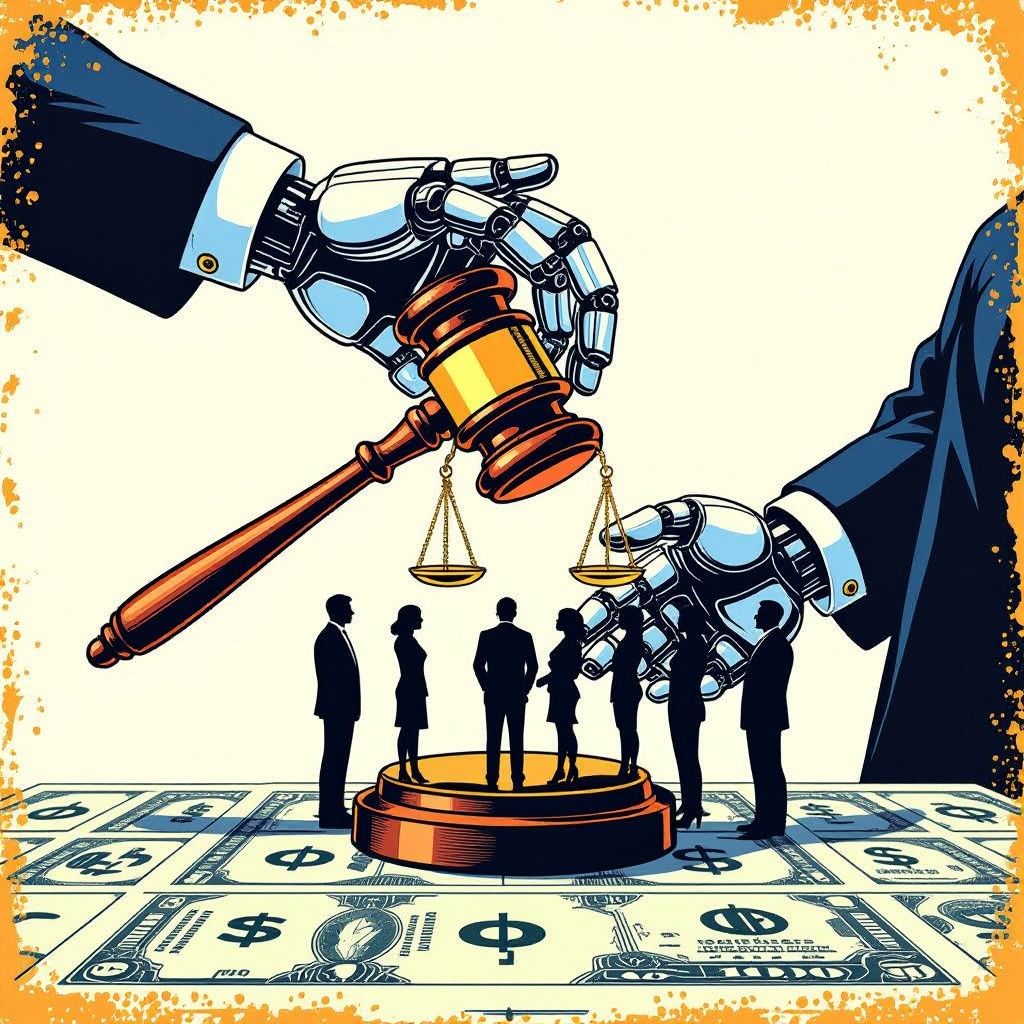
A recent Supreme Court voting rights decision is now being repurposed by federal agencies to dismantle workplace anti-discrimination rules, potentially shielding biased AI hiring algorithms from legal scrutiny.
From the Ballot Box to the Boardroom
The bedrock of American civil rights law is currently experiencing a seismic reconfiguration. In the landmark Louisiana v. Callais decision—a 6-3 ruling handed down along ideological lines by the Supreme Court’s conservative supermajority in April 2026, with related enforcement actions cementing its impact by early June 2026—the justices effectively dismantled a 1982 amendment to the federal Voting Rights Act [1][3][5]. Authored by Justice Samuel Alito, the decision eliminates the long-standing “results” test, which previously allowed plaintiffs to challenge discriminatory voting maps without needing to prove explicit racist intent [1]. While the text of the Callais ruling contains no explicit directives regarding workplace diversity, the Trump administration’s Department of Justice has swiftly capitalized on the precedent to target the broader “disparate impact” legal standard [1][3].
The End of “Disparate Impact” as We Know It?
To understand the gravity of these executive actions, one must look at the history of the disparate impact standard. Established by the Supreme Court in 1971 and formally codified by Congress in 1991, this legal framework has allowed civil rights plaintiffs to challenge institutional practices that yield discriminatory outcomes, regardless of whether explicit racial animus was intended [1]. Historically, this standard has been a powerful financial and regulatory tool; for instance, it previously enabled the Department of Justice to secure a $335 million settlement from the mortgage lender Countrywide for over 200,000 minority borrowers [1]. By raising the evidentiary bar to require proof of intentional discrimination, the new Office of Legal Counsel guidance threatens to neutralize the 1991 statutory codification of disparate impact lawsuits, operating under the premise that such aggressive protections are no longer necessary [1].
Ripples Through Local Governments and the 2026 Midterms
Beyond corporate hiring, the Callais ruling is actively triggering representational contractions at the local and state levels ahead of the November 2026 midterms [2]. By requiring plaintiffs to prove that redistricting cannot simply be explained by partisan affiliation—a notoriously difficult hurdle given that Black voters historically lean toward the Democratic Party while white voters lean Republican—the Supreme Court has significantly reduced the legal pressure on municipalities to maintain diverse single-member districts [2]. Legal scholars note that roughly 50 percent of Section 2 voting rights cases have historically targeted at-large electoral systems in local school boards and city councils [2]. For example, after a 2018 lawsuit, the Richardson Independent School District in Texas transitioned to a single-member model, successfully diversifying its board and introducing an African American Studies course by August 2021; such gains are now legally vulnerable under the new precedent [2]. Supreme Court Justice Elena Kagan has warned that Section 2 is now “all but a dead letter” [2].
Sources
- www.vox.com
- newrepublic.com
- statecourtreport.org
- www.news4jax.com
- www.stevevladeck.com
- www.reddit.com