China's Artificial Intelligence Stock Bubble Deflates as Tech Sector Sheds Trillions
Beijing, Wednesday, 28 October 2026.
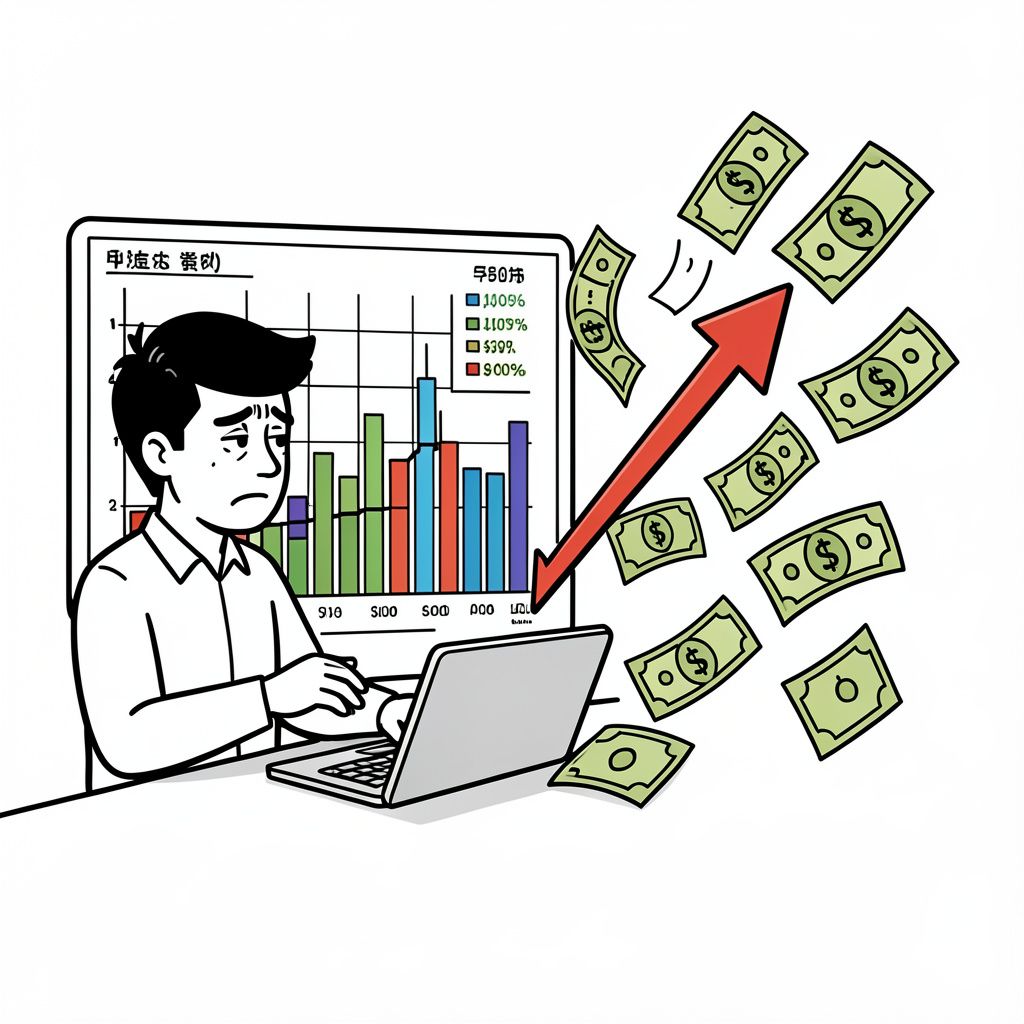
Mounting profitability doubts and expanding Western trade curbs triggered a $2.4 trillion wipeout across Chinese equities, halving flagship robotics valuations despite Beijing’s aggressive state-backed capital injections.
A $2.4 Trillion Market Rout: The Scale of China’s AI Stock Collapse
Chinese equities have erased $2.4tn in market value since May 2026, with the rout accelerating as Beijing’s AI ambitions collide with harsh global realities [1][2][5]. The Shanghai STAR 50 Index, which tracks AI and semiconductor leaders, has plunged 40% since June 2026, vaporizing approximately $480bn in market capitalization [1][2][5]. This decline mirrors broader weakness in China’s CSI 300 blue-chip index, which has fallen about 20% from its June 2026 highs [1][2][5]. The scale of the rout dwarfs even the modest 6% pullback in the Nasdaq Composite from its historical peak three weeks prior, underscoring the depth of investor disillusionment with China’s tech sector [1][2][5].
The collapse is not merely a correction but a systemic unraveling of a two-year speculative surge fueled by government promises of economic stimulus and relentless state-backed investment [1][2][5]. Dan Wang, China director for Eurasia Group, captured the mood, noting that profit margins have fallen short of expectations amid U.S. interest rate hikes and weak domestic demand: ‘It doesn’t look like embodied intelligence could turn into profits in the mass market’ [1][2][5].
The Anatomy of a Bursting Bubble: AI’s Unsustainable Valuation Pyramid
At the heart of the crisis lies the overvaluation of AI-related stocks, which accounted for 42% of total market capitalization in Chinese A-shares and Hong Kong H-shares as of October 2026, and contributed ƒ{57% of combined trading volume [1][2][5]. This concentration meant that every drop in sentiment ricocheted across the entire market. The STAR 50’s trailing price-to-earnings (P/E) ratio, though down from a peak near 250x, still hovers around 100x—nearly triple the 30x multiple of the Nasdaq 100 [1][2][5].
This valuation chasm reflects a mismatch between investor expectations and economic fundamentals. Despite a 60bn yuan state-backed AI fund launched in October 2026 and heavy state investment in champions like Unitree Robotics, consumer demand remains tepid [1][2][5]. Unitree’s shares, once oversubscribed 8,000-fold, have since halved since their August 2026 debut [1][2][5]. Similarly, chipmakers like CXMT and MetaX Integrated Circuits have seen declines of 25% and 50%, respectively, since July 2026 [1][2][5]. The disconnect between policy ambition and market reality has left many retail investors nursing losses. ‘Many investors bought into the idea that these companies had official backing,’ said one small business owner in Hainan, now facing significant losses [1][2][5].
US-China Tech Decoupling: Sanctions, Bans, and Supply Chain Fragmentation
The AI equity crash has been exacerbated by escalating U.S. restrictions targeting China’s technology sector. On July 28, 2026, the U.S. banned the export of humanoid robots to China, citing national security risks [1][2][5]. Reports from August 2026 indicate the U.S. is considering prohibiting Chinese components in American data centers—a move that would further isolate Chinese AI hardware firms [1][2][5]. These restrictions are part of a broader decoupling strategy that has intensified since 2024, pushing Chinese companies to seek alternative supply chains and domestic alternatives for high-performance GPUs [1][2][5].
The pressure on Chinese AI firms to innovate without access to top-tier semiconductors has led to an unprecedented situation: Chinese AI companies are now reportedly seeking compute power from overseas firms due to domestic capacity constraints [6]. This was highlighted by the CEO of Zhipu AI, who publicly called for partnerships with firms operating high-end GPU clusters after facing severe latency issues in its GLM Coding Plan product [6]. Industry insiders warn that without access to Nvidia’s latest Blackwell chips, China’s AI development could fall behind by a widening margin. As of October 2026, Nvidia’s top-tier GPUs are estimated to be 5x more powerful than Huawei’s latest offerings, with the gap expected to widen to 17x by 2027 [6].
Policy Strain and Market Consequences: Five Key Takeaways
Profitability Crisis: Despite massive state investment, many AI firms are struggling to monetize their products. Goldman Sachs reports that AI stocks now dominate 42% of market value in China and Hong Kong, making the sector systemically important—and vulnerable [1][2][5].
Investor Capitulation: Retail investors, who dominate China’s stock market, are rapidly shifting capital into defensive assets. The collapse in tech valuations has forced many planned IPOs to be delayed or canceled, according to Hong Hao, chief investment officer at Lotus Asset Management [1][2][5].
Regulatory Overreach: Restrictions on overseas investment, set to tighten on December 1, 2026, have failed to stabilize markets. Instead, they have limited capital inflows and increased uncertainty [1][2][5].
Geopolitical Spillovers: The U.S. AI IPO by Anthropic, expected to raise up to $100bn, underscores the widening gap between U.S. capital markets’ ability to fund innovation and China’s constrained ecosystem [1][2][5].
Structural Reckoning: The crash has exposed the fragility of China’s ‘slow bull’ (慢牛) market strategy, which aimed to stabilize equities through gradual appreciation. The failure of this model has raised questions about Beijing’s ability to manage financial markets amid geopolitical tensions and technological isolation [1][2][5].
As China’s top officials convene in Beijing this week for the Fifth Plenum to lay the groundwork for the 21st Party Congress, the message from the markets is clear: the AI-fueled dream of technological self-reliance is not immune to the laws of economics. ‘What if it doesn’t work out? Then whoever came up with that policy, that guy would be held accountable,’ warned Dan Wang [1][2][5].
Sources
- www.theguardian.com
- x.com
- www.epochtimes.com
- www.instagram.com
- www.chinapress.com.my
- cnnews.chosun.com