Rising Grocery Costs Force College Students to Skip Meals
New York, Thursday, 24 September 2026.
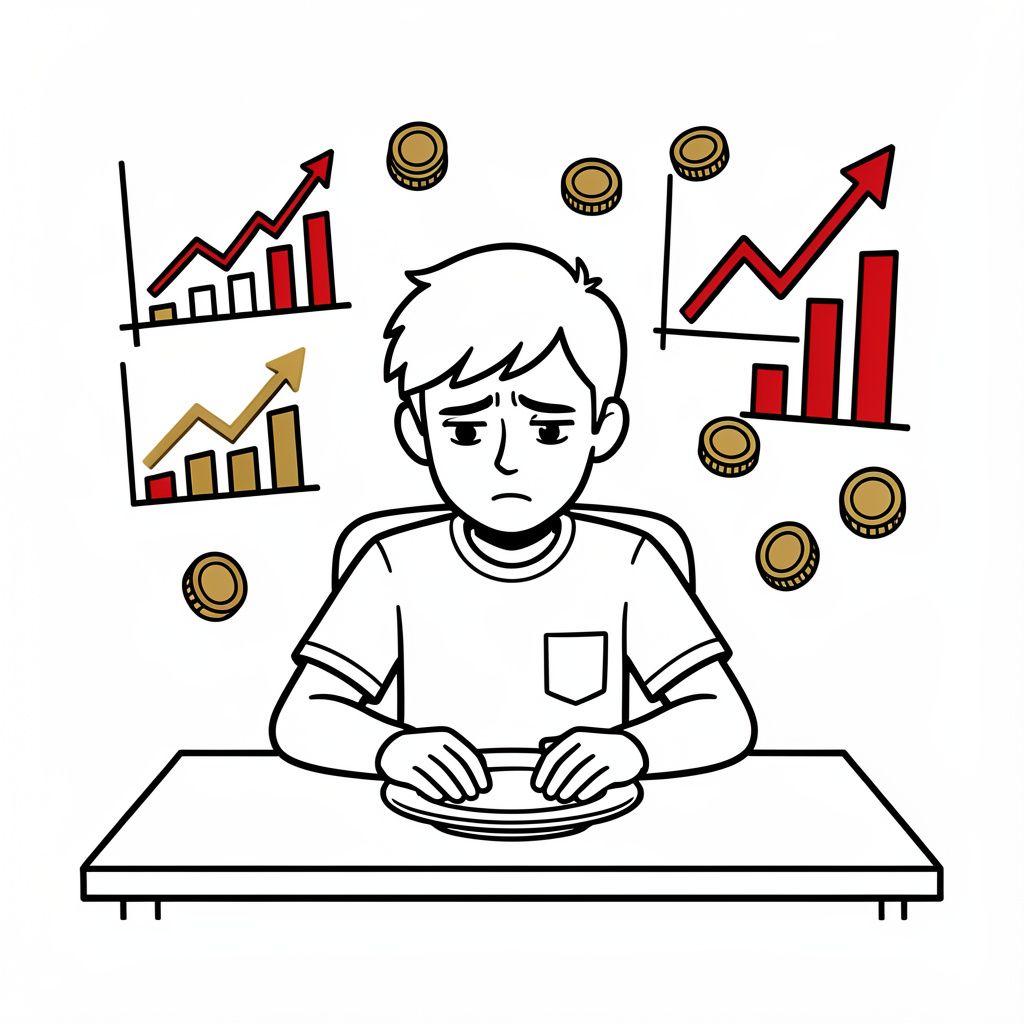
Persistent food inflation has forced 90% of college students to skip meals or reduce food purchases to pay basic bills, clashing with their strong desire for healthier diets.
The Widening Gap Between Health and Budget
Recent data highlights a stark disparity in food pricing that disproportionately affects younger consumers. A study by Harvard Law School’s Food Law and Policy Clinic and Yuka, released in March 2026, analyzed 805 packaged foods and found that healthier options cost significantly more than their counterparts [1]. Specifically, additive-free bread was priced 28% higher, and additive-free cereal cost 65% more than conventional alternatives [1]. This price sensitivity is compounded by broader inflationary trends; according to the Bureau of Labor Statistics, grocery costs in August 2026 were 2.2% higher than in August 2025 [1]. For college students, these incremental increases accumulate rapidly, forcing difficult trade-offs between nutritional quality and financial solvency [1].
The Time Cost of Economic Efficiency
Beyond monetary costs, consumers are paying a significant time tax to manage grocery expenses. On 23 September 2026, Iridio by RRD released the ‘2026 State of Grocery & CPG Report,’ revealing that 79% of U.S. adults spend additional time weekly trying to save money on groceries compared to 2023 [2]. Within that group, 58% spend at least 30 extra minutes, and 32% spend one hour or more seeking deals [2]. This shift represents a behavioral adaptation where personal time is traded for financial relief, with 73% of consumers adopting new shopping habits over the past year [2].
Psychological Impacts and Coping Mechanisms
The economic pressure extends into psychological coping strategies, often manifesting as ‘treat culture.’ A Bank of America report released in late July 2025 indicated that 57% of Gen Z individuals purchase a ‘little treat’ at least once a week, despite income constraints [3]. Experts suggest this behavior acts as a coping mechanism for economic instability and anxiety, with small indulgences serving to reclaim agency in an uncertain environment [3]. However, 60% of Gen Z consumers report that this behavior leads to overspending, creating a slippery slope for long-term financial health [3].