Rising Truck Parts Costs Signal Hidden Pressures on Freight Industry
Los Angeles, Tuesday, 13 October 2026.
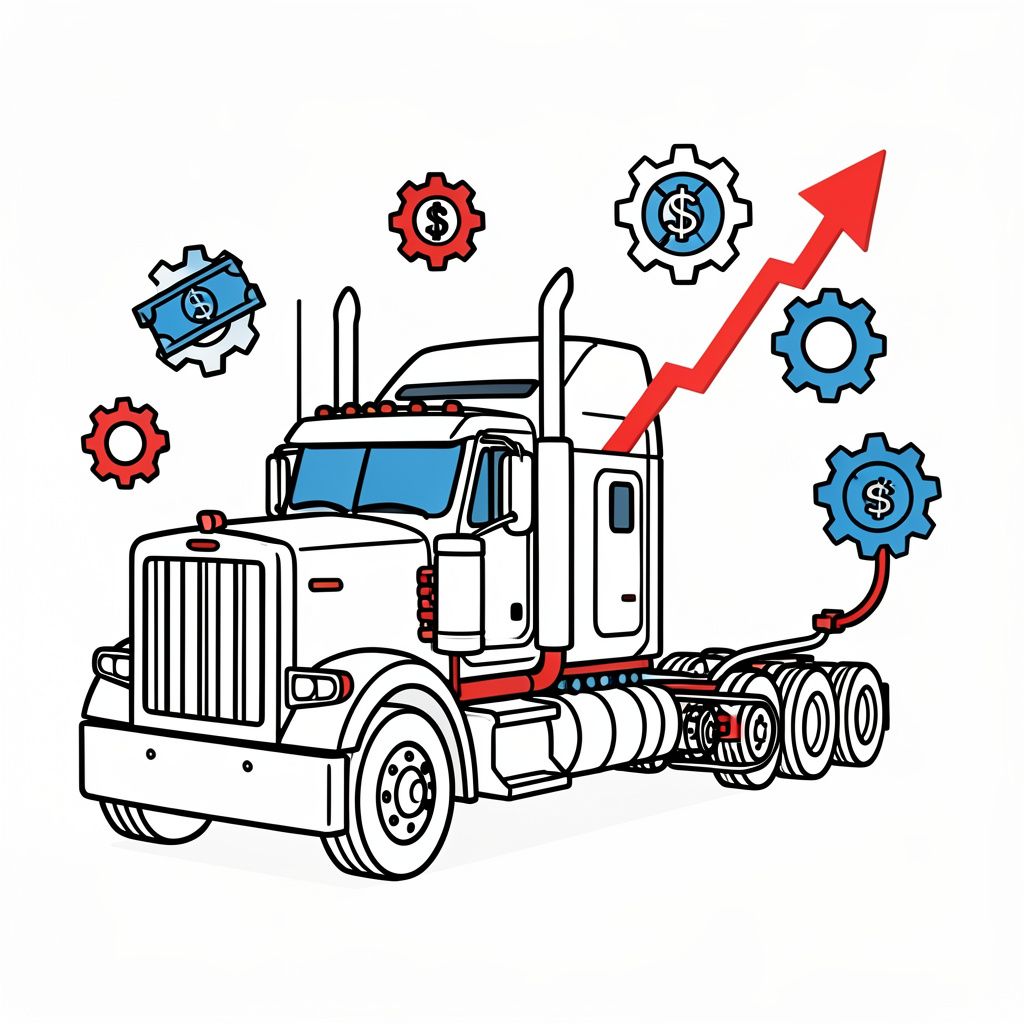
Heavy-duty truck parts prices jumped 5.7% since early 2024, with critical driveline components surging nearly 13%, exposing persistent supply chain cost pressures despite cooling broader inflation.
Heavy-Duty Price Index Launches Amid Cost Surge
On October 13, 2026, FinditParts released the inaugural Heavy-Duty Price Index (HDPI), revealing that heavy-duty truck parts pricing has increased by an average of 5.7% since January 2024 [1][2]. The index, which reached a value of 105.7 as of September 30, 2026, indicates a steady climb from the baseline index value of 100.0 established in January 2024 [1][2]. This data is derived from approximately three million in-stock truck parts across nearly 900 supplier locations, representing an estimated $7 billion in inventory at supplier cost [1][2]. The calculation of the overall increase is confirmed by the index movement: 5.7 [1][2].
Heavy-Duty Price Index Launches Amid Cost Surge
The HDPI was designed to address the limitations of broad national indexes by providing granular, industry-specific inflation data for heavy-duty truck parts [1][2]. Unlike the government’s Consumer Price Index, which samples roughly 80,000 prices across the entire consumer economy, the HDPI offers high-volume price tracking specific to the logistics hardware sector [1][2]. For executives and fleet managers, these rising operational costs indicate persistent underlying inflationary pressures within the freight and supply chain infrastructure, potentially impacting broader transportation margins and retail goods pricing [1][2].
Category Divergence and Inflationary Signals
Pricing trends show significant category divergence since January 2024, with driveline and axle parts increasing by 12.9% while HVAC parts remained nearly flat at an index value of 99.0 [1][2]. This wide gap between categories highlights that pricing pressure has not landed evenly across the industry, creating complex budgeting challenges for shops keeping trucks on the road [1][2]. Manufacturer-level pricing rose 1.9% year-over-year, suggesting potential future downstream price increases for distributors and fleets despite overall cooling inflation trends throughout 2026 [1][2].
Category Divergence and Inflationary Signals
Federal data provided conflicting signals as of August 31, 2026, with the Consumer Price Index showing a 0.9% year-over-year rise and the Producer Price Index showing a 3.3% rise for motor-vehicle parts [1][2]. Matt Schweickert, CEO of FinditParts, noted that headline inflation may be cooling, but manufacturers’ pricing is still climbing [1][2]. This discrepancy suggests that more cost is working its way toward distributors and fleets in the months ahead, contrasting with the broader economic cooling [1][2].
Economic Ripple Effects and Future Outlook
For years, industry participants have had to rely on market anecdotes, incomplete insights, or unsubstantiated data to inform their operating decisions [1][2]. The inaugural Heavy-Duty Price Index changes that by providing the visibility needed to differentiate between guessing and planning [1][2]. This detailed, industry-specific price index highlights that overall U.S. Heavy-Duty truck part prices are 5.7% above January 2024 levels, offering a critical tool for financial forecasting [1][2].
Economic Ripple Effects and Future Outlook
The heavy-duty truck parts industry is a large and critical part of the overall U.S. economy, making accurate data essential for stability [1][2]. As the industry moves forward, the ability to see shifts in pricing before they appear on an invoice will be vital for maintaining margins in a tightening freight environment [1][2]. The full report is accessible via the FinditParts intelligence portal, marking a shift toward data-driven decision-making in heavy-duty logistics [2].