Cyberattack Forces European Supermarkets to Trash Food Stocks
Brussels, Monday, 12 October 2026.
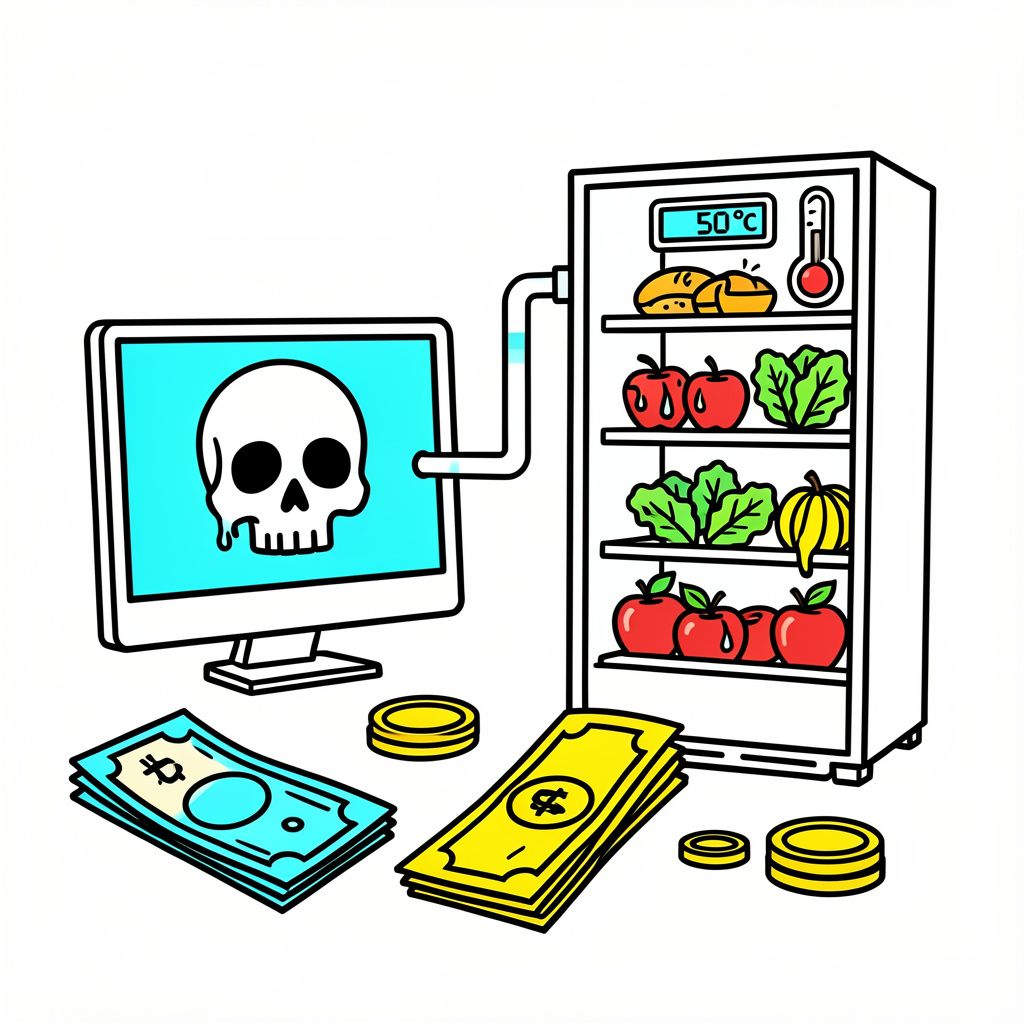
Hackers breached European supermarket cooling systems, forcing temperature controls to 50 degrees Celsius and ruining fresh food supplies across hundreds of stores.
Cyberattack Forces European Supermarkets to Trash Food Stocks
An unprecedented cyberattack has disrupted major supermarket chains across Europe, targeting smart refrigeration systems and triggering automatic defrost cycles [1]. The breach, detected overnight between Sunday, 11 October 2026, and Monday, 12 October 2026, forced retailers to discard significant inventory due to temperature spikes reaching 50 degrees Celsius [3][4]. This incident highlights critical vulnerabilities in operational technology and supply chain IoT infrastructure, raising immediate risk management concerns for global food distributors [1][5].
Operational Disruption and Financial Loss
Several major retailers have been targeted, with French supermarkets Intermarché and Coopérative U confirming significant impacts on their refrigeration production facilities [3]. Approximately 150 to 200 Intermarché shops were targeted, along with almost 100 Coopérative U outlets, according to statements provided to AFP [3]. While BFM TV reported that E. Leclerc was also affected, the chain did not immediately confirm the information, leaving the full extent of the breach partially unverified [3][alert! ‘E. Leclerc confirmation status pending’]. In Haguenau, Alsace, just two stores reported €270,000 in merchandise losses, which was cited as equivalent to $302,000, implying an exchange ratio of 1.119 [5].
Technical Vulnerabilities and Exposure
The attack exploited outdated software from Danish provider Danfoss to remotely trigger forced defrost cycles, raising temperatures up to 50 °C and causing significant food spoilage [5]. Security research by Claroty’s Team82, presented at DEF CON 34 in August 2026, had previously demonstrated that compromised Danfoss controllers could disable cooling while falsifying temperature data [5]. Specific vulnerabilities identified include CVE-2023-25915 and several CVE-2025 entries, which could allow attackers to gain privileged access and manipulate physical equipment [5]. Modern supermarket infrastructure, specifically connected IoT devices used for temperature monitoring, faces significant risks if unauthorized access is gained [4].
Investigation and Industry Response
Paris prosecutors confirmed the attack and indicated it had prompted outbreaks of fire, leading to an opened investigation into the large-scale cyberattack affecting refrigerators [3]. The probe aims to identify victims and establish the link with reported damage in terms of foodstuff losses and fire outbreaks [3]. In a separate but concurrent incident, Ahold Delhaize investigated a network security issue initiated by 11 October 2026, resulting in the proactive shutdown of systems, though officials confirmed no link to the French refrigeration attack [4][7]. Intermarché condemned the food waste and warned there could be issues with insurance policies which do not cover this type of in-store incident [3].
Sources
- www.tomshardware.com
- www.facebook.com
- www.afp.com
- euroweeklynews.com
- www.infosecurity-magazine.com
- www.retaildetail.eu
- progressivegrocer.com
- ground.news