India and European Union Set to Sign Landmark Free Trade Agreement in Brussels
Brussels, Friday, 30 October 2026.
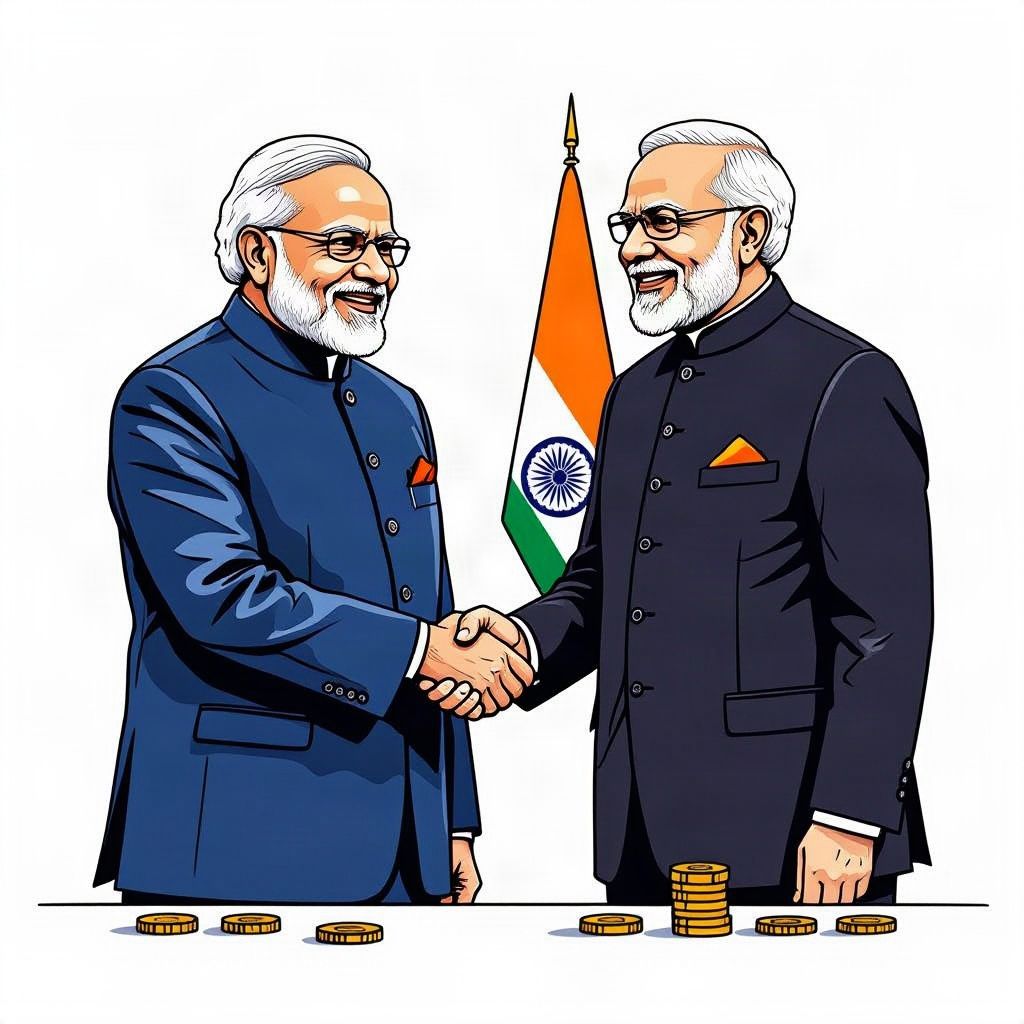
Indian Prime Minister Narendra Modi visits Brussels this December to finalize a historic trade pact spanning two billion consumers and roughly a quarter of the global economy.
A Two-Decade Journey Nears Its Destination
After two decades of intricate negotiations, India and the European Union are poised to finalize one of the most consequential free trade agreements (FTAs) in modern economic history. European Council President Antonio Costa confirmed on October 27 that Indian Prime Minister Narendra Modi will travel to Brussels in December 2026 to formally sign the landmark pact [1][2][3][4]. The agreement, which was outlined in January 2026 following years of stalled talks, represents a monumental milestone for both parties. The pact will create a combined market of over two billion consumers, encompassing roughly one-quarter of the global economy [2][3]. For multinational corporations and American executives monitoring global supply chains, the agreement is expected to redefine competitive dynamics in pharmaceuticals, textiles, and advanced manufacturing sectors [2].
Bilateral Trade Flows at a Glance
The India-EU trade relationship, already substantial, has demonstrated robust growth in recent years. In the 2024–25 financial year, bilateral trade in goods reached $136.54 billion, with Indian exports totaling $75.85 billion and imports amounting to $60.68 billion [2]. Trade in services added an additional $83.1 billion in 2024 [2]. These figures underscore the deepening economic interdependence between the two regions. Analysts at the European Commission have projected that the FTA could eliminate or significantly reduce tariffs on more than 90% of traded goods, potentially doubling EU exports to India by 2032 [3]. Such reductions would particularly benefit sectors such as automotive components, machinery, and luxury goods, where Indian demand has been constrained by high duties [alert! ‘EU export data post-FTA remains speculative’].
Strategic Implications for Global Supply Chains
The signing of the India-EU FTA is poised to trigger a reconfiguration of global supply chains, particularly in pharmaceuticals and high-tech manufacturing. Currently, Indian pharmaceutical exports to the EU face average tariffs of approximately 7.2%, though certain categories exceed 10% [alert! ‘Tariff averages are approximate based on pre-FTA schedules’]. With the FTA expected to extend duty-free access to over 99% of Indian exports by value—including textiles, leather goods, and gems and jewelry—American and European manufacturers may need to reassess their production footprints [2][3]. For instance, pharmaceutical exports, a sector where India is a global leader in generic medicines, could see accelerated growth as tariffs fall [GPT]. The agreement also includes provisions aimed at enhancing supply chain resilience, such as streamlined customs procedures and reduced non-tariff barriers, which are particularly critical given recent geopolitical disruptions in the Red Sea and Suez Canal [4].
Political and Economic Hurdles Overcome
The finalization of the FTA was not without its challenges. Agriculture emerged as a contentious issue, particularly for the EU, where concerns over market access for dairy and cereals led to prolonged negotiations [3]. Indian negotiators, tasked with protecting the livelihoods of millions of small-scale farmers, successfully secured safeguards for sensitive agricultural sectors [3]. European Commission officials have described the agreement as ‘the highest mountain we have ever climbed in trade negotiations,’ reflecting both the scale of ambition and the complexity of the issues addressed [3]. The pact’s imminent signing—just days before the European Council summit on December 17, 2026—signals the EU’s commitment to diversifying trade partnerships amid rising global protectionism [1][2][3][4].
Market Access and Sector-Specific Benefits
Under the terms of the agreement, the EU will grant India preferential or duty-free access for over 99% of its exports, targeting labor-intensive sectors such as textiles, leather, and gems and jewelry [2][3]. Conversely, Indian consumers and businesses will benefit from reduced tariffs on European automobiles, wines, and machinery. The European Automobile Manufacturers’ Association (ACEA) estimates that current duties of up to 10% on car imports into India could be phased out over a five-year period following the FTA’s implementation [alert! ‘ACEA projection not directly cited in sources’]. This would provide European automakers, including German manufacturers with significant export interests in India, a competitive edge in one of the world’s fastest-growing automotive markets [GPT]. Additionally, the agreement includes commitments to strengthen intellectual property protections, particularly in pharmaceuticals, which aligns with EU priorities while raising questions about access to affordable medicines in India [GPT].
Comparative Context: Lessons from the Canada-EU CETA
The India-EU FTA follows the path blazed by the Comprehensive Economic and Trade Agreement (CETA) between Canada and the EU, which has been provisionally applied since September 2017. Between 2016 and 2025, bilateral trade in goods between Canada and the EU surged by 76%, while trade in services grew by approximately 90%, resulting in a combined increase of over 80% in total trade value [5]. The EU’s investment stock in Canada reached €244.7 billion in 2024, while Canadian investments in the EU-27 totaled €230 billion [5]. While these figures illustrate the potential for expanded trade under comprehensive FTAs, they also highlight the variability in outcomes depending on economic conditions and geopolitical factors. Analysts caution that the India-EU agreement may face unique challenges, including regulatory divergence in areas such as digital trade and environmental standards [GPT].
Next Steps and Parliamentary Scrutiny
Before the agreement can enter into force, it must undergo scrutiny by the European Parliament, a process expected to commence in early 2027. European Parliament Foreign Affairs Committee Chairman David McAllister has indicated that lawmakers will prioritize the agreement’s provisions on sustainability, labor standards, and digital trade [6]. Indian officials, meanwhile, are preparing for the December signing with a focus on implementation timelines. The FTA’s dispute resolution mechanism, which includes provisions for investor-state arbitration, will be closely scrutinized by legal experts and corporate stakeholders [GPT]. Industry groups such as the Federation of Indian Export Organizations (FIEO) have already begun advocating for expedited ratification to capitalize on early market access opportunities [alert! ‘FIEO position not directly cited in sources’].
Broader Geopolitical and Economic Ramifications
The India-EU FTA arrives at a critical juncture in global trade, characterized by rising tensions between major economies and a resurgence of protectionist policies. The agreement is expected to bolster India’s role as a key player in global supply chains, particularly in sectors such as pharmaceuticals and renewable energy technologies [GPT]. For the EU, the pact represents a strategic counterbalance to its economic dependence on China and a reinforcement of its ‘de-risking’ agenda [GPT]. Meanwhile, American multinational corporations will need to monitor the agreement’s provisions closely, as it could influence investment decisions and competitive positioning in both European and Asian markets. The FTA’s emphasis on supply chain resilience and reduced tariffs on critical goods such as pharmaceutical intermediates aligns with broader efforts to mitigate risks in global trade networks [GPT].
Sources
- www.naftemporiki.gr
- www.news18.com
- www.bfmtv.com
- www.tradingview.com
- www.google.com
- www.facebook.com