Election Prediction Markets Face Federal Crackdown as Midterm Bets Exceed $1.4 Billion
Washington, Friday, 30 October 2026.
With over $1.4 billion staked on midterm outcomes, anticipated Democratic congressional victories threaten to trigger aggressive federal oversight and potential bans on booming political prediction platforms.
Midterms Loom as Catalyst for Regulatory Overhaul
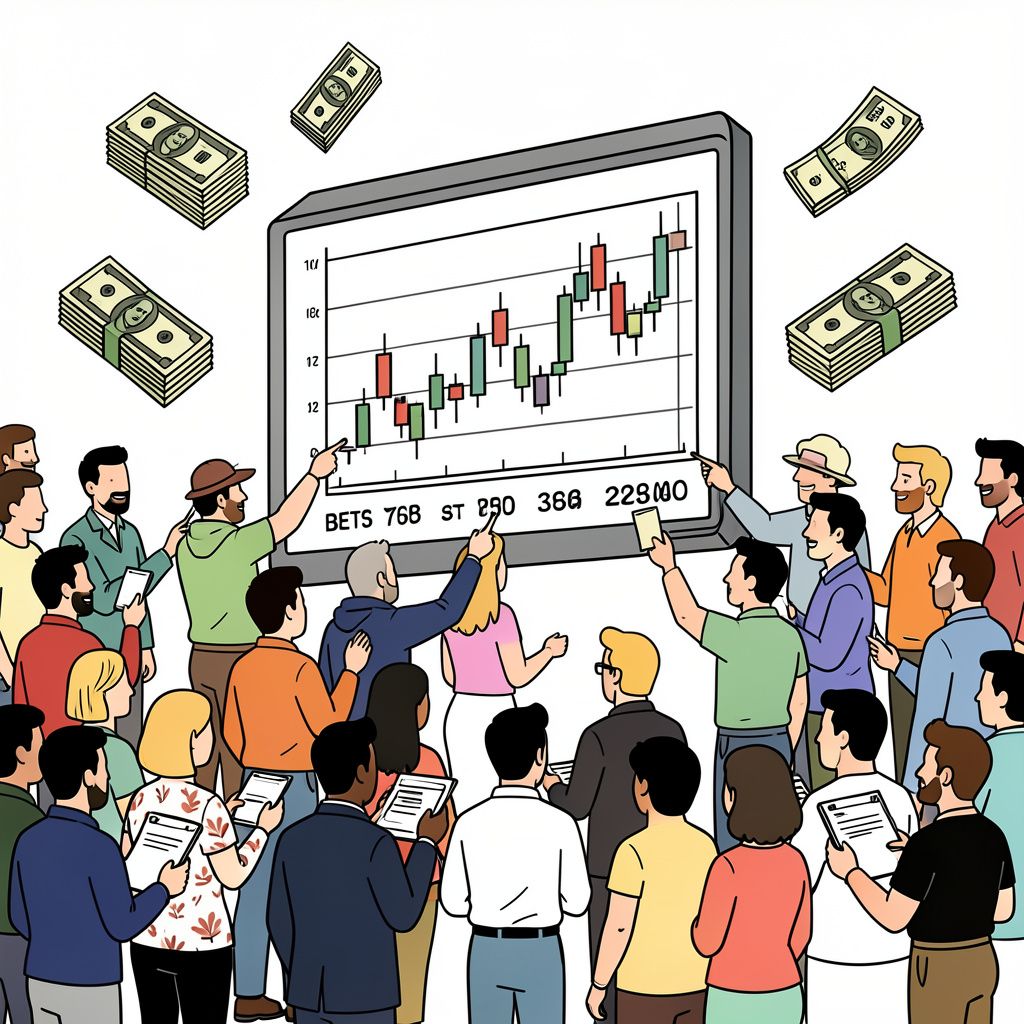
As the November 2026 U.S. midterm elections approach, political prediction markets have surpassed $1.4 billion in trading volume, with forecasts suggesting this figure could exceed $2 billion by Election Day [5]. The anticipated outcome—potential Democratic gains in Congress—has intensified scrutiny over these platforms, which allow users to bet on election results and other geopolitical events. Industry insiders and regulators warn that a Democratic-controlled Congress could accelerate legislative and administrative actions to tighten oversight of the Commodity Futures Trading Commission (CFTC), the federal agency responsible for regulating these markets. Already, lawmakers have introduced nearly 30 bills since 2025 targeting prediction markets, though none have passed to date [1].
CFTC’s Federal Preemption Clash with State Governments
The CFTC has escalated its legal battle against state-level restrictions on prediction markets, filing lawsuits against 10 states in 2026 alone, including Utah on October 20 and Minnesota on May 19 [3][4][5][7]. The agency argues that its federal regulatory framework preempts state gambling laws, particularly in cases where platforms like Kalshi operate as designated contract markets (DCMs) under CFTC oversight. Utah’s lawsuit against Kalshi, filed on October 13, alleges the platform operates an illegal gambling business, a claim the CFTC has countered by seeking to block state enforcement actions [3][5][7]. The legal conflict reflects a broader circuit split, with courts in Nevada, Maryland, and Ohio ruling in favor of state enforcement, while others have sided with the CFTC’s jurisdiction [2].
Political and Financial Interests Collide in Prediction Markets
The prediction market industry has drawn significant political and financial attention, particularly due to the involvement of high-profile figures. Donald Trump Jr. serves as an advisor to both Kalshi and Polymarket and is a major investor in Polymarket through his venture capital firm, 1789 Capital, which valued the company at $2.1 billion in August 2026 [5]. Critics, including former CFTC trial attorney Joseph Konizeski, have raised concerns about conflicts of interest, noting that a Republican senator has called for a probe into Trump Jr.’s ties to these platforms [1]. Meanwhile, Polymarket has hired former Democratic congressional staff to bolster its government relations team, signaling an attempt to navigate the regulatory landscape amid bipartisan scrutiny [1].
Industry Growth Faces Regulatory Uncertainty
Despite the regulatory headwinds, the prediction market sector continues to expand rapidly. By early October 2026, Kalshi and Polymarket facilitated $1.4 billion in trading volume on midterm election markets, with over 1,000 markets offered to users [5]. The CFTC’s recent decision to exempt certain software companies from registration requirements—such as Phantom’s partnership with Kalshi—has further fueled growth, enabling app-based access to these markets [8]. However, the agency’s pending hiring of 100 employees by December 31, 2026, and its ongoing rulemaking on vertical integration and manipulation risks in ‘mention markets’ underscore the need for enhanced oversight [1][5]. The Supreme Court’s potential review of the circuit split could ultimately determine the fate of prediction markets in the U.S., with outcomes that may either curb or legitimize their expansion [2][3].
Sources
- www.cnbc.com
- www.legal500.com
- www.politico.com
- www.google.com
- www.google.com
- www.google.com
- www.google.com
- www.google.com