California's Upcoming Backyard Housing Law Faces Resistance from Regional Regulators
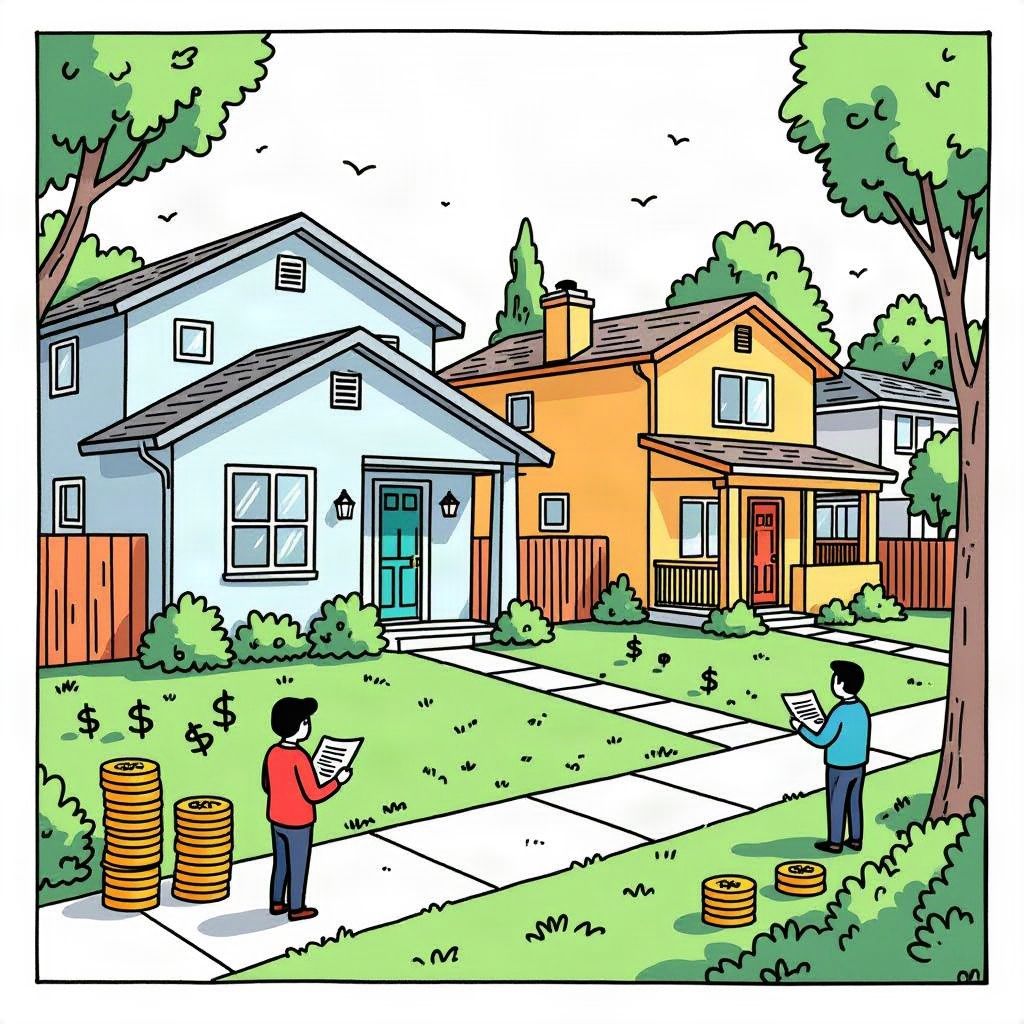
South Lake Tahoe, Saturday, 21 November 2026.
Starting January 2027, California will permit two detached accessory homes per residential parcel, though local agencies maintain strict environmental limits, mandatory development rights, and vacation rental bans.
California’s Backyard Housing Mandate: A Statewide Push Meets Local Resistance
On January 1, 2027, California will implement Assembly Bill 956 (AB 956), a statewide mandate permitting up to two detached accessory dwelling units (ADUs) per single-family residential parcel[1]. Governor Gavin Newsom signed the bill into law on September 29, 2026, marking a significant expansion of California’s housing policy aimed at addressing the state’s chronic housing shortage[1]. However, regional regulators, particularly the Tahoe Regional Planning Agency (TRPA), are pushing back by maintaining existing environmental and land-use constraints, creating a regulatory friction that could limit the law’s effectiveness in high-value markets like the Lake Tahoe Basin[1].
Regional Constraints Threaten Statewide Housing Goals
While AB 956 removes many local barriers to ADU construction—such as public hearings and discretionary approvals—it does not override existing environmental protections or local development rights[1]. In the Lake Tahoe Basin, the TRPA requires a residential development right, available land coverage, and prohibits ADUs from being used as short-term rentals, effectively limiting new construction despite the state’s mandate[1]. Michael Willson, co-owner of Mr. Honey Do, a Tahoe City-based construction firm, noted that TRPA’s rules on development rights, land coverage, and long-term rental requirements remain critical hurdles for homeowners[1]. For instance, a 600-square-foot detached ADU in the Tahoe area can cost between $132,000 and $210,000, with additional TRPA fees and development rights ranging from $8,000 to $25,000[1].
Economic Implications for Investors and Homeowners
The economic impact of AB 956 extends beyond California’s coastal and metropolitan regions, with potential ripple effects in secondary markets where ADUs are increasingly viewed as a viable housing solution. The law’s allowance for two detached ADUs per parcel, each up to 800 square feet, presents a new opportunity for homeowners to generate rental income[5]. However, the feasibility of this strategy depends heavily on local regulations. In the Bay Area, for example, AB 956 could enable homeowners to build two detached ADUs in their backyard, provided they meet local zoning and setback requirements[5]. Yet, as Amy Sylvis, a real estate consultant, cautions, managing ADUs as rental properties is far from passive[6]. Homeowners must contend with maintenance, tenant screening, and compliance with rent control laws, particularly in markets like San Francisco where eviction protections are stringent[6].
Setbacks, Costs, and the Practicality of ADU Development
Beyond regulatory hurdles, ADU development is also constrained by local setback requirements, which dictate how close structures can be built to property lines. California state law allows most single-story detached ADUs to be placed as close as 4 feet from side and rear property lines, but exceptions apply in high fire severity zones or coastal areas[2]. For example, in San Diego County, ADUs under 16 feet in height may qualify for 0-foot setbacks, though fire-rated walls and restricted openings are often required if built within 5 feet of a property line[2]. These setbacks can significantly impact project feasibility, increasing costs or even prohibiting construction in certain locations. Additionally, the choice between prefabricated and stick-built ADUs introduces another layer of financial consideration. Prefab ADUs in California range from $155,000 to $498,800 all-in as of 2026, while stick-built ADUs cost between $178,536 and $203,481 for a 660-square-foot unit in Los Angeles and San Francisco, respectively[4]. Site work costs, which include foundations, utility connections, and electrical upgrades, can add another $40,000 to $105,000 to the total expense[4].
The Path Forward: Navigating State Mandates and Local Realities
As AB 956 approaches implementation, stakeholders—from homeowners to investors and developers—must navigate a complex landscape where state mandates clash with local regulations. In Placer County, which includes areas like Tahoe City and Kings Beach, current guidance allows only one ADU and one junior ADU per parcel, complicating efforts to build two detached units[1]. Meanwhile, Truckee, which operates under its own development code, is exempt from TRPA review, illustrating how local autonomy can shape the impact of statewide policies[1]. For those considering ADU development as a source of passive income, experts like Sylvis emphasize that the reality is far more labor-intensive than the term suggests[6]. The economic potential of AB 956 will ultimately depend on how effectively homeowners and developers can reconcile state-level housing goals with the practical constraints imposed by local authorities.
Sources
- www.einpresswire.com
- snapadu.com
- www.instagram.com
- www.therenology.com
- www.facebook.com
- www.linkedin.com